
Unitree Enters Japan With GMO Deal, Targeting Labor-Starved Market With ¥100,000 Daily Rental Model
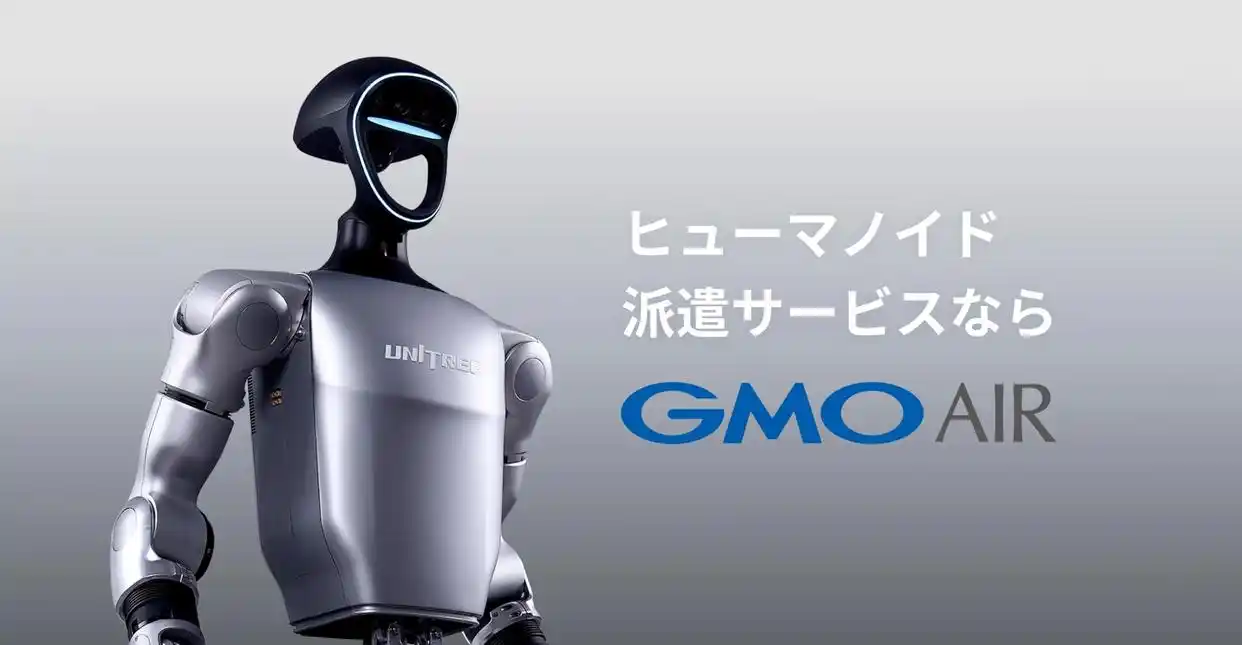
China's leading humanoid robot maker secures its first formal distribution agreement in East Asia, using a lease-first strategy to penetrate one of the world's most demanding robotics markets — ahead of most Western rivals.
Unitree Robotics, the Hangzhou-based humanoid robot manufacturer, officially entered the Japanese market on June 19, 2026, through an exclusive distribution agreement with GMO AI & Robotics (GMO AIR), a subsidiary of GMO Internet Group — marking the company's first formally authorized sales channel in East Asia and, notably, arriving before several European and American competitors had mapped out their own Japan entry timelines.
The partnership is more than a distribution handshake. GMO AIR, which began piloting Unitree's G1 humanoid in Japanese enterprise settings as early as 2025 — generating over 100 corporate inquiries — has since established what it describes as Japan's largest physical AI research facility in Tokyo's Shibuya district and launched a joint cargo-handling trial with Japan Airlines at Haneda Airport in May 2026. That trial, scheduled to run through 2028, positions Unitree hardware at the operational front line of Japan's acute labor shortage crisis, not merely in a showroom.
Rental Pricing Signals a Deliberate Market-Entry Architecture
The commercial structure underpinning this deal deserves close attention from investors tracking China's robotics export trajectory. Rather than quoting fixed sale prices — GMO AIR states these will vary "according to enterprise specifications" — the partnership leads with a rental offering: Unitree's G1 humanoid starts at ¥100,000 per day (approximately RMB 4,200, or US$583), a price point calibrated to lower the decision threshold for Japanese enterprises still in proof-of-concept phases.
This rent-then-buy funnel mirrors Unitree's domestic commercialization playbook and reflects a broader strategic logic: in a market where capital expenditure approval cycles are long and technology skepticism runs deep, leasing converts what would otherwise be a ¥multi-million procurement decision into an operational expense line item. For GMO AIR, which layers communication services, cloud infrastructure, cybersecurity — backed by what the company describes as a world-class white-hat hacker team — and financial services on top of the hardware, each robot deployed is effectively a recurring-revenue anchor.
The product lineup covered under the agreement spans Unitree's full commercial portfolio: the G1 humanoid (1,320 × 450 × 200 mm, 35 kg), the higher-performance H1 humanoid, and the quadruped series including the consumer-grade Go2 and industrial-grade B2.
Japan's Structural Labor Crisis Creates a Demand Pull That Domestic Rivals Cannot Easily Satisfy
The market selection is not incidental. Japan's ground-handling workforce at major airports contracted from 26,300 in 2019 to 23,700 by 2023 — a 9.9% decline — and by December 2023, Tokyo's Narita Airport was unable to respond to more than 30% of weekly flight-handling requests due to staffing shortfalls. Broader manufacturing and services sectors face compounding demographic pressure as Japan's working-age population continues to shrink.
The Haneda Airport trial — involving Unitree's G1 alongside UBTECH Robotics' Walker E — is structurally significant precisely because airport environments resist conventional fixed automation: irregular layouts, variable cargo configurations, and aging infrastructure make humanoid robots, which require no facility retrofitting, the path of least resistance. The trial's initial scope covers cargo container transport into aircraft holds, with future phases evaluating cabin cleaning and ground vehicle operation.
Domestic Japanese incumbents, including Fanuc and Yaskawa Electric, command formidable channel advantages and brand equity built over decades. However, neither has demonstrated humanoid robots at the production volumes Unitree has achieved — a gap that GMO AIR's selection of a Chinese partner makes explicit.
Shipment Volume Claims Require Investor Scrutiny
Unitree has stated in official communications — citing GMO's press release — that it ranked first globally in bipedal humanoid robot shipments in 2025, with self-reported figures exceeding 5,500 units delivered and over 6,500 units produced. However, third-party research firms present a more contested picture: Omdia's 2025 data places Zhiyuan Robotics at approximately 5,100 units and Unitree at roughly 4,200 units, while Counterpoint Research similarly ranks Zhiyuan first. Methodology differences — how "shipment" is defined, whether dual-arm wheeled variants are included — account for much of the discrepancy.
What is not in dispute is that Unitree sits firmly among the top two or three global humanoid producers by volume, a standing that contrasts sharply with Western peers: Figure AI, currently valued at approximately RMB 280 billion (US$38.9 billion), shipped an estimated 150 units in all of 2025. Scale manufacturing capability remains China's most structurally durable competitive advantage in this sector.
Authorized Channel Model Limits Unitree's Localization Exposure — For Now
By routing market entry through an exclusive authorized distributor rather than establishing a direct local entity, Unitree avoids the overhead of Japanese-language customer support infrastructure, regulatory navigation, and local hiring — costs that have historically slowed foreign robotics firms' Japan penetration. GMO Internet Group's existing footprint across Japanese internet, cloud, and financial services provides brand legitimacy that a hardware-only vendor would struggle to acquire independently.
The critical open question is whether GMO AIR can build the technical after-sales depth that high-complexity humanoid hardware demands. A robot deployed in a live airport cargo operation is not a consumer device; maintenance response times and firmware update protocols will define enterprise customer retention as much as the hardware's motion-control capabilities — capabilities that Unitree upgraded significantly in early June 2026, just ten days before the Japan announcement.
The Haneda trial runs to 2028. Whether it converts from proof-of-concept to scaled deployment — and whether that outcome generates replicable orders across Japan's manufacturing and logistics sectors — will serve as a more meaningful benchmark for China's humanoid robotics export ambitions than any shipment ranking dispute.
Related Coverage:
Unitree Races to Commercialize After Record-Speed IPO Approval