
CATL’s TENER Marks Sodium-Ion Storage Breakthrough
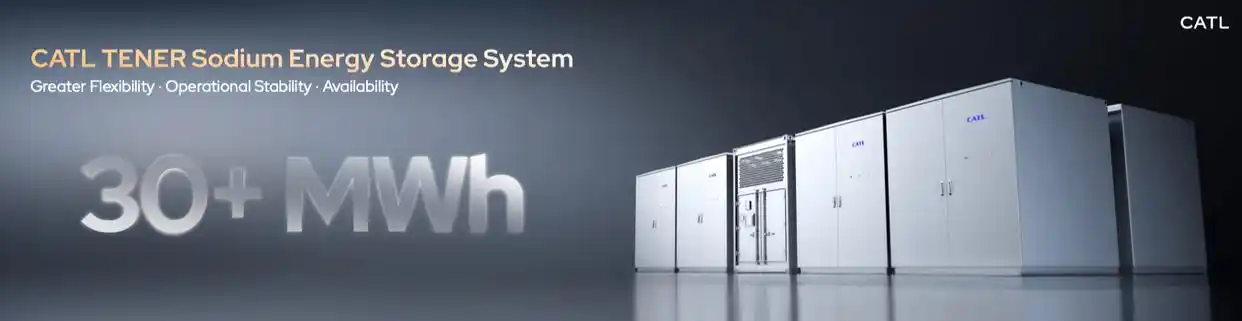
Contemporary Amperex Technology (CATL), the world's largest battery maker, unveiled its TENER sodium-ion energy storage system at a product launch event in Munich, Germany on June 22, positioning the technology for its first large-scale commercial deployment and signaling a potential hedge against lithium price volatility for the global storage industry.
The system, which CATL describes as the world's first station-level sodium-ion storage solution, is built on a dedicated sodium-ion platform and delivers a maximum energy capacity of more than 30 MWh per unit. Its modular design — separating energy and power compartments — allows a 1 GWh station to be deployed with just 34 units, with configurable storage durations ranging from one to eight hours.
Performance and Safety Specifications
CATL highlighted several performance metrics aimed at addressing longstanding concerns about sodium-ion technology's commercial viability. At 25°C, the system achieves a cycle life exceeding 15,000 cycles. In sub-zero conditions of -20°C, it retains more than 92% of usable energy, while at 45°C it sustains more than 10,000 cycles — figures the company says demonstrate suitability for diverse climate environments.
On safety, the sodium-ion chemistry reduces expansion force by 40% compared to conventional alternatives, limits surface temperature during thermal runaway to approximately 200°C, cuts gas generation by 35%, and raises the critical overcharge state-of-charge threshold to 140%.
To address the wider voltage range inherent to sodium-ion cells, CATL developed a proprietary Bi-DC bidirectional voltage regulation system and battery management system. Using intelligent voltage-boosting technology, the system maintains a continuous 690V output across the full voltage range, improving round-trip efficiency by nearly 2 percentage points. For a 1 GWh station, CATL estimates this translates to several million additional kilowatt-hours of generation annually. The system also incorporates a millisecond-level self-healing function capable of completing fault detection, isolation, and restoration of unaffected zones within 350 milliseconds.
Platform Compatibility as a Strategic Differentiator
One of the more commercially significant aspects of TENER is its interoperability with CATL's existing lithium-ion storage platform. The two systems share the same platform architecture, system interfaces, and physical footprint, allowing customers to switch between sodium-ion and lithium-ion configurations without redesigning or re-certifying their installations. The feature positions TENER as a flexible instrument for operators seeking to manage exposure to lithium raw material price swings.
Supply Chain and Delivery Timeline
CATL said its sodium-ion material supply chain is fully established, with both cathode and anode materials produced at a scale of tens of thousands of tonnes. The company has committed 650 million euros to expand its Fuding base in Fujian province, adding 40 GWh of capacity, and plans to add a further 160 GWh at its Jining facility in Shandong province. All production lines are reported to be operational.
First deliveries to the Chinese market are scheduled for September 2026, with full-year shipments of 1 GWh targeted by year-end. Global market deliveries are expected to begin in June 2027.
Order Backlog Provides Demand Visibility
In April 2026, CATL signed a three-year strategic cooperation agreement with HiNa Battery Technology covering 60 GWh of sodium-ion battery supply — a volume CATL says represents the largest single order in the global sodium-ion storage sector to date. The agreement provides early demand visibility for the TENER system's ramp-up phase and underscores the growing commercial appetite for sodium-ion technology as an alternative to lithium-based storage.
Related Coverage:
CATL's Sodium-Ion Strategy: Why Morgan Stanley Says Markets Miss the 1,000 GWh Opportunity