
Unitree Prices Humanoid Robot at $3,736, Reshaping Industrial Automation Economics
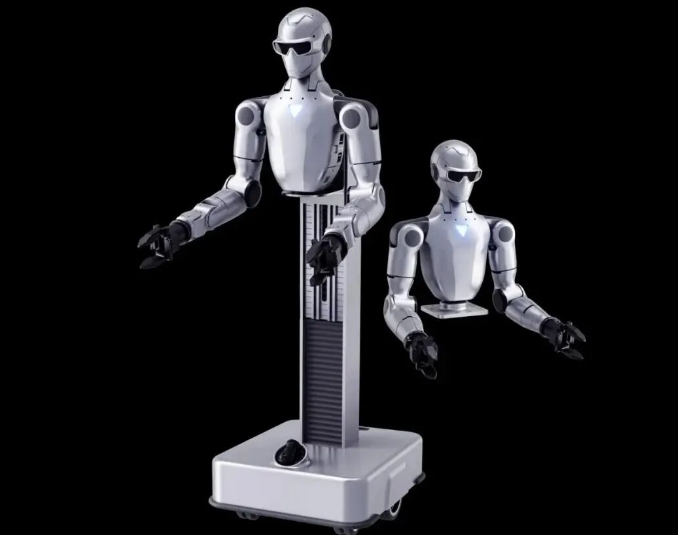
Chinese robotics manufacturer Unitree Technology has unveiled its R1 series dual-arm humanoid robot starting at RMB 26,900 (US$3,736), marking the lowest commercial pricing threshold for functional humanoid systems globally. The April 30 launch positions the Hangzhou-based company to accelerate industrial deployment ahead of competitors constrained by higher component costs.
The R1 series represents Unitree's first desktop-compatible upper-body platform designed explicitly for light industrial tasks. Unlike full-body humanoids optimized for mobility, the system prioritizes manipulation precision and cost efficiency—a strategic pivot reflecting growing factory demand for specialized automation versus general-purpose robots.
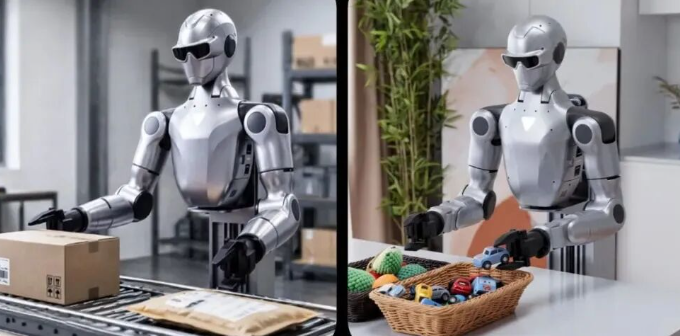
Modular Design Targets Factory Assembly Lines
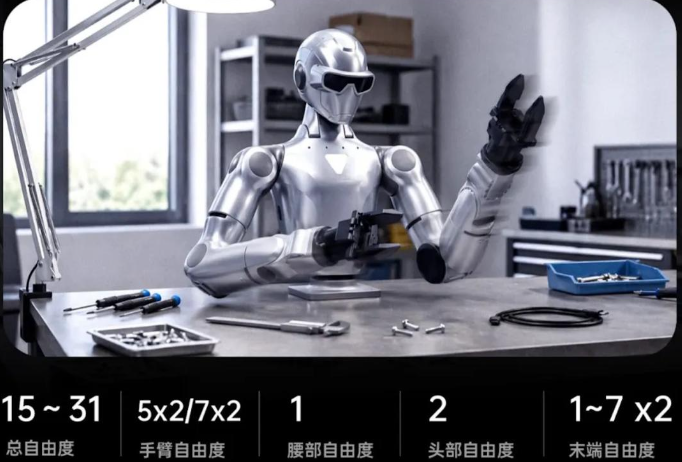
The R1 lineup comprises four configurations: R1-A5 and R1-A7 with fixed bases (11kg and 13kg respectively), plus mobile variants R1-A5-D and R1-A7-D (30kg and 32kg). Each model features Unitree's proprietary joint motors capable of 2kg payload per arm, with 5 or 7 degrees of freedom enabling screw fastening, parcel sorting, and component assembly operations demonstrated in launch materials.
The system's 150-degree waist rotation and 115-degree head yaw eliminate dead zones in standard workstation layouts, reducing the need for robotic repositioning during multi-step tasks. Industry sources note this range exceeds typical collaborative robot specifications by 20–30%, potentially cutting cycle times in electronics assembly environments.
Quick-swap end effectors allow operators to alternate between grippers, suction tools, and precision instruments without disassembly—a feature critical for mixed-product manufacturing lines. The architecture supports both drag-teaching programming and API-level customization through open-source control interfaces.
Processing Power Balances Cost and Real-Time Perception
Unitree embedded a 10 TOPS vision module with dual RGB-depth cameras (146-degree horizontal FOV) into the R1's head unit, running perception algorithms on an 8-core CPU. While modest compared to Tesla Optimus's reported 40+ TOPS configuration, the compute budget aligns with deterministic factory tasks requiring millisecond-level object recognition rather than complex scene understanding.
The stereo camera system delivers 1280×720 RGB streams at 30Hz alongside 544×448 depth maps at 10Hz—sufficient for bin-picking and quality inspection workflows common in consumer electronics production. Audio interaction capabilities suggest potential service sector applications, though Unitree's marketing emphasizes industrial scenarios.
Pricing Strategy Undercuts Established Players
At $3,736, the base R1-A5 model undercuts Unitree's previous entry-level R1 Air ($4,153) by 10% and significantly underprices known competitors. For context, full-body systems from Figure AI and Agility Robotics reportedly target $50,000+ price points for initial commercial units, while Boston Dynamics has not disclosed Stretch robot pricing publicly.
The aggressive pricing likely reflects vertical integration gains from Unitree's experience manufacturing quadruped robots, where the company achieved sub-$3,000 pricing for its Go2 model in 2024. Shared component platforms—particularly motors and controllers—enable economies of scale unavailable to humanoid-only startups.
However, the true total cost of ownership remains unclear. Industrial deployments require safety certifications, integration engineering, and ongoing maintenance—expenses that could double the upfront hardware cost for enterprise buyers. Unitree has not disclosed warranty terms or post-sale support structures.
Market Timing Aligns with China's Manufacturing Automation Push
The R1 launch coincides with intensifying labor cost pressures in China's Yangtze River Delta manufacturing corridor, where 2026 minimum wages have risen 8–12% year-over-year in key cities. Government subsidies for "intelligent manufacturing" upgrades further incentivize robotics adoption, creating favorable conditions for affordable automation systems.
Unitree's positioning also anticipates potential export restrictions on advanced AI chips, which could constrain competitors relying on cutting-edge processors. By designing around mature 10 TOPS compute modules, the company maintains supply chain flexibility while sacrificing minimal functionality for structured industrial environments.
The broader humanoid robotics sector faces critical commercialization tests in 2026, with multiple players racing to prove economic viability. Unitree's cost-focused approach contrasts with Tesla's vertical integration model and Figure's AI-first strategy, offering a third pathway toward scale. Whether stripped-down designs can match full-capability systems in real-world deployments will determine market structure through decade's end.
Related Coverage: