
Unitree Rallies 20% in Two Days as China Policy Boosts Humanoid Demand
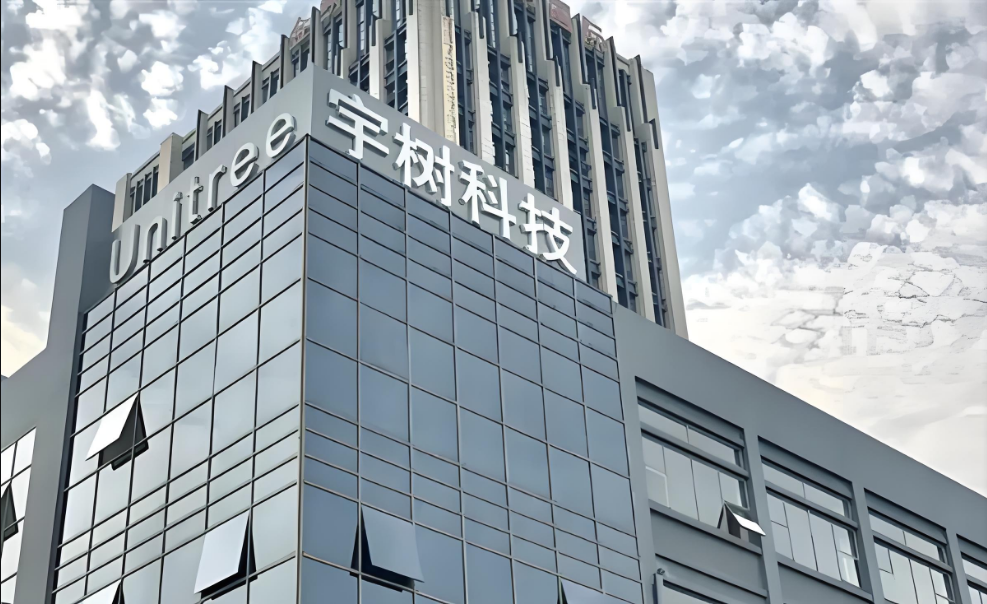
A confluence of national standards, nine-ministry commercial policy, and OpenAI's humanoid ambitions ignited China's robotics stocks, with Unitree Robotics reclaiming a RMB 200 billion market cap — but the real test arrives October 29 when the company reports its first post-IPO quarterly earnings.
The October 19–20 rally in China's A-share robotics sector marks a structural shift in the policy narrative: for the first time, Beijing has moved beyond supply-side industrial support to explicitly engineer demand for humanoid robots in consumer and commercial settings. Unitree Robotics (688836.SH) led the charge, surging 16.15% on October 19 to close at RMB 495.92 per share — the stock's largest single-session gain since its August 19 STAR Market debut, excluding the IPO day itself — before extending gains a further 6%-plus to RMB 526 in early trading on October 20, pushing its market capitalization above RMB 210 billion (US$29.2 billion) with intraday turnover exceeding RMB 2.3 billion (US$319 million).
The immediate trigger was a joint policy directive released October 19 by China's Ministry of Commerce and eight co-issuing agencies, titled Opinions on Accelerating the Promotion of Science and Technology to Empower Commerce. The document explicitly calls for expanding robot supply in household and logistics scenarios and cultivating "robot companionship" as a new intelligent services category — language industry analysts describe as Beijing's first formal demand-side mandate for the humanoid segment, distinct from prior manufacturing-focused subsidies.
Policy Pivot Opens Demand-Side Valve for Humanoid Robots
The policy architecture underpinning the rally has been building for weeks. On October 15, China's State Administration for Market Regulation formally approved the country's first six national standards for humanoid robots — five technical requirement sets plus a simulation testing platform specification — set for implementation on April 1, 2027. Unitree founder Wang Xingxing is listed as a co-drafter of the Humanoid Robot Technical Requirements standard, lending the company unusual institutional proximity to the regulatory framework shaping its own market.
That same day, a separate nine-ministry directive called for accelerating the commercial transfer of frontier technologies including embodied intelligence and brain-computer interfaces. Three days later, the National Bureau of Statistics disclosed that industrial robot output rose 29.1% year-on-year in the first three quarters of 2026, within a broader GDP expansion of 4.6% to RMB 107.1 trillion (US$14.9 trillion). Equipment manufacturing and high-technology manufacturing were cited as primary structural supports for growth.
Taken together, analysts note the policy sequencing — standards, sector mandates, production data — has compressed what would typically be a multi-quarter re-rating process into days. "Prior robotics policy concentrated on the industrial supply side," one sector observer noted. "Explicitly naming household services and commercial logistics as application scenarios to be cultivated is a material demand-side unlock."
Wang Xingxing's Public Self-Correction Signals Inflection Point Confidence
Beyond regulatory catalysts, a statement by Unitree's founder at the 26th China International Industry Fair on October 12 has drawn pointed attention from the investment community. Wang publicly acknowledged that "the biggest mistake I made over the past decade-plus was not believing in AI enough," adding that the inflection point for embodied intelligence could arrive "faster than expected — possibly within one to two years."
The remark carries weight precisely because it is a founder revising his own prior conservatism upward, backed by measurable data. According to a report by Frost & Sullivan, global humanoid robot shipments reached 36,000 units in the first half of 2026, already exceeding the approximately 35,000 units shipped in full-year 2025, generating US$540 million in revenue. Chinese firms occupy all five top positions by revenue; UBTech Robotics (9880.HK) leads with RMB 620 million and a 16.5% share, while Unitree ranks third. The top five collectively account for 57.4% of global revenue, according to Frost & Sullivan data.
Wang also cited the recent release of GPT-6 as having a significant impact on the sector's perception of what AI can currently do, noting his team has deployed it on robot task testing with promising results.
Global Resonance Amplifies Domestic Momentum
The domestic policy wave is meeting incoming global signals that reinforce the sector's re-rating. OpenAI CEO Sam Altman confirmed on October 18 that the company is developing humanoid robots, with a demonstration prototype targeted for 2027. That announcement, combined with ongoing Tesla (TSLA.US) Optimus production ramp expectations and Nvidia's (NVDA.US) forthcoming GTC Berlin conference, is generating what traders describe as an "internal-external resonance" trade — where overseas frontier AI capex and China's industrial policy simultaneously validate the same technology thesis.
Capital deployment data supports the narrative. According to Tonghuashun iFinD and industry aggregator Yuanda Information, total sector financing in the first half of 2026 reached RMB 104.1 billion (US$14.5 billion), nearly double full-year 2025 levels. DeepSeek participated in Unitree's strategic placement in August, investing RMB 141 million (US$19.6 million) for a 0.23% equity stake, and has since made additional investments in embodied intelligence startups. As of June 2026, eight Chinese embodied intelligence companies have crossed the RMB 20 billion (US$2.8 billion) valuation threshold, constituting what the industry terms the "RMB 20 Billion Club" — a cohort that includes Unitree, Zhiyuan Robotics, Galaxy General Robotics, Xinghaitu, Qianxun Intelligence, Self-Variable Robotics, Zhipingheng, and Lingxin Qiaoshou.
Earnings Test Looms as Valuation Overhang Persists
The October 19–20 rebound also carries a technical dimension that investors should weigh carefully. Unitree's post-IPO trajectory has been severe: the stock opened at RMB 1,100 on its August 19 debut — implying a peak market cap of RMB 444.9 billion (US$61.8 billion) and a maximum first-day gain of 629.44%, a STAR Market record under the registration-based issuance regime — before entering a sustained correction that bottomed near RMB 404 per share, a drawdown of approximately 63% from intraday highs.
The current rebound at RMB 526 per share implies a market capitalization of approximately RMB 213 billion (US$29.6 billion). That valuation rests on disclosed financials showing full-year 2025 revenue of RMB 1.699 billion (US$236 million) and humanoid robot shipments of 5,500 units. With a prospectus-disclosed production buildout targeting 75,000 humanoid and 115,000 quadruped robots annually upon completion of its intelligent manufacturing base — a two-year construction timeline — the gap between current revenue and implied capacity remains wide.
Two data events will test the re-rating thesis in the near term. On October 22, Unitree hosts the 2026 World Physical AI Conference and Partner Ecosystem Summit in Hangzhou. More critically, on October 29, Unitree will file its first quarterly report since listing, covering the period through September 30 — the first public window into whether the shipment ramp implied by its 32.4% global humanoid market share estimate (per third-party industry data for 2025) has accelerated in 2026.
Leveraged positioning data tracked by Tonghuashun iFinD suggests margin capital had been exiting ahead of the rebound, indicating the October 19 surge had a meaningful short-covering and technical-reversal component alongside genuine policy-driven re-rating. Separately, the company's registered capital increased from approximately RMB 364 million to RMB 404 million — an 11% expansion — per a September 14 filing with Tianyancha, signaling ongoing structural activity at the corporate level.
For investors, the core question is binary: if the October 29 quarterly report validates accelerating humanoid unit economics, RMB 404 may represent a durable floor. If revenue and margin data disappoint relative to the RMB 210 billion-plus implied valuation, the correction that brought the stock from RMB 1,100 to RMB 404 may not be complete.
Related Coverage:
Unitree's Vertical Integration Gamble: Robotics Faces Its "Battery Moment"
Unitree Puts 48% of IPO Proceeds Into AI as the Humanoid Robot Race Shifts to Cognition