
Xiaomi Claims Viral “Hunter Alpha” Models as MiMo V2 Trio, Pressuring China’s Agent AI Pricing
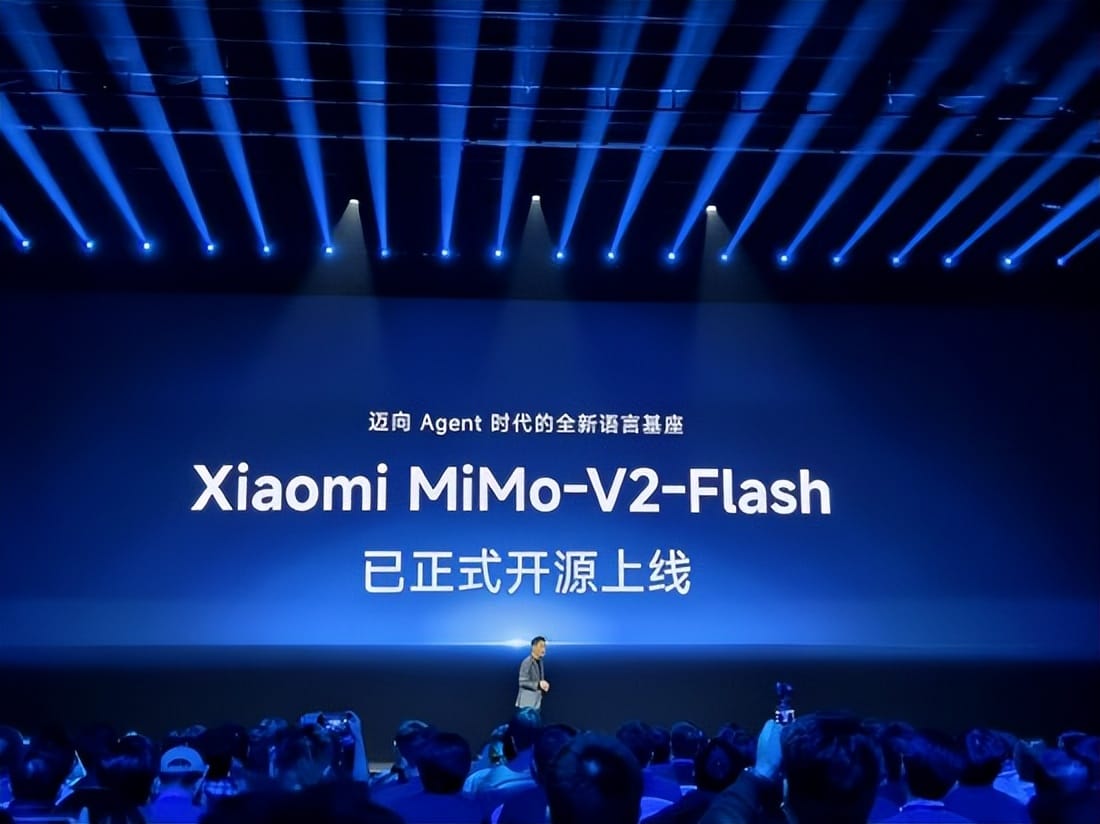
Xiaomi used a triple model release to claim ownership of the viral “Hunter Alpha” and “Healer Alpha” systems on OpenRouter, reframing what developers had speculated might be a DeepSeek V4 preview into a price-aggressive push for agent-ready AI.
The company said the anonymous models that topped OpenRouter’s daily API-call rankings for multiple days were early test versions of its new flagship foundation model Xiaomi MiMo-V2-Pro and its multimodal agent model Xiaomi MiMo-V2-Omni, both still available to developers for free on the platform.
Xiaomi’s MiMo team lead Luo Fuli wrote on X that MiMo is “the first full-stack model family built for the agent era,” adding the models will be open-sourced once they are “stable enough,” a signal that Xiaomi intends to compete not only on performance but also on distribution.
The launch adds fresh pricing pressure to agent model incumbents, with Xiaomi positioning MiMo-V2-Pro at one-fifth the API price of Claude Opus 4.6, while bundling demos and ecosystem integrations designed to pull developers and enterprise users into Xiaomi’s tooling layer.
Rebranding Anonymous Leadership into a Developer Funnel
Xiaomi said its “Hunter Alpha” and “Healer Alpha” models attracted outsized attention on OpenRouter and became the subject of speculation after their disclosed parameter specifications aligned with those rumored for DeepSeek V4. This prompted commentary on X from OpenClaw founder Peter Steinberger, who called for further clarification.
By formally linking these previously anonymous endpoints to MiMo, Xiaomi is converting viral usage into a more controlled developer onboarding channel. The company is keeping the two OpenRouter models free to access, while also offering one-week promotional API access for MiMo-V2-Pro and MiMo-V2-Omni through partnerships with agent-framework teams including OpenClaw, OpenCode, KiloCode, Blackbox, and Cline.
This distribution-first strategy is notable for investors tracking how Chinese consumer-hardware companies translate ecosystem reach into AI workload share. Xiaomi positions MiMo not as a standalone chatbot, but as an “agent stack” designed to integrate directly into workflows and applications.
Cutting Token Prices while Targeting Agent Benchmarks
Xiaomi disclosed MiMo-V2-Pro has more than 1T total parameters, with 42B activated parameters, and supports up to 1 million tokens of context. On Artificial Analysis, the company said the model ranks No. 9 globally and No. 3 in China, behind GLM-5 and MiniMax-M2.7.
On OpenClaw’s PinchBench and Claw-Eval, Xiaomi said MiMo-V2-Pro ranks third, behind Claude Sonnet 4.6 and Claude Opus 4.6. Xiaomi also said internal engineer evaluations put its coding capability “close to Claude Opus 4.6,” emphasizing system design and task planning.
Pricing is set by context window. For up to 256K context, Xiaomi lists input at US$1 per million tokens and output at US$3; for up to 1M context, input is priced at US$2 and output at US$6. Xiaomi’s comparison chart indicates that the MiMo-V2-Pro API is priced at roughly one-fifth of Claude Opus 4.6, highlighting a familiar trade-off for buyers—near-frontier performance at materially lower inference cost.
Expanding Multimodal Execution and Voice to Lock in Workflows
Xiaomi positioned Xiaomi MiMo-V2-Omni as a multimodal foundation model built for “complex real-world interaction and execution,” spanning text, vision and speech. The company said it can support more than 10 hours of continuous long-audio understanding, and in different modalities claims performance comparisons that range from surpassing Gemini 3 Pro in audio understanding to exceeding Claude Opus 4.6 in image understanding, while outperforming Gemini 3 Flash in native audio-video input.
In agent evaluations, Xiaomi said MiMo-V2-Omni approaches Gemini 3 Pro in real digital-environment interaction benchmarks, and trails only Claude Opus 4.6 on average in pure text-agent tasks. The company’s demo describes the model using OpenClaw to operate a browser end-to-end: researching “Xiaomi 17” on Xiaohongshu, comparing offers on JD.com, escalating to human customer service for bargaining, and then adding to cart and placing an order.
For enterprise-style documents, Xiaomi said MiMo-V2-Omni integrates with WPS Office to generate Word files, structured Excel sheets, formatted PDFs, and full PowerPoint decks. Xiaomi priced MiMo-V2-Omni at US$0.4 per million input tokens and US$2 per million output tokens, with a 256K context window.
On voice, Xiaomi introduced Xiaomi MiMo-V2-TTS, trained on “over 100 million hours” of speech data, aiming to make agent interactions sound more human. The company said it supports multi-dialect output, role-play styles and singing synthesis, and can infer punctuation and emphasis markers from text without manual annotation.
Using “MiMo Claw” Demos and Office Integrations to Signal System-Level Ambitions
Alongside the model launch, Xiaomi released MiMo Claw on its official model experience page, offering a 30-minute free session per creation with data automatically destroyed after exit. A published demo shows MiMo Claw building a website that updates at 19:00 daily with next-day listings for Hong Kong and A-share companies, using Python scraping and auto-correcting mismatches during testing.
Xiaomi also said MiMo Claw is integrated into Kingsoft WebOffice, supporting Word, Excel, PowerPoint and PDF formats and covering “over 95%” of daily document types, while Xiaomi Browser has already connected to MiMo-V2-Pro for AI search.
For markets, the strategic signal is Xiaomi’s attempt to pair low-cost inference with privileged distribution points—browser entry, office documents and agent frameworks—so that “system-level native agents” become sticky default tools rather than optional add-ons. Luo’s open-source pledge, conditioned on stability, adds another lever that could widen adoption if Xiaomi follows through.
Related Coverage:
Xiaomi Sets March 19 Launch for 2026 SU7, Betting 800V Upgrade Can Defend Pricing Power
Xiaomi Plans Annual SoC Chip Upgrades and Eyes Google Gemini for Global AI Push