
Xiaomi SU7 Safety Under Fire as Doors Fail to Open in Fatal Crashes
Xiaomi Corp. is facing intense scrutiny over the safety of its popular SU7 electric vehicle after its doors failed to open from the outside in two separate fatal crashes, reviving a controversy the company had previously appeared to overcome.
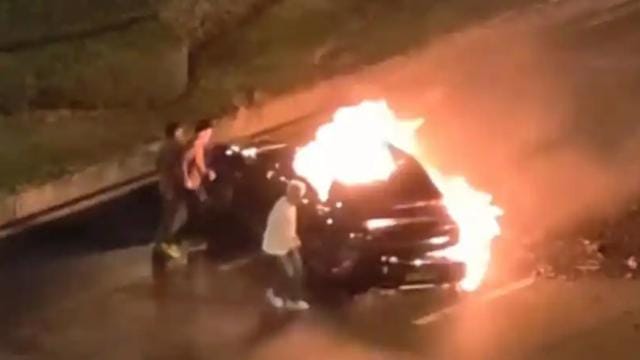
The latest incident occurred on October 13 in Chengdu, when an SU7 Ultra crashed, overturned, and caught fire. According to a statement from the Chengdu Public Security Bureau Traffic Management Bureau, the driver, identified as Mr. Deng, died in the accident.
On-site video circulated online showed bystanders attempting to rescue the driver from the burning vehicle. Despite smashing a window, they were unable to open the car doors. Firefighters who arrived at the scene ultimately had to use specialized tools, including a hammer and an electric saw, to cut open the doors.
The incident echoes a fatal crash in Anhui province in March 2025 where three people died, and rescuers were similarly unable to open the SU7’s doors from the outside. The recurring problem casts a shadow over the SU7’s previously high safety ratings and renews a public debate that began with a discredited social media video in 2024, raising significant questions for investors about potential design flaws and reputational damage.
A Pattern of Failed Rescues
In both recent fatal accidents, the inability for rescuers to access the vehicle from the outside was a critical factor. The October 13 Chengdu crash involved an SU7 Ultra that collided with another car before crossing a median and catching fire. While a police report noted that the driver was suspected of driving under the influence, the focus has shifted to the vehicle’s response. A rescuer at the scene told media outlets the doors showed no obvious structural deformation but would not open.
This followed a March accident in Anhui, where an SU7 operating on its NOA assisted driving system at 116 km/h crashed, resulting in three fatalities. A passing driver who stopped to help broke a window but also found the doors could not be opened, delaying aid.
Under the Regulatory Microscope
The incidents place Xiaomi’s vehicle design in potential conflict with Chinese safety standards. The current national regulation for occupant protection in frontal collisions mandates that at least one door should be openable after a crash. Furthermore, a draft regulation released by the Ministry of Industry and Information Technology (MIIT) in September 2025 proposed a requirement for all doors to have an external mechanical release that functions even after a power failure or collision.
While some have argued that the crash speeds in these accidents may have exceeded the 50km/h national testing standard, the issue of locked doors on non-impacted parts of the vehicle has drawn criticism. The failures stand in contrast to the SU7’s otherwise stellar safety credentials. In 2024, the model received the highest "G+" rating from the China Insurance Automotive Safety Index (C-IASI) across all major safety categories.
A Question of Design
The problem appears to stem from the SU7's door handle design. According to auto industry blogger “Fei Zou De Yun 520,” the vehicle uses electronic releases in its semi-hidden door handles, which rely on the car's high-voltage or low-voltage power systems. If both systems fail in a severe crash, the external handles become inoperable.
A mechanical backup exists, but it is located inside the car door trim. Xiaomi Corp. itself confirmed this design in a previous public Q&A session, explaining that in the event of power loss, the doors can only be opened by pulling the mechanical release lever from within the cabin. This design makes it nearly impossible for external rescuers to open the doors without reaching into what could be a burning or compromised passenger compartment.
Compounding the Crisis
Questions are also being raised about the company's crisis response infrastructure. According to a report by The Paper, Xiaomi’s auto customer service line was unavailable when the Chengdu crash occurred around 3 a.m., as no staff were on duty. An unnamed auto industry insider expressed surprise, questioning why an automaker’s customer support would not be available 24/7. While some have suggested that jump-starting the car from the outside could restore power to the doors, the practicality of such an action on a burning vehicle—compounded by the lack of immediate company support—remains a critical concern.