
XPeng CEO: After Turning the Tide, the Pain Remains
In late December 2025, China Entrepreneur Magazine published an in-depth interview with He Xiaopeng, chairman and chief executive officer of XPeng. Released on December 29, the interview offers a rare, candid look at XPeng’s strategic transformation, technological bets and organisational overhaul following a dramatic rebound in performance this year.
The conversation is noteworthy not only because XPeng has staged a sharp turnaround in deliveries, revenue and losses in 2025, but also because it sheds light on how a leading Chinese electric vehicle maker is repositioning itself amid intensifying global competition. He outlines XPeng’s ambition to become a “globally oriented embodied intelligence company”, spanning smart vehicles, physical AI and humanoid robotics—an agenda that places the company at the intersection of automotive manufacturing and frontier AI development.
XPeng Motors staged a remarkable turnaround in 2025: From January to November 2025, XPeng Motors delivered a total of 391,937 new vehicles, a year-on-year increase of 156%; XPeng Motors' third-quarter report showed that the company's revenue reached 20.38 billion yuan in the third quarter, breaking the 20 billion yuan mark for the first time and setting a new historical record; net loss narrowed to 380 million yuan, a year-on-year decrease of 78.9%.
However, He Xiaopeng still feels "pain" from time to time. In a recent interview with China Entrepreneur, He Xiaopeng, chairman and CEO of XPeng Motors, mentioned "pain" at least 10 times.
"We have been going through this painful process for the past year or so, which is how to get more and more people, especially those in leadership positions, to make a difference."
“We need to proactively tell them that we will all share the responsibility in the end, and then help them persuade their neighbors and subordinates. I think this is a painful process.”
...
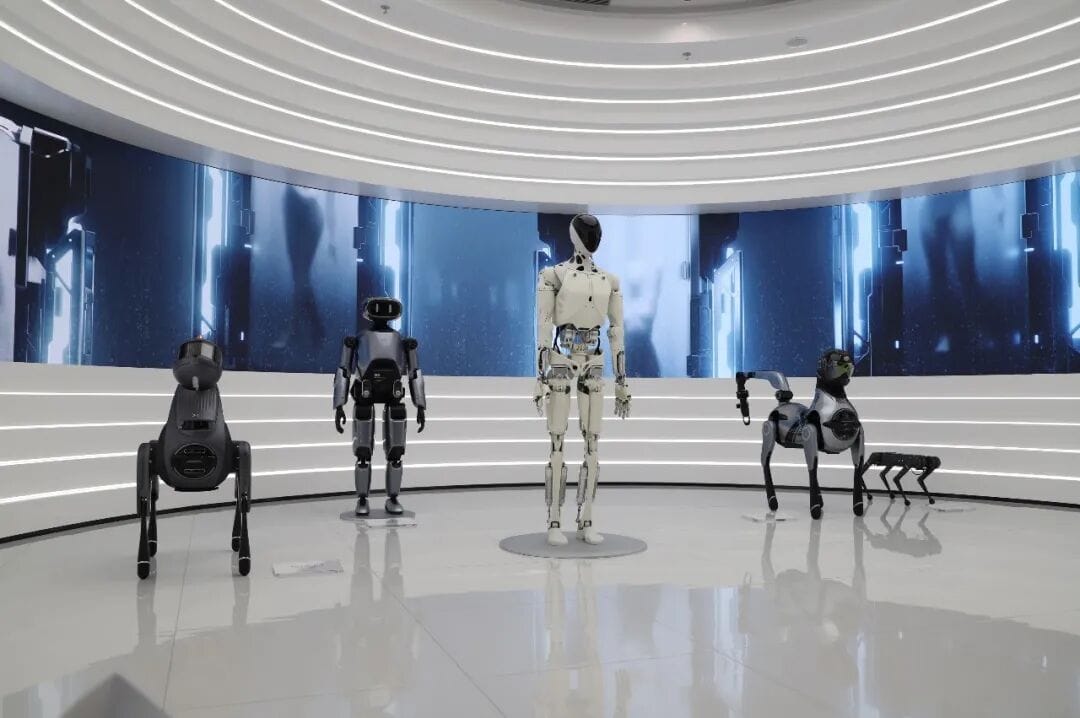
He Xiaopeng defines himself as "a person who uses technology to change the world." During the third-quarter earnings call, He Xiaopeng formally proposed the company's new ten-year vision: to become a "globally-oriented embodied intelligence company." While this may sound abstract, XPeng Motors' technological progress by 2025 is quite concrete. For example, in intelligent driving, the company released its second-generation VLA architecture; and in humanoid robots, the new generation IRON robot made a stunning debut in November.
He Xiaopeng's "pain" is also closely related to this. For example, this year XPeng Motors is betting heavily on the VLA architecture (Vision-Language-Action Model, which is regarded as an "intelligent enhancement version" of the end-to-end solution in the field of autonomous driving) in the field of intelligent driving. He Xiaopeng considered this for more than two months before making this decision.
Previously, he had revealed that the company had invested approximately 2 billion yuan in training the second-generation VLA model.
He stated that the continued improvement in the company's operating conditions has strengthened its commitment to the research and development of "physical AI." He identified AI-powered vehicles, global expansion, and the deep integration of androids with the automotive industry as the three growth drivers for XPeng's future development. He also emphasized that the company is confident of achieving profitability in the fourth quarter of 2025.
However, to realize the vision for the next decade, He Xiaopeng faces challenges beyond just technological innovation and breakthroughs; he also faces new challenges in company management.
The following are some of the key points from this dialogue:
1. Many of the logics in the internet sector are different from those in the automotive sector. I cannot answer what the automotive industry will be like in 2024 and 2025, which means there is a huge potential for strategic combinations in this market.
2. Good management does not necessarily mean a strong system.
3. Startups need to take a gamble when there's a reasonable probability of success. Taking a gamble makes them more determined, leading to more investment of time and money, and potentially increasing their chances of success.
4. For enterprises, it is important to have confidence, but even more important to have self-awareness in order to move forward steadily.
5. The physical world is very similar to technology and manufacturing, while the AI world is very similar to the internet. These two are actually very different. If we have the ability to combine them, we can create a completely new form, which is the blue ocean we hope to find.
6. The most important thing for a company is adversity. People generally think that adversity is when it is at its lowest point, but in fact, the most dangerous time for a company is when it is at its peak.
The following is a transcript of an interview with He Xiaopeng by China Entrepreneur magazine, with some omissions:
From a "Sea of Blood" to a "Blue Ocean"
China Entrepreneur: XPeng Motors' Q3 2025 financial report was very good, with both revenue and profit increasing. You mentioned a concept: from a "bloodbath" to a blue ocean. What is your understanding of a "bloodbath"?
He Xiaopeng: I think the fierce competition in the automotive industry is full of uncertainty. The automotive market is constantly changing every year. In 2024, even some of the well-performing companies in the Chinese automotive industry still faced challenges, while others achieved great success. In fact, as long as you have a strategy and a little bit of luck, the results will be very different.
Now we at least know where the blue ocean is and where that light comes from. The key is to find the right rhythm, match resources, and strengthen our capabilities in order to reach it.
However, my expectations for blue oceans may differ from those of many founders; my expectations are quite high. In China's internet industry, many sectors ultimately only have two or three companies that survive. The reason why these two or three companies can develop steadily, live comfortably, and do different things is, in my opinion, the true state of a blue ocean.
So, throughout my years in car manufacturing, I've been pondering: how can we avoid getting caught up in the "bottom-right corner effect" and achieve longer-term, stable success? The so-called bottom-right corner effect refers to the current perception that bigger and cheaper cars are more successful, leading everyone to crowd into the bottom right corner of the product roadmap. But from a certain perspective, this isn't a particularly effective approach. There are many reasons why a company ultimately succeeds, but one of them is undoubtedly using technology to change many people's lives and win their favor.
China Entrepreneur: So the bottom right corner is a "sea of blood".
He Xiaopeng: The further you look to the bottom right corner, the more bloody it becomes.
China Entrepreneur: In which part of this quadrant do you envision the blue ocean?
He Xiaopeng: I think the middle part of this quadrant is a balanced system. It can't all be in the upper left corner, nor can it be thought of entirely according to the logic of manufacturing.
We recently discussed physical AI. The physical world is quite similar to technology and manufacturing; the AI world is quite similar to the internet. These two are actually very different. If we have the ability to combine them, we can create entirely new forms, which is the blue ocean we hope to find.
China Entrepreneur: To reach the blue ocean you described, you must first navigate the bloodbath. You mentioned that the challenges in the automotive industry change every year. What are the main directions of these challenges in 2024 and 2025? What do you predict might occur in 2026?
He Xiaopeng: I think it's hard to imagine the state of the automotive industry in the past Chinese internet system. First of all, in the internet system, there are often "battles of the best and worst," but these "battles of the best and worst" are usually over within three years, but in the automotive industry, they never end.
Secondly, in the automotive industry, a single auto show can launch more than a hundred new products, and there may be hundreds of brand-new or redesigned products every year, which is something that the internet industry would never have encountered before.
Third, since most internet products were originally free for users, it was difficult to generate a doubling effect or a 50% discount effect. In the automotive industry, if someone said, "I'll give you all my cars," I estimate their cars would sell very quickly, but of course, they would also go bankrupt very quickly.
Therefore, many of the logics in the internet sector are different from those in the automotive sector. I cannot answer what the automotive industry will be like in 2024 and 2025, which means there is a huge potential for strategic combinations in this market.
That's why some people keep saying that when you come from the internet battlefield to the automotive battlefield, you find that the internet is so harmonious, but once you enter the automotive field, you'll find it's completely different.
The "painful" choice of intelligent driving route
China Entrepreneur: You mentioned on your WeChat Moments that you are very satisfied with XPeng's VLA (Vehicle-Assisted Driving) system, but I know that the entire R&D process was actually very difficult. What were the main difficulties?
He Xiaopeng: I think most companies today are still using the old software programming paradigm to think about how to change the world with software, how to define cars with software. In a sense, we are pursuing a deterministic approach in the software world. For example, if I were to write a program today and say that going right is wrong, and we should go straight, it would only take a few lines of code, and then we would test it. But in the world of large-scale AI models, if you say that going right is wrong, it might not listen to you; it might not go forward, but instead go in the opposite direction.
Therefore, you will see a completely new set of capability requirements and challenges, including new changes in the requirements for teams, resources, and infrastructure.
For the past year or so, we've been painfully going through this process—getting more and more people, especially those in leadership positions, to change their original way of thinking. So, the past year has been very difficult for us. If we use software and algorithms, we have deterministic equations; although the upper limit is insufficient, the lower limit is very high. But if we use large models, it's an uncertain equation; it might have a very high upper limit, but the lower limit could also be very low.
Over the past few months, I've been looking at our second-generation VLA, and I'm very happy that it has surpassed many of our previous limitations. I believe that by 2026 or 2027, it can solve many more problems that were previously unsolvable. For example, if you're driving and there's a hole or a sinkhole in the road, how does it (the intelligent driving system) handle this unexpected event? If you use the original software rules, there could be countless combinations of scenarios, but with a model, the problem might be solved using reinforcement learning. This is something that makes me very happy.
But there are also many things that make me unhappy. For example, if the light is red, and you use rules to write the code and algorithms to optimize it, the intelligent driving system should tell you to stop at a red light and slow down at a yellow light. But in reality, traffic laws for yellow lights differ from country to country: in China, you should slow down at a yellow light, while in some countries you should proceed at a constant speed. How do you strike a balance and achieve excellent generalization?
Our previous logic was that we could create a good L2, or an L2 that was infinitely close to L3, but now I see the possibility of reaching L4 at the upper limit. If we are given another 3 to 5 years, perhaps we can reach L5.
China Entrepreneur: You just mentioned the issue of an upper and lower limit. What do the lower and upper limits depend on respectively?
He Xiaopeng: The greatest strength of large-scale models lies in their ability to integrate various types of long-tail data. An example I often use is: someone driving across a bridge at 5 a.m. happens to see the sun rising on the other side, instantly changing from dark to bright. Most people don't encounter this scenario or don't experience it often. Combining and analyzing long-tail data like encountering sunrise on the way to work or sunset on the way home is precisely where large-scale models excel, while rules are not as good at it (in this respect).
Rules excel at simple instructions, such as "If there are no people on either side of this road and no traffic lights ahead, you should go straight." However, when large models execute, the sheer number of logical combinations can lead to perplexing behaviors like changing lanes. From a programming perspective, it might only involve three or four logic statements, but the complex thinking of large models can cause instability in the lower bound. You might think it shouldn't change lanes, but it can list multiple scenarios to justify the lane change, which can be very frustrating.
This is precisely why we incorporated VLA (Vehicle-Assisted Autopilot) and a human-machine co-driving mode into the large-scale model. After all, some people don't want to drive in the far left lane, feeling it's too dangerous at night and that the middle lane is safer; others don't want to drive in the right lane, worried about encountering bicycles or motorcycles; and still others simply don't like driving in the middle lane, without a clear reason, just preferring the left or right lane. This requires VLA to understand people's habits and preferences, memorizing them through communication and dialogue, gradually achieving "I understand you." How to enable the large-scale VLA model to achieve this "understanding you" adjustment is the challenge we currently face.
China Entrepreneur: From the first generation to the second generation of VLA, what kind of painful R&D process did you go through? I heard that when you have internal meetings, sometimes it is even impossible for everyone to continue because you need to reach some consensus and solve some specific problems.
He Xiaopeng: Actually, it was a question of whether or not to make a choice given the highly uncertain goals and processes, as well as the huge R&D investment. I thought about it for a long time, and finally decided to gamble on this path.
China Entrepreneur: When did you finally make up your mind?
He Xiaopeng: Probably between the end of the second quarter and the beginning of the third quarter this year.
We had previously worked on multiple solutions in parallel, but each solution had its strengths and weaknesses and required a lot of resources. I think at this point, someone needs to be willing to make a firm decision.
I think XPeng is a startup, and startups need to take a gamble when there's a reasonable probability of success. Because once they've taken the gamble, they're more determined, investing more people and more money, which may increase their chances of success.
China Entrepreneur: Why did you make this decision at this time? What was your reasoning?
He Xiaopeng: I think this comes from multiple capabilities. I probably can't answer this question. It's a change in our internal technologies that ultimately led me to make this judgment.
China Entrepreneur: Do you need to do some persuasion and communication work internally? Because if you make this adjustment, your colleagues will need to make a lot of changes.
He Xiaopeng: It's very difficult (to communicate). What they really want to ask is, Xiaopeng, with such a large team like ours, how can you prove (that you are right)? I can't say that I acted on intuition, so it was very painful.
Sometimes it really comes down to your intuition, which is a combination of your technical skills, your comprehensive judgment of the business, resources, and trends. In the end, it still comes down to a painful answer: intuition.
My intuition tells me that this is a path to L4 or even L5 in the future, so I must go all out to take it.
I believe that even if China's L2 system is fully developed, it will be difficult to achieve global compatibility. For example, when we drive in Europe, many countries have roads that are decades or even over a hundred years old, making them very narrow and difficult for us to drive. That's why Chinese people prefer to drive large vehicles, while Europeans prefer smaller vehicles because large vehicles are not suitable for driving in Europe.
In narrow, winding roads where even a single driver struggles to navigate, such as the hutongs of Beijing, Chinese L2 companies, including XPeng, conduct specialized testing and achieve high disengagement rates. If we truly want to move towards autonomous driving, Beijing's hutongs are one of the essential problems that must be solved.
Why am I betting so heavily on our next-generation VLA? I believe that only when it can drive well in all four scenarios—highways, main roads, side roads (alleys are side roads), and outdoors—can it be considered the ultimate autonomous driving system.
China Entrepreneur: You just mentioned that the biggest challenge in communication is self-verification. Sometimes, for an entrepreneur, after making a judgment based on intuition, the biggest challenge is the "translation" work, which is to translate your intuition into language that your colleagues can understand. How do you prove yourself? Do you "subdue them if you can't persuade them," or do you rely on other methods?
He Xiaopeng: I think in the end it's a team effort, which involves a lot of communication and also hoping that the technology team can provide more evidence. There were many times when we had to adjust their OKRs, proactively tell them that everyone would share the responsibility in the end, and help them persuade their colleagues and subordinates. It was a painful process that took several months to implement.
I think many AI companies in China that combine hardware and software will encounter this difficulty in the future, because you don't know if this path is 100% viable. Using software makes things clearer, but using models will be a chaotic state. But chaos has another advantage: it may reveal some new things that were not previously thought of or imagined.
You may not have encountered it, but others may. Large models combine different long tails in certain environments, creating an "emergence".
China Entrepreneur: What technological routes did you abandon for this?
He Xiaopeng: This means we've moved from the realm of small end-to-end models to a large end-to-end model, representing the possibilities of different capabilities. I'm talking about strengths, mid-range capabilities, and weaknesses. We're very excited about our strong strengths right now, and we're also working hard to solve countless mid-range problems.
China Entrepreneur: Could you give a specific example of a medium-sized board?
He Xiaopeng: For example, how to judge traffic lights, how to reliably ensure that traffic lights are 100% problem-free—that's a mid-level problem. In the digital world (large-scale models), we often say that this problem can be solved 98%, which is already very impressive. But sorry, in the physical AI world, there's still 2% of unsolved cases. You might run a red light, or not start moving when the red light turns green. That 2% problem is too exaggerated. Can we turn it into solving 99.99%? This seems like just moving the decimal point two places to the right, but the difficulty is enormous.
China Entrepreneur: You have also developed your own chips, which were successfully taped out last year. This is a very important link in the industrial chain.
He Xiaopeng: The original autonomous driving logic did not require high computing power. High-definition maps can solve the challenge of "God's eye", and LiDAR can deal with abnormal scenarios. This not only greatly reduces the programming difficulty, but also greatly reduces the requirements for central computing power.
Large-scale models have virtually unlimited computing power requirements, with no clear upper limit in sight. Therefore, to truly succeed in this field, companies must develop their own computing power and a complete compilation environment, and master quantization. This poses a huge challenge for physical AI companies with software attributes, such as those specializing in autonomous driving, and this issue is unavoidable if they want to scale up.
In the future, there won't be a wide variety of chips and different levels of driver assistance systems. There will likely be two main types: one is a simple assistance type, and the other is a powerful, high-level type.
Mass production of robots to be achieved by the end of 2026
China Entrepreneur: After you unveiled your latest robot, you did something quite unusual—you cut open its skin in public, and you even choked up. I found that video strange, because there should have been many other things that would have made you choke up. Why were you so emotional at that moment?
He Xiaopeng: When you're in close contact with something for a long time, you start to feel like it's your partner. The robot was made by our team, and many people don't understand: why prove it to others by cutting open the machine you made? We even feel that cutting open the product we've nurtured is like wronging a child we've cherished. Some people on our team also think it's unnecessary: it's okay if outsiders don't understand, don't know, and don't believe.
At that moment, I truly considered it a partner and felt sorry for it being wronged. We were extremely reluctant and heartbroken, but ultimately we saw more and more people turn from skepticism to belief, which will drive the development of the robotics industry. So I firmly believe that it was worthwhile. If it had thoughts, it might also feel pain and injustice.
China Entrepreneur: You poured your emotions into it, right?
He Xiaopeng: Yes.
China Entrepreneur: Could you share the current state of development in the robotics industry?
He Xiaopeng: I think robots are a bit like the VLA autonomous driving I just talked about. In the past, they were written in software, so they had determinism, but their level was not high enough, that is, their generalization was very poor. We are trying to rethink robots using large models.
Because a car only has one joint or one motor, it can only move forward, backward, left, and right. But a robot now has over eighty joints and over eighty motors, making it impossible to control with rules. In this situation, the entire industry is exploring or choosing the future form of robots. For example, a proprietary, customized robot, specifically designed for a particular industry, with more predictable capabilities, like the robotic arms of the past, such as sweeping robots and logistics robots.
But I think there are other forms. First, there are comprehensive, humanoid, generalized robots, which are better suited to solving extremely long-tail problems. Second, we've seen changes in the physical AI world today, and I think these changes represent the upper limit of development that has only been amplified in recent years. I firmly believe that all-around robots with some generalization ability and some intelligence will soon emerge in this world. As long as there is ample funding and technology, like with China's new energy vehicles, I believe that robots will definitely change everyone's lives in the next 10-20 years.
China Entrepreneur: Compared with other companies, what are XPeng Motors' advantages in making robots?
He Xiaopeng: First, we are a company that manufactures autonomous or AI-powered cars, which solves many AI and sales problems. We have a deeper understanding of mass production, quality, and safety.
Secondly, compared to many car companies, we considered from the outset how to combine hardware and software, how to use AI to drive the enterprise and products, how to conduct full-stack in-house development, and how to achieve cross-domain integrated innovation. We started this a little earlier than many car companies. Therefore, I think we have a greater advantage in these two aspects, whether it's a robotics company or most robot-oriented car companies.
At this technology day, our robot only demonstrated its ability to "walk." I believe that in six months, everyone will see a 50 to 100-fold increase in its combined capabilities, at which point it will truly be able to help people, even just a little. At this rate of iteration, its capabilities will undoubtedly undergo a dramatic transformation in one or two years, or three to five years. I very much look forward to this kind of robot truly helping more people in the coming decades.
China Entrepreneur: Your goal is to achieve mass production by 2026?
He Xiaopeng: End of 2026.
China Entrepreneur: What is your concept of mass production?
He Xiaopeng: It represents the next stage of control-type robots. It can be managed through interaction, such as natural language, has a higher safety factor, can be better generalized, and is truly marketable to consumers (toC).
China Entrepreneur: It's actually still a consumer-facing (C-end) scenario. Are you currently using it in your factory primarily for data collection?
He Xiaopeng: In reality, the vast majority of current mass production is for scientific research, demonstration, and industrial applications. However, I personally feel that humanoid robots face many challenges in industrial applications, similar to those encountered by our own robots in factories.
China Entrepreneur: Tell me more about the challenges you've encountered in your factory.
He Xiaopeng: There are three challenges for humanoid robots to enter Chinese factories: First, the cost and durability of robot hands are not good, and they are not cost-effective; second, the cost of manufacturing in China is still lower than that in Europe and the United States; third, the requirements for the complexity of functions in China's manufacturing industry are higher than those in Europe and the United States.
One striking difference we've recently observed is that many factories in Europe and America have very clear operating manuals, specifying three things to do in situation A and four things to do in situation B. In contrast, China didn't have such a set of rules; it was a random, dynamic, and highly generalized combination of behaviors.
China Entrepreneur: So the foreman role is particularly important in Chinese factories.
He Xiaopeng: I think robots entering factories will definitely happen in the future, but it may not be the first step. However, it might be a good option for a good humanoid robot to enter factories in Europe and America.
Organizational Change: Control the Upper Limit, Raise the Lower Limit
China Entrepreneur: I remember at the beginning of 2025, you said that your organizational development goals were just starting out, and by the end of 2025, you wanted to achieve another, higher-level goal. Now that the year is almost over, how do you view the changes in the organization?
He Xiaopeng: I think we've done an organizational upgrade, and most of the middle and senior management have already done so. This adjustment didn't start from the grassroots level like many companies do; instead, it proceeded from top to bottom, from the head and neck to the shoulders, and finally to the waist. I've always believed that if there are any problems, they are management's problems; the vast majority of those at the grassroots level are fine.
We've also optimized many processes, systems, and tools, and are advancing various infrastructure developments to improve the efficiency and effectiveness of the entire system. However, even so, considering XPeng's current scale of 28,000 employees, our management is still in its early stages, having only achieved initial management stability.
Next, we have a three-year plan to move steadily and far from the previous three years into the new three years from 2026 to 2028.
Sometimes you may admire well-managed companies and want to learn from them, but in reality, their development paths are very different. Sometimes they are not called "south slope" and "north slope", but two mountains. In the end, you still have to find a path that suits you.
I've always believed that management is a practical science, so in the next three years, I hope to lead the company from basic management to a more advanced level.
But even good management doesn't guarantee a strong system. Refining the system may be something we'll need to do for the next ten or twenty years, and it's something we find painful.
China Entrepreneur: Good management doesn't necessarily mean a strong system. Behind this statement lies a lot of hard-won experience. What are your thoughts on this? What is the difference between good management and a strong system?
He Xiaopeng: Many small companies are actually very small teams, and their fighting ability is enough. But as your team grows larger, you may need the ability to fight on a large scale.
I believe there are two capabilities within our system that we are far from achieving: First, how to enable individuals within a system who are at a 80-point level to reach a 120-point level, thus combining the strengths of many individuals into the strength of an organization. While this may not guarantee a 200-point outcome, it can ensure a sufficiently high minimum standard.
Secondly, a better system is needed to adapt to different founders. If the original founders or managers retire, how can we ensure that a particularly incompetent new generation won't lead the company astray? This is also something the system needs to address.
I think one approach is to raise the lower limit, and the other is to control the upper limit.
China Entrepreneur: You've been carrying out this kind of systematic reform for the past two years?
He Xiaopeng: I think we are just making management changes today, and I expect to reach the edge of the system in the next few years.
China Entrepreneur: There's a "10,000-employee trap" for companies, meaning that when a company reaches 10,000 employees, it presents a significant challenge to its management and organizational capabilities. XPeng Motors currently has over 20,000 employees. When did you first experience this trap? Because managing a manufacturing company is different from managing an internet company. You're actually managing a manufacturing company, but it also incorporates elements of an internet company, making the difficulty double.
He Xiaopeng: Many companies with 10,000 employees are easy to manage because they are divided into many business groups, each with only 1,000 to 2,000 employees. In reality, it is still a management logic for a company with 1,000 employees.
The automotive business is more complex than the internet business, with two major additional variables: first, it has many dependencies, such as the supply chain; and second, it has numerous relationships related to brand sales.
In reality, there are still potential challenges. First, there is quality and safety; second, there are policies and regulations; and third, there are globalization issues. Therefore, I think the complexity of managing 10,000 people in the automotive industry far exceeds the scale of a single business unit of 10,000 people in an internet company, and is even 5 to 10 times more difficult.
The most important thing for a company is adversity. People generally think that adversity is when the company is at its lowest point, but in reality, the company is in greater danger when it is at its peak.
China Entrepreneur: The summit is actually the greatest adversity, you just haven't experienced it yet.
He Xiaopeng: If adversity occurs at the peak, the resulting changes in values can often be more damaging to a company than if it were at the bottom. For a company, it's essential to have confidence, but even more important is self-awareness, and the ability to move forward steadily. Therefore, I define the most important word for XPeng Motors' past three years and next three years as "stability."
I hope that by slowing down appropriately and controlling my emotions and desires, I can ultimately succeed more easily.
China Entrepreneur: The problems you encountered before were not at the peak, but at the bottom, right?
He Xiaopeng: No, I think the problems encountered at the bottom come from the seeds sown at the peak. So when you're at the bottom, you have to rethink things, find the thread from the surface to the bottom, and try to unravel the mystery. I think the hardest thing at the bottom is that you have to withstand a lot of pressure and do things that many people think are not important enough.
This is extremely painful, and most people don't agree with it. This is what we encountered in the past few years. Now that our organizational capabilities, sales capabilities, management capabilities, and momentum are slightly better, why are we still so cautious? We shouldn't set high goals for ourselves—we don't expect to set high goals for ourselves next year—but we also can't set low goals either. The key is to find a way to go further while maintaining stability.
China Entrepreneur: Actually, XPeng Motors faces challenges different from other manufacturing industries. Other manufacturing processes may be relatively stable, but yours changes very rapidly. For example, after changing the intelligent driving solution to VLA, the suppliers or supply chain may change. You don't need as many sensors, but you still need to increase investment in chips and other areas, which is also a challenge.
He Xiaopeng: Absolutely. Therefore, in the automotive industry, it's best to think long-term and avoid making changes arbitrarily. Every change results in a huge loss—it could be in costs, trust, or all sorts of other losses.
China Entrepreneur: You mentioned in early 2025 that when you made changes in 2024, you adjusted many people, laid off many people, and hired many people. Will there be many more personnel changes in 2025?
He Xiaopeng: 2025 is much better. 2024 was the most painful year; I ate dozens of meals, asking everyone to have confidence in the company, only to find that we had lost over 30% of our staff. In 2025, everyone's confidence in the company has gradually recovered, and this year our employee turnover rate has dropped significantly, which makes me very happy.
At the same time, we will focus more on internal training and incubation, and I believe many talented individuals will emerge from within our ranks. Over the next three years, our recruitment will shift from primarily hiring experienced professionals to focusing on graduates, as we believe many outstanding graduates will become future experts and managers.
China Entrepreneur: Looking back on 2025, what were some of the most difficult decisions you made?
He Xiaopeng: I feel like I'm making important decisions every day. If I had to pick a difficult decision, I'd say VLA was one of them, because I considered it for about two months. But how to formulate next year's strategy, and how manufacturing companies can be less stressed and thrive in the future, are things I've been thinking about for even longer.
I think that after starting a business, especially one on such a large scale, you won't have to make painful decisions for a long time. You will be able to think quickly, make quick decisions, make dynamic adjustments, and iterate on yourself.
China Entrepreneur: From an internet company entrepreneur to the head of a manufacturing company, your respect for manufacturing was gradually built up. What were the most difficult hurdles along the way? Have you fully established your respect for manufacturing now?
He Xiaopeng: First, nothing is more real than firsthand experience than what others tell you or what you learn from books; second, it requires extremely strong lateral learning ability to re-examine the logic of business and industry, as well as the correct way to build a startup.
The larger the company, the more supply chain companies it affects, and the deeper its impact on the well-being of more families. This forces you to shoulder a stronger sense of responsibility, ensuring that the results of your work benefit more people. This is the responsibility of manufacturing and physical enterprises like ours.
I often tell my friends that when starting a business for the first time, you want to make it big. The happiness index of starting a business in the digital field is higher than that of starting a business in the physical world. Although both are not easy, the level of difficulty and sustainability are completely different, and the resulting perceptions are also vastly different.
Ultimately, I just want to be someone who uses technology to change the world. To truly make products change the world and make it a better place, it's not enough to just have good software; we also need to ensure its implementation in the physical world—both hardware and software are essential for this to happen.