
XPENG Launches YOYO Robotaxi Brand in China’s Shift to Commercial Autonomy
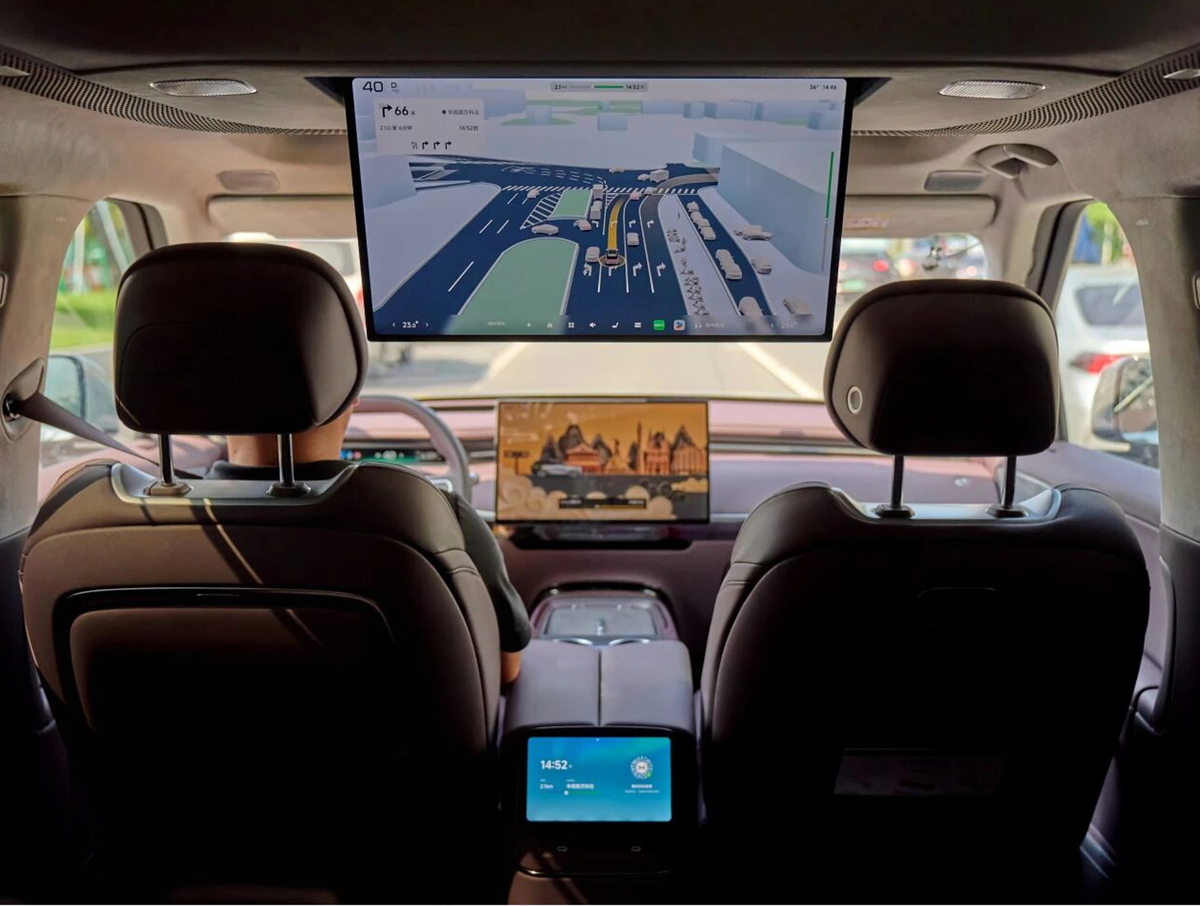
XPeng has formally branded its robotaxi service "XPENG YOYO"and simultaneously launched a public-facing WeChat mini-program, marking the company's pivot from closed-loop R&D validation to open commercial operations — a threshold few Chinese L4 autonomous driving ventures have crossed at this speed.
The dual launch, which went live on the company's official website alongside a dedicated robotaxi product page, signals that XPeng is accelerating its timeline to revenue-generating autonomous mobility faster than the industry anticipated. Within a single calendar year, the Guangzhou-based automaker has compressed what traditionally takes competitors three-to-five years — from vehicle mass production and full-chain verification to employee pilots, fee-based internal testing, and now public user onboarding — into roughly six months.
Initial market reaction reflects growing investor attention on XPeng's differentiated positioning: unlike pure-play L4 startups that operate as fleet owners, XPeng's publicly stated model — articulated by Chairman and CEO He Xiaopeng — casts the company as a technology provider and ecosystem enabler, monetizing through hardware sales, software licensing, and commission-sharing while offloading fleet operations to global partners.
Milestone Timeline Reveals Compressed Commercialization Sprint
The pace of XPeng YOYO's development trajectory stands out even against China's increasingly competitive autonomous driving landscape. In May 2026, the company rolled its robotaxi production vehicles off the assembly line. By July, it had stitched together the full service chain — online ride-hailing, autonomous pickup, and drop-off — and launched employee beta testing. In August, XPeng secured a remote-testing qualification from Guangzhou municipal authorities, permitting driverless road tests (no safety officer in the driver's seat) across the city's designated Level 1, 2, and 3 test corridors.
A fee-based internal pilot followed, priced at RMB 1 (approximately US$0.14) per ride — a deliberately token fare designed to stress-test payment infrastructure and service workflows rather than generate revenue. The public mini-program launch now extends that operational learning loop beyond employees to external users, with access gated through an invitation-code system that allows XPeng to manage scaling while accumulating real-world behavioral data.
Proprietary Silicon and Map-Free Architecture Differentiate XPeng's L4 Approach
At the core of XPENG YOYO's technical proposition is a hardware-software stack that XPeng argues is structurally distinct from legacy L4 architectures. Each production robotaxi is built on the XPeng GX platform and equipped with four proprietary Turing AI chips, delivering a combined on-vehicle compute capacity of 3,000 TOPS — a figure XPeng claims is the highest of any production vehicle globally as of mid-2026.
The system runs XPeng's second-generation VLA (Vision-Language-Action) large model and, critically, operates without high-definition maps or LiDAR — a deliberate architectural choice that reduces per-vehicle hardware costs and, more importantly, eliminates geographic data dependency. This makes multi-city and cross-border deployment substantially faster than HD-map-dependent competitors, which must conduct labor-intensive mapping campaigns before entering each new city.
The map-free, model-generalization approach also creates a compounding data advantage: every ride enriches the training corpus, theoretically widening the performance gap over time. XPeng's ability to bridge L2 advanced driver-assistance systems (ADAS) — deployed across its consumer vehicle lineup — with L4 autonomous operations means the company is drawing on a far larger real-world driving dataset than standalone robotaxi operators can accumulate.
"YOYO" Brand Encodes Both Lifestyle Positioning and Global Ambition
The naming decision carries deliberate strategic weight. The Chinese name 小鹏悠游 (Xiǎopéng Yōuyóu) draws on the characters 悠 (leisurely, unhurried) and 游 (travel, roam) to evoke a premium, stress-free mobility experience — a direct contrast to the utilitarian "get from A to B" framing that has dominated autonomous driving marketing. The cabin experience reinforces this: passengers can pre-set cabin temperature and fragrance via the mini-program before boarding, and the rear compartment features zero-gravity seating, massage functions, and an entertainment display with integrated music and video streaming services.
The English name XPENG YOYO prioritizes phonetic simplicity and cross-linguistic consistency — a brand architecture decision that signals XPeng's intention to enter international markets under a unified identity, consistent with He Xiaopeng's stated goal of positioning the robotaxi business as a global solution provider rather than a China-only operator.
On the company's official website, XPENG YOYO now sits alongside AI Cars, Robotics, Flying Cars, and the Turing AI Chip as one of five core business pillars — a structural placement that underscores management's view of autonomous mobility as central to, not peripheral to, XPeng's long-term value creation thesis.
Asset-Light Model Tests Whether Hardware Margins Can Fund an Autonomous Ecosystem
XPeng's chosen business model warrants scrutiny. By positioning itself as a technology and platform provider — selling integrated solutions comprising the vehicle platform, autonomous driving software, and AI capabilities to operating partners — the company is effectively betting that hardware and software margins can sustain the business without the capital intensity of owning and maintaining a large fleet.
This approach mirrors, in broad strokes, the platform economics that have made software-defined businesses attractive to investors. However, the model's success depends on two variables that remain unproven at scale: whether operating partners can run profitable unit economics on XPeng's platform, and whether XPeng's commission-sharing structure can generate sufficient recurring revenue to justify continued R&D investment.
The current invitation-code rollout phase, while commercially modest, is strategically critical. Each verified external user ride generates operational data, service quality metrics, and — eventually — the track record that prospective global partners will scrutinize before committing capital to fleet deployment.
Impact Assessment: What YOYO's Launch Means for China's Autonomous Mobility Sector
XPeng's public launch arrives as China's robotaxi sector undergoes rapid consolidation. Baidu's Apollo Go continues to expand its Wuhan and Beijing operations, while WeRide and Pony.ai have both pursued international listings to fund scaling. XPeng's entry introduces a new competitive variable: a consumer automaker with an existing ADAS data moat, proprietary chip infrastructure, and a production vehicle platform purpose-built for autonomous ride-hailing.
For investors, the critical metrics to watch in the next two quarters are: the pace at which XPeng converts invitation-code users to regular riders, the geographic expansion of Guangzhou test corridors, and any announcements regarding the first wave of global operating partners. A credible partnership announcement — particularly one involving a Southeast Asian or Middle Eastern fleet operator — would materially validate the asset-light thesis and represent a significant positive catalyst for the stock.
For the broader Chinese autonomous driving supply chain, XPeng's map-free, chip-integrated architecture signals that the next competitive frontier is not sensor count or mapping coverage, but model generalization capability and on-vehicle compute efficiency.
Related Coverage:
Xpeng Consolidates Product Lines to Four to Two as Sales Growth Stalls and Losses Persist
XPeng’s EV Growth Hits a Supply Wall as Its Physical AI Bet Gains Momentum