
XPeng's He Xiaopeng Takes Robot CEO Role, Targets IRON Mass Production by End-2026
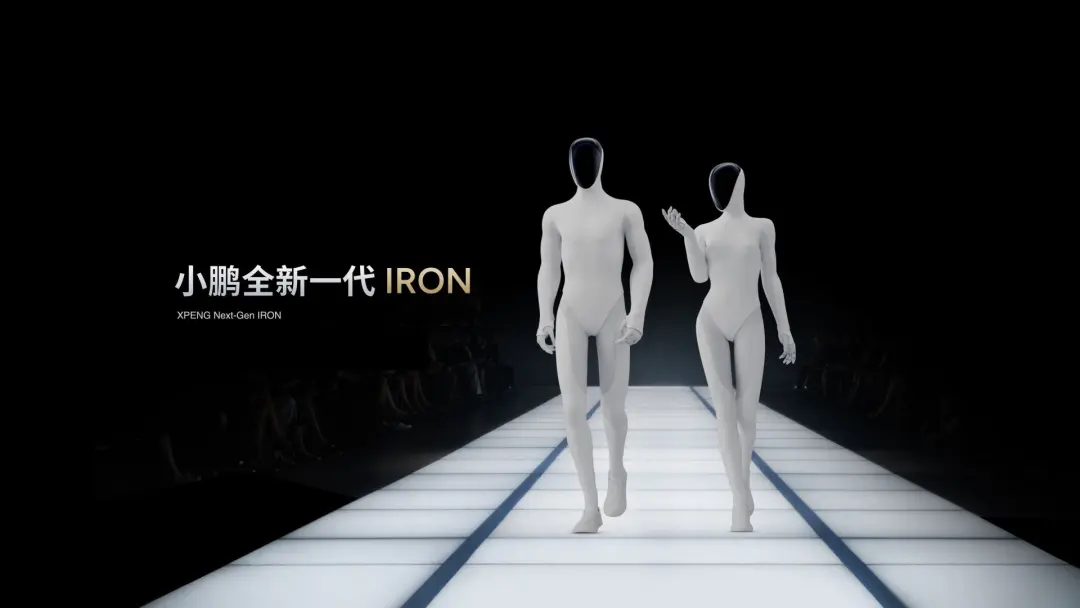
The chairman of one of China's leading electric vehicle makers is doubling down on humanoid robotics, personally seizing operational control of the unit and setting a hard deadline that signals XPeng is no longer content to be defined solely by its cars.
In an internal letter dated June 10, 2026, He Xiaopeng, chairman and CEO of XPeng, announced he would concurrently assume the role of CEO of the company's robotics division — a structural move that elevates the humanoid robot program from a side project to a board-level strategic imperative. The letter frames the decision in explicitly transformational terms: XPeng is repositioning itself from an "intelligent automobile company" to a "Physical AI company," a pivot with direct implications for how investors should value the stock and how the broader China robotics supply chain should calibrate demand.
The announcement arrives as XPeng's humanoid robot, designated IRON, enters what the company calls a "mass-production sprint phase." At the end of May 2026, the company convened an internal mobilization meeting attended by nearly 1,000 employees drawn from its automotive, powertrain, manufacturing, testing, and general intelligence divisions — a cross-functional assembly that underscores the scale of internal resource reallocation now underway.
He Xiaopeng Draws a Direct Line to XPeng's G3 Inflection Point
He's internal letter explicitly invokes the company's own history as a strategic benchmark. He characterizes IRON's current development stage as equivalent to where XPeng stood approximately eight years ago — on the eve of delivering its first production vehicle, the G3 SUV — a moment that proved to be the company's commercial inflection point. The analogy is deliberate: it signals to employees and, implicitly, to the market that management views the robotics unit as a business of comparable foundational significance, not a speculative R&D line item.
The stated target is unambiguous: achieve mass production of IRON by the end of 2026. He said the company will redirect automotive-derived capabilities — supply chain relationships, manufacturing process know-how, and global expansion infrastructure — into the robotics division without reservation. For a company that has spent years building out a vertically integrated EV production system, the transfer of those institutional competencies represents a meaningful head start over robotics-native startups that lack comparable manufacturing depth.
Retail Showrooms Serve as the First Commercial Proving Ground
XPeng's initial commercialization pathway for IRON targets the company's own dealership and showroom network, where the robot will be deployed in customer-facing roles including navigation assistance and sales guidance. He's letter indicates the company views this not merely as a pilot but as a deliberate wedge into a broader retail automation market, with ambitions to extend into higher-value transactional roles such as cashier functions.
The choice of captive retail venues as the launch environment is strategically conservative and financially logical. It allows XPeng to accumulate real-world interaction data in a controlled setting, iterate on hardware and software simultaneously, and demonstrate commercial viability to prospective third-party clients — all while avoiding the reputational risk of early-stage failures in uncontrolled public environments. He explicitly stated that XPeng's differentiation lies in building robots designed for close human proximity and natural-language interaction, contrasting this with competitors whose robots operate at a distance or rely on cloud-based processing rather than on-device intelligence.
Full-Stack Vertical Integration Defines the Competitive Moat
He's letter outlines a product philosophy that sets IRON apart on three axes: anthropomorphic design prioritizing elegance and safety over raw capability; on-device natural language processing rather than cloud-dependent cognition; and full-body enclosure with lightweight movement, SEP compliance, and data privacy architecture. The emphasis on local processing is particularly noteworthy in the context of China's evolving data governance landscape and the sensitivity of in-home AI deployments.
To support this architecture, He confirmed that XPeng is investing in proprietary large-scale data centers and dedicated mass-production facilities — infrastructure commitments that imply substantial capital expenditure and signal the company is building for a multi-year competitive horizon rather than seeking near-term licensing or partnership revenue.
Global Markets Enter the Roadmap as Domestic Rollout Advances
Beyond the domestic launch, He outlined a global commercialization thesis for IRON, suggesting that the commercial logic for humanoid robots may prove more immediately adaptable in overseas markets than in China. The company indicated it has engineered IRON's hardware, software stack, data privacy protocols, and total cost of ownership with international regulatory and commercial requirements in mind from inception. He signaled that overseas robot deployments could materialize as early as 2027, running parallel to the domestic scale-up.
This global-from-day-one positioning mirrors the international expansion playbook XPeng has executed on the EV side, where it has progressively entered European and Southeast Asian markets. If the robotics unit replicates that trajectory, it could open a second revenue vector in markets where labor costs make humanoid automation economics more compelling than in China's still-competitive manufacturing labor environment.
Impact Assessment: What the Pivot Means for Investors and the Supply Chain
For XPeng shareholders, He's dual-CEO structure concentrates execution risk at the top while removing organizational ambiguity about resource prioritization. The robotics unit now competes for capital and talent on equal footing with the core EV business — a trade-off that could pressure near-term margins if automotive volumes do not continue to scale. Conversely, a successful IRON mass production by December 2026 would provide a tangible proof point ahead of any potential robotics-focused capital markets activity.
For China's humanoid robotics supply chain — which includes component suppliers in servo motors, sensors, and AI inference chips — XPeng's mobilization of nearly 1,000 cross-functional staff and its commitment to proprietary manufacturing infrastructure represents incremental demand that could benefit domestic tier-one suppliers. The company's insistence on full-stack in-house development, however, limits the revenue opportunity for third-party software and systems integrators.
The broader competitive context matters: XPeng enters this race alongside domestic rivals including Unitree Robotics and Leju Robotics, as well as the shadow of Tesla's Optimus program internationally. He's decision to personally lead the unit suggests XPeng believes the window for establishing a durable market position is narrow — and that organizational speed, not just engineering capability, will determine the outcome.
Related Coverage:
XPeng Humanoid Robot's Realistic Walk Sparks "Human Inside" Speculation on Social Media