
Zhang Xue Moto's 60 Billion Yuan Valuation Bet: When a Founder Becomes the Only Distribution Channel That Matters
The most expensive problem in Chinese consumer hardware is not manufacturing — it is the cost of being believed. zxmoto has found a way to eliminate that cost almost entirely, and Sequoia China just paid RMB 6 billion (US$833 million) in implied valuation to confirm it.
Sequoia China's August 2026 Series A participation, following Zhejiang Venture Capital's RMB 90 million (US$12.5 million) injection in January, marks the sharpest valuation inflection in China's motorcycle sector in recent memory: from a RMB 100 million angel-round post-money valuation in 2024 to RMB 6 billion in under two years. The arithmetic is striking, but the underlying logic is more so. What Sequoia is pricing is not a factory in Chongqing's Liangjiang New Area — it is a trust-distribution infrastructure that traditional motorcycle brands have failed to build despite spending hundreds of millions in dealer subsidies and above-the-line advertising.
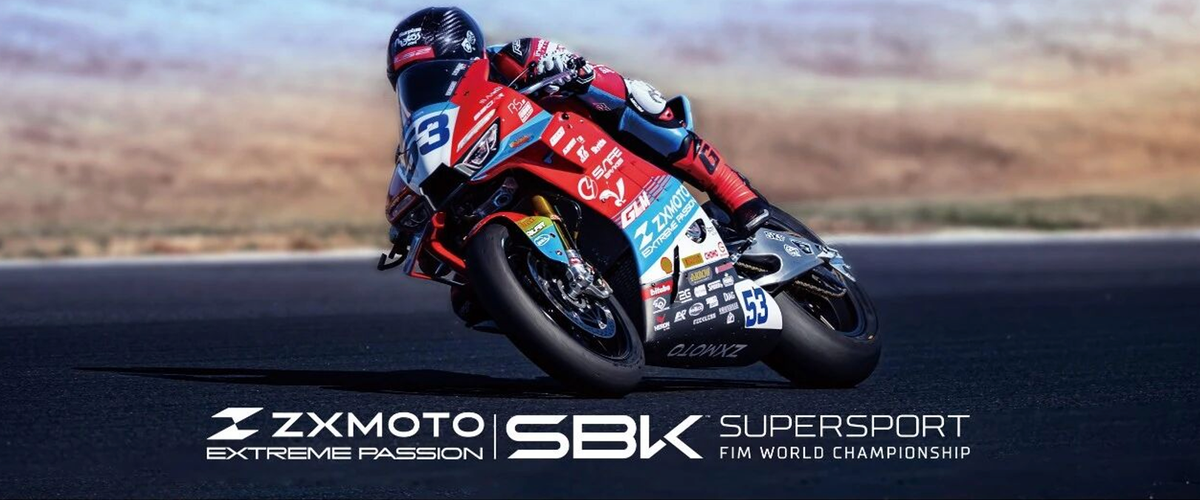
The October calendar compressed the argument into a single week. On Oct. 11, the Canton Fair awarded zxmoto's 820RR its highest design honor, the Supreme Gold Award. On Oct. 18, the World Superbike Championship (WSBK) closed its 2026 season in Jerez, Spain, with the brand recording six race victories, a rider runner-up finish, a team runner-up finish, and a manufacturers' third-place result — results that physically displaced Ducati and Yamaha from positions they have occupied for decades. On Oct. 25, founder Zhang Xue returned to his home county of Mayang, Hunan, and rode a modified MX450 across the Jinjiang River's surface for 40.74 kilometers, setting a Guinness World Record in a livestream that simultaneously sold local specialty produce to viewers. Four distinct media verticals — sports, politics, industry, and entertainment — were occupied in overlapping cycles. The efficiency is not accidental.
Tracing the Asset That Sequoia Actually Acquired
Analysts attributing zxmoto's rise to "founder charisma" are describing the surface correctly but explaining the mechanism poorly. The more precise framing is that Zhang Xue has constructed a channel, not a campaign — one that converts attention into transactions continuously and at near-zero marginal cost per unit of trust generated.
The infrastructure has three interlocking components.
Racing Validates Claims Before Marketing Can Assert Them
The 820RR's three-cylinder engine peaks at 16,000 rpm. Its domestic content rate stands at 97%. Engine management, electronic control units, and the frame — the three components that define a motorcycle's engineering identity — are 100% proprietary. On a product brochure, these figures are self-reported claims. On a WSBK timing sheet, they become third-party certified facts. The distinction matters enormously to buyers of large-displacement motorcycles, a customer segment defined by technical literacy and brand skepticism.
Zhang Xue's WSBK commitment also creates a research dividend that conventional marketing cannot replicate. Brake, thermal, and power-delivery data gathered under race conditions — sustained loads that consumer testing protocols do not reach — flow directly back into civilian model calibration. The racing budget, therefore, partially reclassifies as research and development expenditure. In 2025, zxmoto posted a net loss of RMB 22.78 million while committing RMB 69.58 million to R&D — a ratio that signals deliberate investment sequencing rather than financial distress.
Weaponizing Transparency to Defeat Cheaper Competitors
The brand's domestic sales trajectory reflects this positioning. In September 2026, zxmoto recorded 9,979 retail units in the 250cc-and-above displacement category, ranking first among domestic brands in that segment and surpassing established players including CFMoto — a company with two decades of large-displacement manufacturing experience. For a brand whose first production motorcycle reached consumers less than two years prior, the velocity is anomalous by any industry benchmark.
The anomaly traces back to a decision made on March 21, 2026, when the 820RR opened for reservations. The product launch notice carried an unusual restriction: riders with less than one year of licensing history were prohibited from purchasing. Dealers who violated the rule faced a RMB 5,000 (US$694) penalty payable to any customer who reported the infraction. Several prospective buyers filed complaints with the Liangjiang New Area Market Supervision Bureau.
Zhang Xue's public response — "I want fewer people to die" — was followed by an explicit acknowledgment that the restriction would cost 10% of sales volume. The Ministry of Public Security's Traffic Management Bureau subsequently issued a public endorsement of the policy. The sequence is instructive: a genuine revenue sacrifice triggered an institutional validation that no advertising budget could have procured, because the validation's credibility depended precisely on the sacrifice being real.
This dynamic — short-term margin destruction generating durable trust that competitors cannot replicate without accepting equivalent losses — recurs throughout zxmoto's operating history. When multiple used-vehicle dealers posted videos in June 2026 alleging rust defects across more than 500 component points, Zhang Xue's response bypassed legal letters entirely. He livestreamed an inspection of the disputed part — a brass fitting that oxidizes green, not red — then parked a zxmoto MX450 alongside Honda and Yamaha comparators in a seaside iron cage for a 24-hour continuous livestream, repeated monthly for up to six months. The dealers retracted their videos. The challenger's legal exposure was zero. The brand's credibility cost was zero.
Weekly Livestreams Replace a National Dealer Network
Every Wednesday, Zhang Xue opens a live channel for direct user complaints. The mechanism has processed more than 1,000 feedback items over the past year. Critically, responses carry contractually enforceable terms — repair delays exceeding 10 days trigger compensation covering the user's transportation costs. This transforms customer service from a cost center managed behind closed doors into a publicly audited accountability function.
The WSBK season closing coincided with a broadcast appearance on China Central Television's "Long March Tribute" gala on Oct. 22, where Zhang Xue delivered a 30-second statement framing his motorsport ambitions as a personal "Long March." The clip became the most-shared segment from the evening's programming. Three days later, the Mayang Guinness attempt simultaneously promoted local products — rock candy oranges and traditional brown sugar — to the livestream audience.
These are not spontaneous moments. They are the output of a founder who understood media logic at age 19, when he telephoned Hunan Television's Late Night program in 2006 to demand coverage of a rider with no results and no team, then chased the production crew's vehicle for more than 100 kilometers through rain to force a second take. That chase — generating footage more compelling than any produced advertisement — already demonstrated an intuition about the economics of earned media that has since scaled into a company valued at RMB 6 billion.
Following his March 2026 WSBK podium finish in Portugal, Zhang Xue's Douyin account gained 1.336 million followers in three days and crossed 5.24 million within seven days. Related topic hashtags accumulated over 20 billion views across platforms. The customer acquisition cost embedded in those numbers is, to a conventional motorcycle brand evaluating dealer network economics, essentially incalculable.
Identifying the Structural Risk That No Valuation Model Can Easily Price
The model's vulnerability is identical to its strength. A channel built around a single individual concentrates systemic risk in that individual's continued availability, judgment, and physical capacity. Zhang Xue has noted that inbound traffic now prevents him from commuting by motorcycle. Crowds regularly gather outside the Chongqing facility. A single consequential misstep — a product failure at the wrong moment, a public statement that cannot be walked back — would travel through the same high-velocity distribution infrastructure that currently amplifies successes.
More structurally, the transition from a founder-as-channel to an organization-as-brand has historically been the point at which IP-led consumer companies either institutionalize their trust assets or watch them degrade. Zhang Xue's stated five-year target — capturing over 50% of international premium brands' large-displacement market share in China — requires manufacturing scale, supply chain depth, and after-sales infrastructure that a founder's Wednesday livestream cannot substitute.
The MX450's planned MXGP campaign in 2027, with two China-hosted rounds, and the 450 Rally Enduro variant's scheduled Dakar entry in January 2027, will extend the racing validation strategy into additional segments. At the Canton Fair, Zhang Xue recruited a title sponsor for the Dakar program in real time, with a corporate representative exchanging contact information on the exhibition floor. The informality was deliberate signaling: the pipeline from attention to commercial transaction remains direct and frictionless.
Whether zxmoto can transfer that frictionlessness from its founder to its institution is the question that the RMB 6 billion valuation has bought Sequoia China the right to find out.
Related Coverage:
China's Motorcycle Industry Rides Back as a Global Challenger
As European Manufacturers Crumble, Chinese Motorcycle Giants Are Seizing The Continent