
Alibaba’s New ATH Unit Pushes “Meoo” No‑Code Builder as China Races to Own the AI App Layer
Alibaba Group Holding is using a new consumer-facing AI product to pull non-engineers onto Alibaba Cloud’s stack, betting that the next battleground in 2026’s generative-AI race will be who controls application creation—not just model performance.
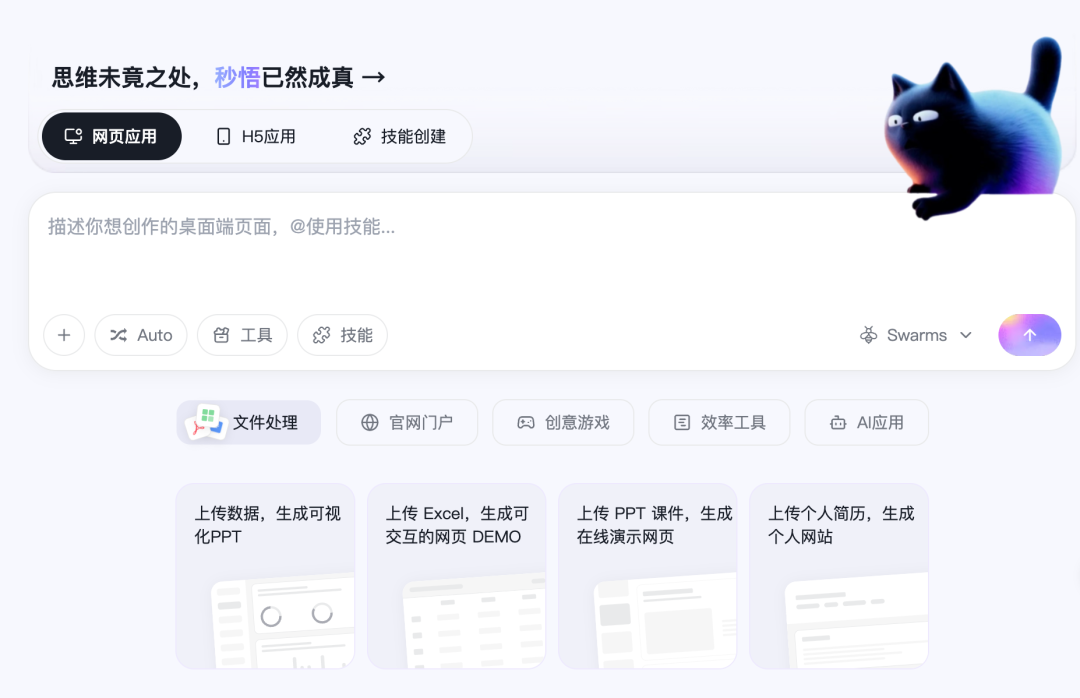
The company’s newly formed Alibaba Token Hub has released Meoo, a web-based AI development tool available for free trial, positioning it as a zero-code/low-code platform that turns natural-language prompts into deployable apps. The launch marks ATH’s first consumer product after the unit was set up in March 2026 under Alibaba CEO Eddie Wu.
Early hands-on tests published Tuesday showed Meoo can generate full projects—front end, back end, database, APIs and deployment—inside a single workflow, while also exposing reliability gaps such as timing inaccuracies in a simple countdown game. That tradeoff is familiar to investors tracking generative AI: distribution and workflow lock-in can matter as much as raw output quality.
Targeting Non-Technical Users Expands Alibaba’s TAM
Meoo is aimed at finance staff, designers, product managers and operations teams rather than professional developers—an approach that broadens Alibaba’s total addressable market for AI tooling beyond the narrow cohort already using OpenAI Codex or Anthropic’s Claude Code.
Alibaba said more than 10,000 internal employees are already using Meoo to build productivity tools, lifestyle utilities and entertainment apps, with “most” coming from non-technical roles. If adoption holds, it gives Alibaba a measurable wedge into “citizen development,” a segment that can generate high-frequency cloud usage through small apps, internal dashboards and workflow automations.
Bundling Cloud Services Reinforces Alibaba Cloud Stickiness
Meoo’s most consequential design choice is architectural: it bakes in Alibaba Cloud databases, storage and related services, and supports one-click deployment on Alibaba Cloud. For the market, that makes Meoo less a standalone chatbot and more an on-ramp to infrastructure consumption—especially as Chinese enterprises in 2026 scrutinize ROI and prefer tools that shorten the path from prototype to production.
This vertical integration also clarifies ATH’s mandate. By consolidating Tongyi Lab, a Model-as-a-Service platform, the Qwen model line, Wukong and an AI innovation unit, ATH can steer model traffic and token usage toward Alibaba-controlled endpoints—an economic model closer to platform tolls than one-off software licenses.
Scaling With “Swarm Agents” Shifts Competition to Execution Speed
Meoo includes an “Agent mode” and a “Swarm Agent” mode that runs multiple agents in parallel, with the company claiming pages can be generated in as little as one minute. Paid subscribers can also collaborate on app creation, turning the product into a lightweight development workspace rather than a single-user generator.
In practice, the parallel-agent approach is aimed at compressing build cycles for simple H5 games and workflow “Skills,” such as a queue-number system with both consumer intake and merchant management dashboards. For competing platforms, the benchmark is no longer whether an AI can write code, but whether it can ship a coherent, testable flow—UI, logic, and basic admin tooling—fast enough to replace ad-hoc outsourcing or internal IT backlogs.
Aggregating Chinese Models Signals a Pragmatic Ecosystem Play
Instead of binding users to one model, Meoo integrates multiple domestic options—including Qwen, Kimi, GLM and MiniMax—letting users mix capabilities inside one interface. That multi-model posture reduces switching friction for users and gives Alibaba leverage in model routing and token economics, even when the “best” model varies by task.
Meoo’s pricing underscores a usage-led strategy: free users get 5,000 points per month and an additional 2,000 points for daily logins, with paid options via monthly subscriptions or point purchases. The structure encourages habitual experimentation—important for a tool competing for mindshare at the earliest stage of app ideation.
Related Coverage:
Alibaba Restructures AI Operations with New 'Token Hub' Unit Led by CEO Eddie Wu