
Baidu Delivers 20 Million L2 Vehicles Across China's Auto Industry
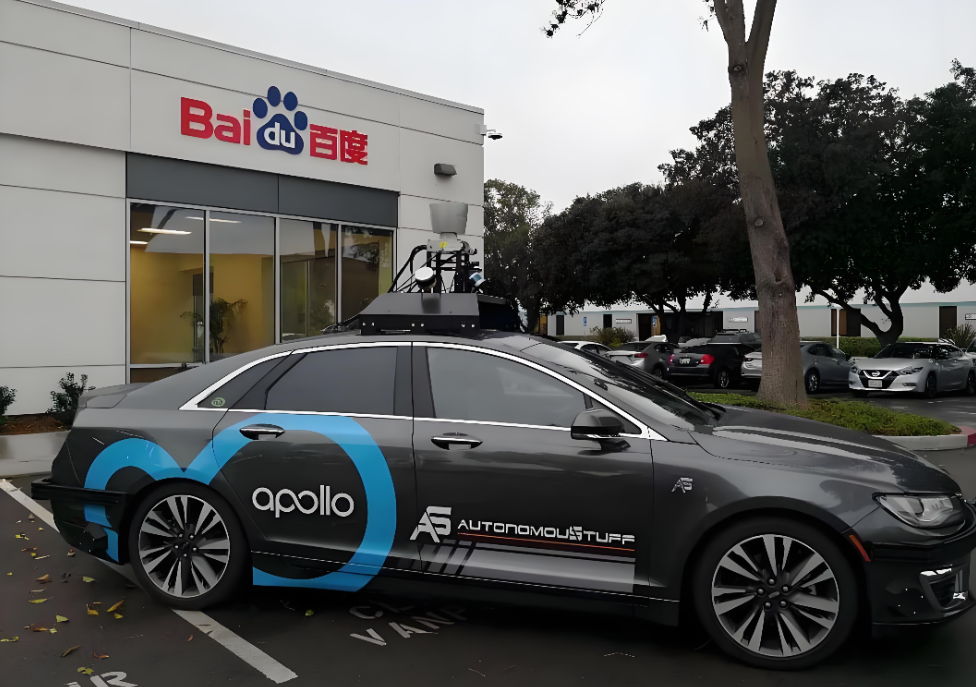
Baidu Inc. has supplied advanced driver-assistance systems (ADAS) to more than 20 million Level 2 vehicles delivered in 2025, marking the first time a Chinese cloud provider has achieved complete penetration across all major domestic automakers, the company disclosed at its annual developer conference Tuesday.
The milestone positions Baidu Intelligent Cloud as the infrastructure backbone for China's automotive intelligence transformation, supporting processes from R&D simulation to mass production across OEMs, battery makers, chipmakers and autonomous vehicle operators. The disclosure comes as Beijing intensifies scrutiny of foreign AI infrastructure while domestic automakers race to deploy proprietary self-driving capabilities ahead of new regulatory timelines.
Robin Li, Baidu's founder and CEO, framed the achievement within a broader AI industry shift: from measuring computational horsepower to tracking Daily Active Agents (DAA)—an analytics metric he predicts will surpass 10 billion globally by 2027. "Users don't pay for what models can do," Li said. "They pay for what agents get done."
Automotive Partnerships Anchor Cloud Expansion
Baidu's automotive client roster now spans the entire Chinese value chain. Shen Dou, president of Baidu Intelligent Cloud, cited partnerships with Changan Automobile and Horizon Robotics as proof-of-concept deployments where infrastructure integration—not piecemeal AI features—drives competitive advantage.
Three years ago, Baidu co-built a computing center with Changan capable of 14.2 exaflops per second, then a domestic record. That facility now underpins Changan's end-to-end autonomous driving models, with the automaker becoming one of only two companies to secure Ministry of Industry approval for Level 3 vehicle production. Changan plans to deploy production-grade end-to-end self-driving systems this year.
Horizon Robotics, a Tier-1 supplier in which Baidu holds a strategic stake, operates a 5,000-node heterogeneous computing cluster jointly developed with Baidu. Founder Yu Kai emphasized organizational scalability: "This infrastructure enables thousands of engineers—across Horizon, OEMs and algorithm teams—to execute distributed collaboration on corner-case generation, model training and version control." Horizon's systems now power over 40 automakers globally, including 800+ vehicle models from Volkswagen and Toyota. Volkswagen alone will launch 8–9 China-market models built on this stack in 2026.
The scale underscores a structural shift: Chinese automakers are consolidating compute workloads onto domestic platforms as U.S. export controls on advanced semiconductors tighten. Baidu disclosed that all inference requests—whether for its proprietary Ernie models or third-party systems like DeepSeek and GLM—now run on domestically designed Kunlun chips.
Token Efficiency Replaces Raw Compute as Differentiator
Baidu's cloud upgrade introduces two architectural layers designed to reduce inference costs for agent-heavy workloads, which Shen noted consume 1,000 times more context than standard chatbots.
The MaaS platform evolved into "Token Factory," employing a First-Token-Last-Token optimization strategy that eliminates redundant computation. Baidu claims 25% faster inference speeds versus market alternatives, critical as single-agent tasks routinely process millions of tokens. Shen emphasized cost economics: "Tokens represent expense, not revenue. Our job is to ensure every token delivers measurable value."
A parallel layer, "Harness Engineering," orchestrates persistent memory, tool invocation and sub-agent scheduling without manual prompt engineering. In browser-and-office task simulations, success rates hit 95%, while token consumption dropped 23% versus open-source benchmarks. For automotive R&D teams, this translates to automated workflows for data mining, scenario library creation and model validation—tasks previously requiring human-in-the-loop coordination.
Kunlun Chips Shift From Backup to Baseline
Baidu's Kunlun silicon—developed in-house after U.S. sanctions curtailed Nvidia access—has moved from experimental to mission-critical status. Shen called it "no longer an option, but a requirement" for Chinese enterprises.
Key milestones include:
- Training Validation: Full training of Ernie 5.1 on all-Kunlun clusters achieved 97% effective training rates, with 10,000-chip linearity exceeding 85%. Loss curves remained stable throughout.
- Tianchi Supernode: A 256-chip unit launching June delivers 25% higher throughput than prior generations, with 50%+ inference efficiency gains after adapting Ernie, DeepSeek, GLM and MiniMax models.
- Network Architecture: Dual-redundant 400G interconnects cut end-to-end latency by half, enabling clusters scalable to hundreds of thousands—or potentially millions—of chips. Datacenter construction timelines shortened 30% via wind-liquid hybrid cooling.
The announcements signal Baidu's intent to decouple Chinese AI development from foreign semiconductor dependencies. For automakers, the implication is immediate: training compute for autonomous driving now relies on verified, domestically sourced infrastructure capable of supporting frontier model development.
Li positioned the stack—chip, cloud, model, agent—as "a new generation of computers purpose-built for agents, not humans." The automotive industry's $278 billion (RMB 2 trillion) annual R&D spend ensures demand for such systems will only accelerate as Level 3+ autonomy becomes table stakes.
Related Coverage:
Baidu Shares Jump 12% as Goldman Sachs Highlights Robotaxi Leadership