
Beyond Price Wars: Wuling's Five-Year Reign in China's Entry-Level EV Market
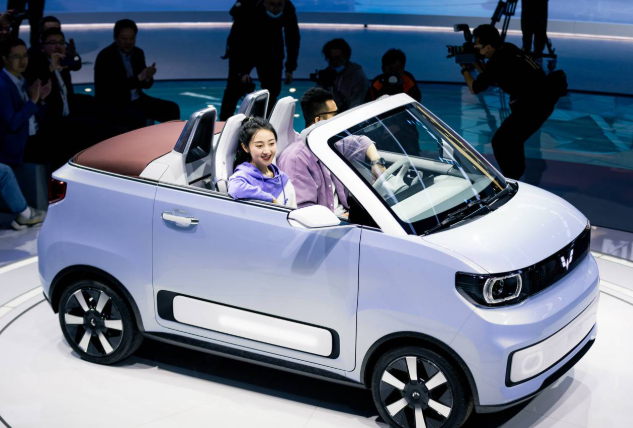
Wuling's Hongguang MINI EV has maintained its position as China's best-selling budget electric vehicle for 60 consecutive months since its 2020 launch, accumulating over 1.7 million units sold. The compact EV's sustained success in the sub-RMB 50,000 ($6,900) segment reflects evolving consumer priorities toward cost-effectiveness and demonstrates how strategic product iteration can outperform premium alternatives in China's fiercely competitive automotive market.
The vehicle's latest promotional campaign offers RMB 4,000 trade-ins and subsidies on its third-generation Youth Edition, bringing the effective price down to RMB 16,800 ($2,300) when combined with national and local government incentives. This pricing positions the vehicle at roughly the cost of two premium smartphones, intensifying pressure on competitors in the entry-level EV segment.
Wuling's ability to anticipate rather than react to consumer trends has enabled the Hongguang MINI EV to avoid the commoditization trap that typically afflicts low-margin products. The manufacturer's approach contrasts with premium EV makers currently engaged in feature-driven competition at higher price points.
Product Strategy Balances Function and Appeal
The Hongguang MINI EV prioritizes user experience despite its budget positioning. Standard features include remote start, automatic parking, and four-door access with keyless entry. The company deliberately positions the vehicle as a lifestyle product rather than basic transportation, emphasizing design flexibility through varied color options and compact dimensions suited to urban environments.
This strategic positioning addresses a market segment squeezed between ride-hailing vehicles available at marginally higher price points and unregulated low-speed electric vehicles popular among older consumers. The RMB 50,000 price ceiling traditionally offers minimal profit margins, making sustainable market leadership technically challenging.
Cross-Industry Collaborations Expand Market Reach
Wuling has executed partnerships spanning entertainment, gaming, food and beverage sectors since 2020, extending the vehicle's appeal across demographic categories. Collaborations have included celebrity endorsements, video game tie-ins, and restaurant brand promotions. In May 2025, the company partnered with dairy producer Yili on a co-branded initiative.
The vehicle has gained cultural visibility beyond its core urban female demographic. Social media documentation shows Hongguang MINI EV convoys at weddings, completed journeys on challenging routes, including National Highways 318 and 219, and international owners customizing vehicles in Western markets.
Iterative Updates Address Shifting Consumer Preferences
Wuling introduced the Macaron edition in 2021, targeting female buyers with distinctive styling as competitors escalated technical specifications. The company launched the Gameboy edition and convertible variant in 2022, capitalizing on interest in recreational vehicle customization among younger consumers.
The third-generation model released in 2023 incorporated enhanced connectivity features and build quality improvements. Each iteration has aligned with emerging consumer preferences ahead of broader market recognition, allowing Wuling to maintain category leadership without engaging in the subsidy-dependent volume strategies employed by some newer EV manufacturers.
The manufacturer's stated operational principle of "producing what people need" has translated into consistent sales performance across multiple product cycles, a notable achievement in China's rapidly evolving automotive sector where consumer preferences and regulatory requirements shift frequently.