
BYD Ends “L” Era as Dynasty Network Pushes Premium With Qin MAX
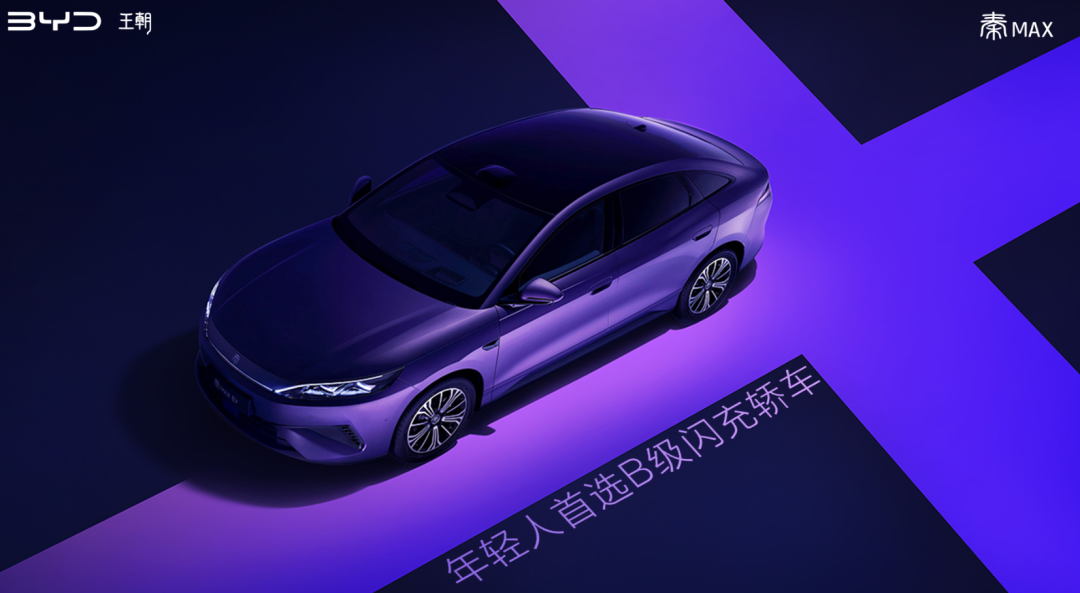
BYD is executing the most aggressive product-line restructuring in its Dynasty Network's history, retiring the entire "L" suffix generation after roughly 18 months on the market while simultaneously launching a higher-spec "MAX" tier and iterating its workhorse "PLUS" lineup — a three-pronged reset that reveals how mounting competitive pressure and internal organizational reform are forcing China's largest EV maker to compress its traditional product cycles.
The pivot became concrete on July 13, 2026, when Dynasty Network General Manager Lu Tian officially unveiled the Qin MAX, a B-segment fast-charging sedan positioned as the "extra-large" flagship of the Qin family. The announcement came less than a week after industry sources confirmed that all "L"-badged models across the Qin, Song, Han, and Tang nameplates had been discontinued — an unusually abrupt exit for vehicles that, in several cases, were still posting respectable monthly sales figures.
Market observers noted that the sequencing of these disclosures — discontinuation leak followed swiftly by a new flagship reveal — was unlikely to be coincidental, suggesting BYD's product-planning team is managing the narrative around a deliberate generational reset rather than a reactive capacity decision.
Qin MAX Resets the Performance Ceiling for an Entry-Level Nameplate
Ministry of Industry and Information Technology (MIIT) filing data, submitted as early as December 2025 but only formally announced seven months later, reveals the Qin MAX EV's core specifications: body dimensions of 4,866 mm × 1,880 mm × 1,495 mm, a 2,820 mm wheelbase, and two single-motor variants rated at 120 kW and 240 kW respectively. Battery options span 52.868 kWh (CLTC range: 530 km) and 64.315 kWh (CLTC range: 630 km).
The 240 kW high-power variant is a meaningful benchmark break: it marks the first time any Qin-series model has exceeded the 200 kW threshold, surpassing even the Tesla Model 3 Long Range Rear-Wheel Drive's 225 kW output. The 630 km CLTC range matches the Han EV's endurance figures, effectively collapsing the distance between BYD's entry and mid-premium segments.
Equally significant is the charging architecture. BYD is marketing the Qin MAX under its flash-charging standard — "5 minutes for a meaningful charge, 9 minutes to near-full" — and MIIT preview images confirm LiDAR hardware, enabling optional fitment of BYD's "DiPilot Eye-B" advanced driver-assistance suite. For a nameplate historically constrained by price-point to basic ADAS, this represents a substantive technology step-up.
At 4,866 mm, the Qin MAX is 146 mm longer than the outgoing Qin L (4,720 mm) and 86 mm longer than the current Qin PLUS (4,780 mm), while sharing the Qin L's 2,820 mm wheelbase. The dimensional and powertrain data together indicate the MAX is not a replacement for the L but a genuine upward extension — targeting a buyer cohort the Qin family has historically failed to capture.
"L" Suffix Retirement Exposes a Structural Naming Logic, Not a Sales Failure
The discontinuation of L-suffix models initially generated confusion precisely because Qin L and Song L were not underperformers. The explanation that emerged from the latest MIIT batch filing is more architecturally coherent: BYD is using the L-generation as a design and engineering donor for a refreshed PLUS generation, effectively absorbing the L's improvements into the lower price point.
MIIT documents show BYD has filed a next-generation Qin PLUS DM-i and a next-generation Tang EV. The redesigned Qin PLUS DM-i integrates styling cues from both the Qin L EV and Han L, abandoning the current "wide-mouth" front fascia, and stretches body length to 4,840 mm — 10 mm longer than the Qin L DM-i — while trimming the wheelbase to 2,800 mm (20 mm shorter). The positioning overlap is direct: the new Qin PLUS DM-i functionally inherits the Qin L DM-i's market slot at a presumably lower price anchor.
The next-generation Tang EV tells a similar story. At 5,045 mm × 1,980 mm × 1,765 mm with a 2,950 mm wheelbase, it mirrors the Tang L (5,040 mm × 1,998 mm × 1,760 mm, 2,950 mm wheelbase) to within rounding error on every key dimension, while adopting design language borrowed from the Da Tang (大唐) concept. The L-generation, in this reading, served as a 12-to-18-month real-world validation platform for technologies and proportions that are now migrating downstream.
The one gap in BYD's disclosed roadmap is the Song L succession. A Song L GT was filed with MIIT in July 2025 but has since gone dark — neither confirmed for launch nor officially cancelled. Whether the Song PLUS nameplate returns to the Dynasty Network (the Ocean Network has already retired it in favor of the Sea Lion 06) remains an open question that will define the Song family's competitive posture against Volkswagen's ID. series and the broader SUV segment.
Competitive Pressure and Internal Restructuring Are Accelerating BYD's Clock Speed
Two structural forces explain why BYD is compressing what would historically be a three-to-four-year product cycle into under two years.
Externally, China's new-energy vehicle penetration rate continues to climb in 2026, but the competitive axis has shifted from range to charging speed and intelligent driving. Rivals including Xpeng — whose MONA M03 consistently delivers over 10,000 monthly unit sales by targeting younger buyers with competitive ADAS at the RMB 100,000 (approximately US$13,900) price point — demonstrate that BYD's Dynasty Network risks ceding the youth demographic if it cannot deliver credible smart-driving features at accessible prices. The Qin MAX's LiDAR fitment and DiPilot Eye-B availability is a direct response to this gap.
Internally, BYD has restructured its passenger-vehicle brands toward greater operational independence, with each brand now required to manage its own profit-and-loss. This organizational shift creates a direct incentive for Dynasty Network management to accelerate model turnover and eliminate underperforming SKUs rather than maintain legacy nameplates for brand continuity.
The acceleration, however, is generating supply-chain friction. BYD's second-generation Blade Battery, which underpins the flash-charging capability across new models, has been in constrained supply throughout the first half of 2026. The Da Tang, launched earlier this year, accumulated a visible delivery backlog, with consumers publicly pressuring Lu Tian on social media for delivery timelines. That BYD has proceeded to officially announce the Qin MAX — a volume-oriented model that will require substantial second-gen Blade Battery allocation — suggests the company believes supply constraints are beginning to ease, though no formal capacity guidance has been issued.
Impact Assessment: What the Restructuring Signals for Investors and Suppliers
For investors tracking BYD's (002594.SZ / 1211.HK) average selling price trajectory, the Dynasty Network overhaul carries a mixed signal. The MAX tier introduction expands the addressable revenue per unit upward, but the simultaneous PLUS iteration — which absorbs L-generation specs at presumably lower price points — could compress blended ASP if volume shifts toward the entry end. The critical variable will be the Qin MAX's launch price, which has not yet been disclosed.
For the EV supply chain, the second-generation Blade Battery ramp is the near-term bottleneck to watch. Suppliers to BYD's battery production lines, including upstream lithium and cathode material providers, will face accelerating demand signals as BYD attempts to simultaneously launch multiple flash-charging models across Dynasty and Ocean networks in the second half of 2026.
The broader industry implication is a compression of competitive response time. BYD's willingness to retire models after 18 months — even commercially viable ones — signals that the company now treats product generations as iterative software releases rather than capital-cycle anchors. Competitors who plan four-year model cycles will find themselves structurally disadvantaged in a market where BYD is effectively operating on an annual cadence.
Related Coverage:
BYD Cracks Germany's Top 15 as Tesla Surges 318%, But European Moat Holds Firm