
BYD’s Denza Tests China’s ¥450,000 SUV Ceiling With N9 Fast-Charge Pre-Sale
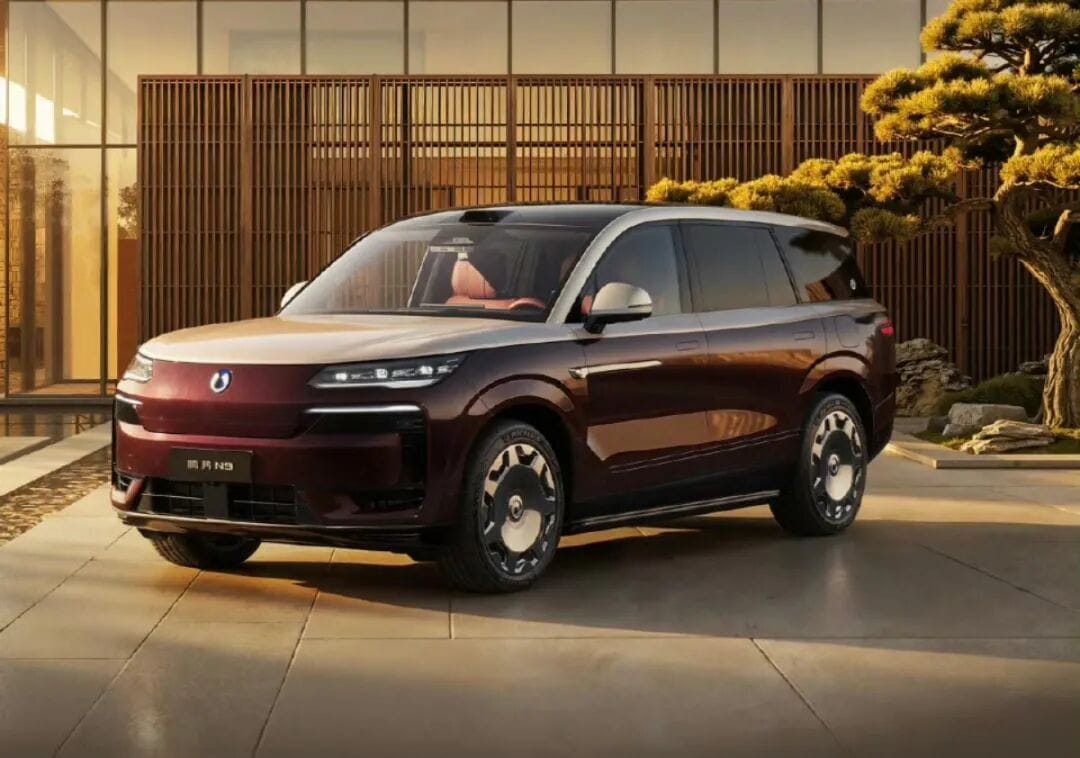
Denza, the premium marque under BYD, has opened pre-sales for its N9 “flash-charging” SUV at RMB 450,000 to RMB 500,000 (about US$62,500 to US$69,400), signaling a renewed push to defend pricing power in China’s crowded high-end new-energy vehicle segment.
The pre-sale starts just RMB 200 above the current top-trim price of RMB 449,800 (US$62,472)—a marginal premium that nonetheless matters in a market where automakers have leaned on discounts and frequent model refreshes to sustain deliveries. Denza’s move effectively serves as a real-time test of demand elasticity ahead of final pricing and deliveries.
Raising Price Anchors Reframes the “9-Series” SUV Battle
The N9’s pre-sale positions Denza directly against the fast-growing “9-series” large SUV tier, where Aito M9 and Li Auto L9 cluster around the RMB 500,000 range.
By setting an entry point at RMB 450,000 (US$62,500), Denza is attempting to reset consumer reference points—not by undercutting peers, but by arguing that measurable hardware upgrades justify a higher upfront cost.
For investors and suppliers, the key takeaway is not the RMB 200 increase versus Denza’s existing top trim, but the brand’s willingness to establish a higher price band first and adjust later. This approach has become a tactical tool in China’s NEV market: pre-sales act as a demand probe, allowing automakers to calibrate final pricing and incentives while preserving a premium positioning.
Scaling Battery and Charging Specs Shifts Cost Structure Upward
BYD says the N9 fast-charge version features its second-generation Blade Battery and upgraded fast-charging system, marketed with claims of “5 minutes to readiness” and “9 minutes to full,” with charging time extended by about three minutes in -30°C conditions. Denza also lifts pure-electric range to 420 kilometers, up from 202 kilometers on the current version.
Even without disclosing battery capacity or charging power, the range increase implies a larger battery and a higher bill of materials, reinforcing the rationale for a higher price bracket. In China’s NEV supply chain, battery capacity remains one of the most direct drivers of cost; moving from roughly 200 km to 420 km of EV range typically requires trade-offs across cell count, thermal management, and packaging—areas where BYD has vertical integration advantages but still faces incremental costs.
Bundling Charging Benefits Mimics Telecom-Style Subsidies
Denza is extending free fast-charging benefits by six months, bringing the total to 18 months, effectively shifting part of ownership cost into an upfront “service subsidy.”
From a pricing strategy perspective, this resembles telecom-style bundling rather than traditional auto rebates: it protects headline MSRP while offering a tangible, usage-linked benefit for customers likely to rely on public charging.
For the broader ecosystem, this tactic highlights a competitive shift from “vehicle-only” specifications to “vehicle-plus-energy” packages—an approach that can increase customer lock-in and reshape negotiations with charging partners, especially as high-power charging utilization rises.
Smart Driving and Safety Positioning Targets Premium Credibility
Denza says the N9 fast-charge version includes the “God’s Eye 5.0” driver-assistance system and a new AI cockpit, alongside BYD’s Yi Sanfang and DiSus-A technologies. The company also cites top-tier performance in the China Insurance Automotive Safety Index (C-IASI), describing results as “G plus four G+,” positioning safety as a monetizable premium feature.
In the near term, the key commercial question is whether Denza can convert specification-led differentiation into sustained pricing power—something even well-funded Chinese EV makers have struggled to maintain as feature gaps narrow.
In the medium term, the N9’s configuration suggests BYD is using Denza as a testbed to bundle battery, charging, chassis systems, and driver assistance into a higher-margin package—an increasingly important lever as volume growth becomes harder to sustain through price competition alone.
Related Coverage:
BYD Remains No.1 as China EV Rebound Masks Export- and Tech-Led Divergence in 2026
BYD Profit Squeeze Forces 'Toyota-Style' Global Pivot as China Margins Erode