
SAIC-GM-Wuling Bets on Huawei Qiankun to Mainstream City Pilot Assist
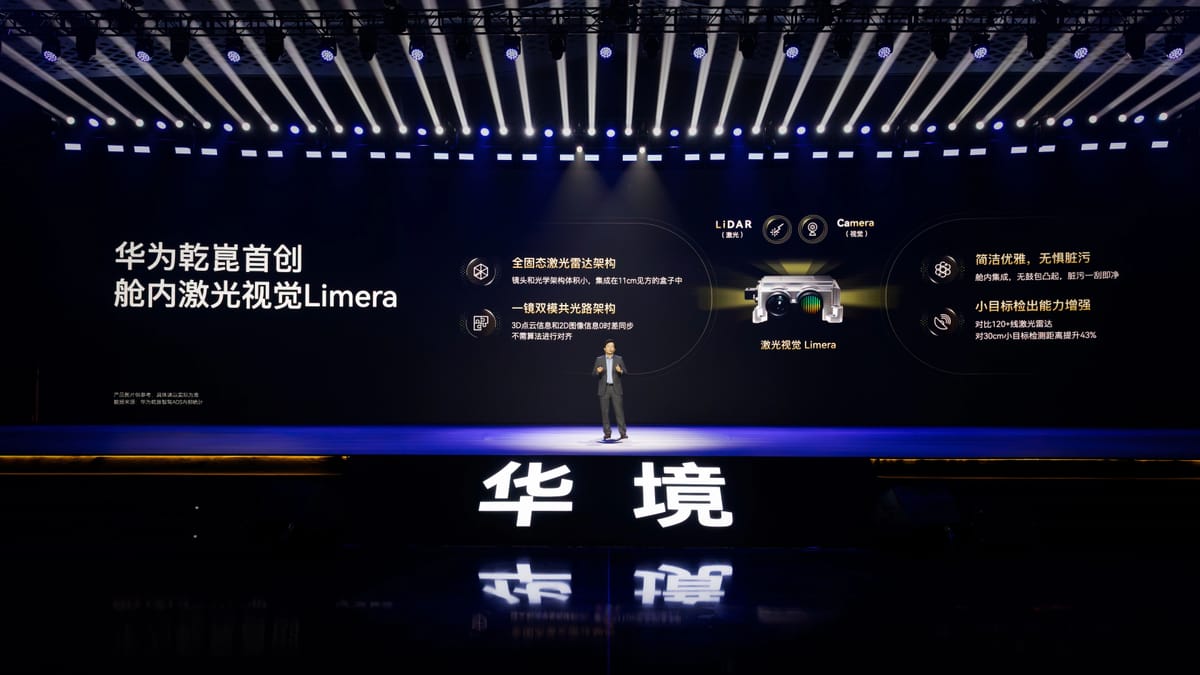
SAIC-GM-Wuling Automobile has opened pre-orders for its new Huajing S six-seat SUV, making Huawei Technologies’s Qiankun smart driving and cockpit suite standard across the lineup—an aggressive move to push “city navigation assist” from premium brands into the mass market in 2026.
The Huajing S debuted on April 7 and is scheduled to launch in the first half of 2026, according to the company. Pre-order incentives include a RMB 1,000 (US$139) deposit that converts into RMB 5,000 (US$694) of purchase credit, along with a bundle of benefits valued at RMB 40,000 (US$5,556).
Early market messaging is clear: SAIC-GM-Wuling is positioning the Huajing S as a “technology-first” family SUV, leveraging named suppliers—Huawei Technologies, Contemporary Amperex Technology, and Baoshan Iron & Steel—to reduce buyer uncertainty around assisted driving capability, battery safety, and body integrity, three of the most scrutinized decision factors in China’s 2026 auto cycle.
Standardizing Huawei’s stack shifts competition toward software-defined value
Huajing S will ship with Huawei Qiankun ADS Pro Enhanced, HarmonySpace 5 cockpit and Huawei iVCS vehicle-cloud services as standard equipment, SAIC-GM-Wuling said. At launch, the vehicle will support “urban navigation assist,” with additional “park/zone navigation assist” functions expected to unlock in the second half of 2026.
That configuration matters because it reframes where differentiation sits in China’s crowded SUV segment: not in engine displacement or screen count, but in the repeatable delivery of software features at scale. By bundling city-level pilot assist at launch rather than as a later trim upgrade, SAIC-GM-Wuling is effectively compressing the feature gap with higher-priced brands—forcing rivals to respond either with lower prices, faster OTA delivery, or deeper ecosystem tie-ins.
The company also highlighted an in-cabin laser vision system, Limera, and cited test scenarios including braking at 130 km/h for a suddenly stopping lead vehicle and night avoidance maneuvers at 110 km/h for road obstacles. It said the system’s performance “pre-meets” stricter combined driver-assistance requirements that are still under review—signaling that compliance readiness is becoming a marketing lever as China tightens expectations around assisted-driving claims.
Re-engineering safety becomes a supply-chain story, not just a spec sheet
SAIC-GM-Wuling is using supplier branding to support safety claims. For body structure, it said Huajing S uses 2000 MPa ultra-high-strength steel and integrated hot-forming processes developed with Baosteel, including a hot-formed front floor frame and dual door rings. The vehicle is designed to the latest C-NCAP five-star standard, the company said.
On occupant protection, it cited Autoliv and Yanfeng Automotive Interiors for a dual-chamber far-side airbag configuration, totaling nine airbags with 14 chambers. It also said the model passed an “80 km/h side impact followed by a 15-meter slope rollover” challenge and received a TOP Safety certification from China Automotive Technology & Research Center’s testing arm.
For investors and suppliers, the takeaway is that “safety” in 2026 is increasingly packaged as an auditable chain of custody—steel grade, forming process, airbag architecture and third-party test endorsements—rather than a single headline rating. That approach can speed consumer trust-building in lower-tier cities, where brand switching is common and new nameplates face higher skepticism.
CATL-backed battery messaging targets risk-sensitive family buyers in 2026
Huajing S uses the Shenlian Battery 3.0 system, paired with CATL “super range-extender hybrid” cells, SAIC-GM-Wuling said. It framed the pack around “five zero” safety metrics and cited an accumulated “76.6 billion kilometers” of zero spontaneous-combustion record in real-world operation.
The company also pointed to validation claims such as a 1500J underbody impact test at the bare-cell level and certification under a “001” high-quality battery verification for PHEVs from China’s automotive testing bodies. In a market where battery incidents can quickly become viral and regulatory scrutiny is rising, these quantified and third-party-referenced statements are aimed at de-risking purchase decisions for family users—especially for large, three-row vehicles that face higher expectations around long-distance reliability.
Expanding retail footprint aims to convert pre-orders into delivery momentum
SAIC-GM-Wuling said 158 Huajing experience centers are ready across 131 cities, with additional sites to follow. The company is taking orders via Huawei Qiankun’s app alongside Huajing’s own mini program and Douyin channels, linking retail conversion to Huawei’s traffic and device ecosystem.
The distribution plan suggests a classic 2026 playbook: use digital ordering funnels to capture intent, then rely on dense offline coverage to reduce delivery friction for mainstream customers. If execution holds, Huajing S could pressure incumbents by combining high-visibility driver-assist branding with a fast ramp of test-drive availability—often the limiting step for new entrants.
Related Coverage:
Huawei Qiankun's 3-Million-Unit Target Exposes Automotive Power Shift: OEMs Surrender User Control
Huawei’s QiJing GT7 Debuts With Three First-to-Market QianKun Features, Signaling Deeper GAC Tie-Up