
CATL Signals Major Push for Sodium-Ion Batteries as Technology Enters Commercial Phase
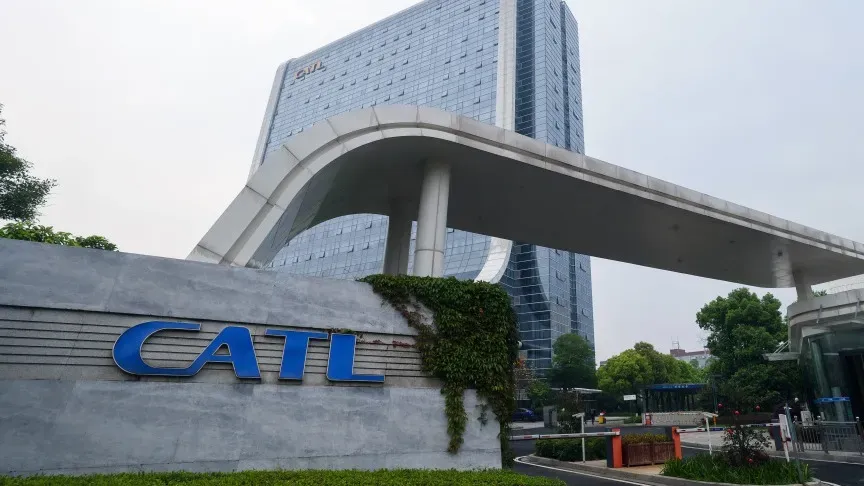
Contemporary Amperex Technology Co. Ltd. (CATL) is ramping up efforts to mass-produce sodium-ion batteries, marking a potential shift in the energy storage landscape as the world's largest battery maker seeks to diversify beyond lithium technology. The company's chief technology officer said achieving widespread sodium battery adoption is critical to China's energy independence, with plans to make the technology cost- and performance-competitive with lithium batteries within three years.
The Fujian-based manufacturer recently deployed its first mass-produced sodium-ion battery in light commercial vehicles, representing the technology's first real-world application since CATL launched its sodium battery brand in April 2025. The low-temperature version of the Tianxing II light commercial vehicle solution is designed for cold-climate regions, retaining over 92% energy capacity at minus 20 degrees Celsius compared to around 80% for lithium batteries.
Markets responded positively to the development. The sodium battery sector index surged 3.32% in the second trading session following CATL's announcement, reaching its highest level since May 2021. The index has climbed 62% since CATL unveiled its sodium battery brand.
CATL plans large-scale sodium battery deployment across battery-swapping, passenger vehicles, commercial vehicles, and energy storage sectors in 2026, according to statements made at the company's supplier conference late last year. The move could establish a dual-track strategy alongside its dominant lithium battery business.
Technology Advantages Drive Commercial Interest
"Sodium batteries forming scale in certain areas to replace lithium batteries is a starting point for overall energy restructuring," CTO Gao Huan said in a recent media interview. "To achieve resource or energy freedom, our goal is to promote sodium batteries on a large scale."
Sodium-ion technology offers distinct advantages over lithium alternatives, including greater resource availability, superior low-temperature performance, enhanced safety characteristics, and minimal temperature rise during high-rate charging. However, current industrial costs, supply chain maturity, and energy density remain inferior to lithium batteries.
Despite these limitations, Gao said sodium battery development would follow a similar trajectory to lithium technology, potentially at an accelerated pace. CATL has set a three-year target for sodium batteries to match lithium batteries in both economics and energy density.
The company emphasizes real-world application scenarios for technology development. Its Tianxing II low-temperature commercial vehicle solution targets medium and small vans and micro trucks operating in frigid environments. At minus 30 degrees Celsius, when battery cells are completely frozen, the system can still charge immediately upon connection.
Production Timeline and Market Projections
Beyond commercial vehicles, sodium battery applications are expected to expand throughout 2026. A passenger vehicle version is already in development: JD.com, GAC Group, and CATL are jointly launching a sodium battery variant of the Aion UT Super, branded as a "people's car," with mass production scheduled for the second quarter of this year.
Several publicly listed companies have disclosed sodium battery business developments in recent days. On January 27, Lianying Laser stated its products can be applied to sodium-ion battery manufacturing, while Huayang New Material confirmed cooperation with Zhongke Haina on industrializing cathode and anode materials and battery cells.
Research projections suggest substantial market growth ahead. According to China EV100, sodium battery shipments in automotive and non-automotive sectors could exceed 100 GWh by 2030. Morgan Stanley forecasts that cost reductions will accelerate as supply chain capacity increases over the next three years, with sodium battery prices potentially falling 30% below lithium iron phosphate batteries once production scale reaches 100 GWh.
Early-Stage Development Challenges
Gao acknowledged that sodium battery technology remains in its early development phase, with current limitations in industrial cost structure, supply chain maturity, and energy density compared to established lithium battery production. The technology's commercial viability depends on rapid scaling and continued performance improvements.
CATL's emphasis on cold-weather applications reflects strategic positioning in markets where lithium batteries face performance constraints. The company's approach focuses on identifying specific use cases where sodium technology's advantages outweigh its current limitations, rather than attempting wholesale replacement of lithium batteries across all applications.
The push into sodium-ion technology comes as battery manufacturers seek to reduce dependence on lithium resources, which face supply constraints and price volatility. Sodium's abundance and lower extraction costs position it as a potential solution for energy security concerns, particularly for China's automotive and energy storage sectors.