
China's Bambu Lab Faces Pop Mart Lawsuit, Pivots Strategy Amid 2026 Growth Pains
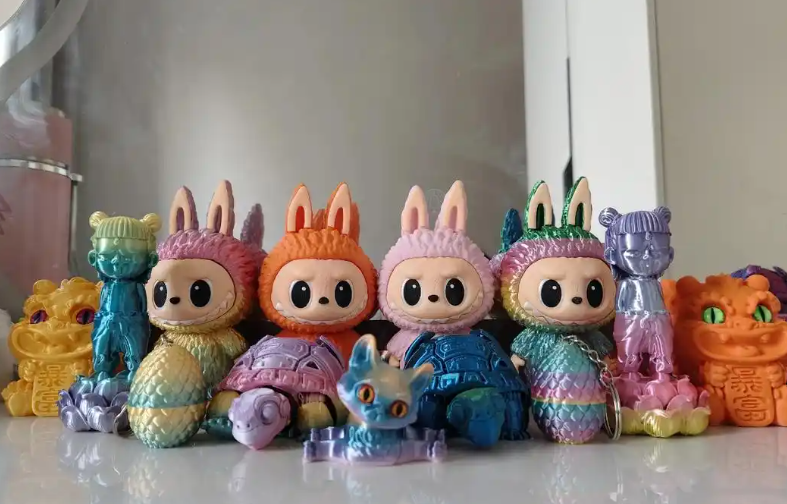
Bambu Lab, the 3D printing unicorn that recently crossed a major revenue milestone, is now navigating a copyright infringement lawsuit from art toy giant Pop Mart, a case that strikes at the heart of its community-driven business model. As it confronts this legal challenge, the company is simultaneously accelerating a strategic pivot, aiming to push its products beyond the niche hobbyist market and into mainstream households and industrial applications to secure future growth.
The legal battle ignited after Pop Mart filed a suit against Shenzhen Bambu Lab Technology for copyright infringement. The case, which revolves around unauthorized 3D-printable files of Pop Mart's popular “Labubu” character appearing on Bambu Lab’s online model-sharing platform, has been accepted by the Shanghai Pudong New Area People's Court, with a hearing scheduled for April 2, 2026.
In response to the legal action, Bambu Lab has removed the contentious files from its platform. Both companies have declined to comment further on the ongoing litigation. The dispute has cast a spotlight on a long-standing gray area in the industry, where hardware manufacturers often leverage free, user-generated model libraries to drive printer sales, a model that now faces significant legal scrutiny.
The lawsuit comes at a critical juncture for Bambu Lab. After its revenue surpassed RMB 10 billion yuan (US$1.39 billion) in 2025, the company is grappling with growth anxiety as it exhausts its core market of tech enthusiasts. To sustain momentum, it is aggressively repositioning its 3D printers, moving from "geek toys" to versatile home appliances and exploring new commercial frontiers.
A Lawsuit Challenging a Core Business Model
Industry observers suggest the lawsuit is more than a simple infringement case; it could fundamentally impact the business model of relying on free model repositories to boost hardware sales. While one investor noted that Bambu Lab’s rich community resources are a key competitive advantage, legal experts see potential liability if the platform is deemed more than a passive host.
Wu Meng, director of Beijing Jinshi Law Firm, argues the core legal question is whether Bambu Lab crossed the line from being a "tool" provider to an active participant in infringement. According to Wu, while users creating 3D models of purchased toys for personal use may be legally permissible, sharing them publicly risks infringing on commercial secrets.
“If the platform uses mechanisms like points or rewards to encourage the sharing of popular IP models, it is essentially boosting its own device sales at the expense of the original IP holder’s sales,” Wu stated. “This 'assistance in sharing' could constitute substantive infringement.” The outcome of the case could lead to a reduction in the availability of models in such free libraries, even if the platforms themselves continue to exist.
A New Narrative: From Niche Hobby to Home Appliance
With legal pressures mounting externally, Bambu Lab is also undertaking a significant internal strategic shift to broaden its market appeal. Having captured an estimated 29% of the global consumer-grade 3D printing market in 2025, the company is now focused on answering the question: what comes after the enthusiast market?
To reach a wider audience, Bambu Lab is repositioning its products as home appliances. The company is set to appear at the Appliance & Electronics World Expo (AWE), where its exhibition space is situated among global giants like Siemens and Panasonic. "The intention is clear: to get the mass market to recognize the 3D printer as a practical home appliance, not just a niche geek toy," said a source close to the company.
The company is also expanding into new consumer scenarios. It has initiated a partnership with meland, a leading family entertainment brand, to introduce 3D printing to the family education market. The collaboration includes co-branded experience centers, with one meland store in Shenzhen even adding "Bambu Lab Co-branded Store" to its name. In tandem, Bambu Lab is streamlining its product line, recently discontinuing its popular P1P model to focus on higher-end machines, signaling a move away from intense price competition.
Defending Market Share Amid Intensifying Competition
As Bambu Lab transitions from an industry disruptor to an incumbent, it faces a landscape of intensifying competition. According to a report from Huajing Industry Research Institute, China's 3D printing market is projected to reach RMB 63.5 billion yuan (US$8.82 billion) in 2025 and exceed RMB 160 billion by 2030, attracting a flood of new and existing players.
Rivals including Creality, Qidi Tech, and Snapmaker are eroding Bambu Lab's mid-range market share with low-cost alternatives and by quickly replicating its multi-color printing technology. The battle has also extended to talent and supply chains. In November 2025, drone giant DJI, the former employer of Bambu Lab's founders, invested in competitor Snapmaker, a deal rumored to include exclusive clauses targeting Bambu Lab's access to talent.
In response, Bambu Lab has moved to secure its talent pipeline by donating a total of RMB 100 million yuan (US$13.9 million) to ten universities, including the University of Electronic Science and Technology of China and Harbin Institute of Technology, to create a talent reservoir. On the international front, the company is also facing a patent infringement lawsuit in the United States from industry veteran Stratasys, which accuses Bambu Lab of violating core patents, including for the "heated print bed."
The Long-Term Bet on Flexible Manufacturing
Beyond the immediate challenges in the consumer market, some investors believe the sector’s ultimate ceiling is relatively low. The larger opportunity, they argue, lies in disrupting traditional manufacturing by replacing high-cost, small-batch mold making and some machining processes.
This long-term vision explains Bambu Lab's strategy to build a "flexible factory" in Shenzhen, deploying 15,000 of its own printers to function as a micro-production line. By leveraging stronger materials like engineering plastics, this printer farm could handle real-world industrial demands for custom parts and manufacturing jigs, offering rapid, on-demand production.
This ambitious plan to sell manufacturing capacity represents a major strategic gamble. However, before this vision of a flexible manufacturing powerhouse can be realized, Bambu Lab must first navigate the immediate turbulence of its legal battles and fend off the giants encircling its current market.