
China's Flying Car Maker Positions for Commercial Takeoff with Tourism Routes and Factory Ramp-Up
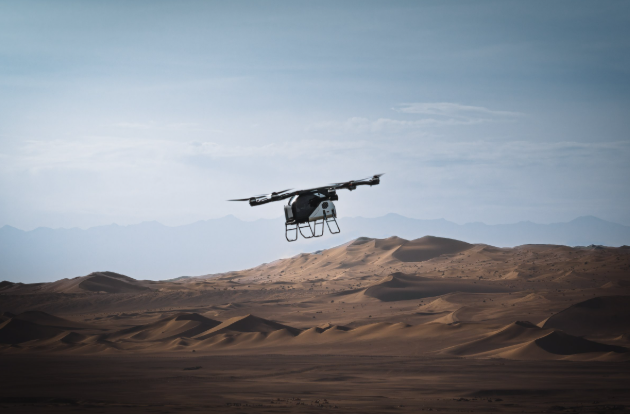
XPeng-backed eVTOL manufacturer Xiaopeng HT Aero, known as HT Aero, is accelerating commercialization of its flying cars, moving the futuristic vehicles from concept to consumer reality. The company completed its first flight demonstration in northwest China and secured 200 vehicle orders for tourism routes, while ramping up production capacity at a newly completed manufacturing facility capable of producing 10,000 units annually.
On October 28, HT Aero flew its modular flying car in Dunhuang and announced plans to launch northwest China's first low-altitude self-driving tourism route. The announcement came alongside a purchase agreement for 200 flying cars and follows a record 600-unit order from the Middle East two weeks prior, positioning the company as a frontrunner in China's nascent electric vertical takeoff and landing (eVTOL) sector.
The commercial deployment hinges on securing Type Certification (TC) from aviation regulators, the most critical and challenging approval for eVTOL operations. HT Aero founder Zhao Deli indicated the company will pursue international airworthiness certification simultaneously once domestic TC approval is obtained, targeting equal distribution between domestic and overseas orders.
The developments underscore China's push into low-altitude economy, estimated at RMB 50 trillion, as eVTOL manufacturers race to commercialize technology that promises to democratize personal flight through electrification-driven cost reductions.
Tourism Route Tests Commercial Viability
HT Aero's Dunhuang project offers an "aerial corridor plus ground experience" tourism network connecting desert landscapes and cultural sites. The route begins at Mingsha Mountain and Crescent Spring, linking Moon Spring Town, a solar power exhibition park, Yangguan and Yumen passes, before reaching Yadan World Geopark.
The initiative involves the Dunhuang municipal government providing policy support and operational scenarios. HT Aero signed cooperation agreements with five companies—Hangzhou Gaozhi General Aviation, Gansu Wanhua Industrial Group, Dunhuang Cultural Tourism Group, Dunhuang Feitian General Aviation, and Dunhuang Airport Economic Development—covering aviation ports, low-altitude operations, and ground tourism services.
Five dedicated flight camps will be constructed along the route in the initial phase, scheduled for trial operations by July 2026. The infrastructure represents a complete ecosystem approach to eVTOL deployment, addressing operational requirements beyond aircraft manufacturing.
Production Capacity Reaches Industrial Scale
HT Aero's flying car manufacturing facility has completed construction and begun equipment installation. Zhao told media the first batch of equipment is undergoing commissioning, currently producing one aircraft per hour. Once the second equipment batch arrives, production time will shorten to 30 minutes per unit, supporting annual capacity of 10,000 vehicles.
"After first-generation product delivery, our volume will likely be the largest" in China's eVTOL industry, Zhao said. The facility positions HT Aero for industrial-scale manufacturing as the company transitions from prototype development to commercial production.
The company's core product, dubbed "Land Aircraft Carrier," is a modular flying car scheduled for mass production and delivery in 2026. The vehicle serves as the foundation for HT Aero's initial market entry strategy targeting personal flight and short-distance sightseeing applications.
Two-Track Strategy Targets Mass Market
HT Aero is pursuing a dual-track commercialization strategy. The first track uses the Land Aircraft Carrier to enter personal flying and tourism markets, with Zhao setting targets of 10,000 annual units and RMB 10 billion ($1.4 billion) in revenue while accumulating tilt-rotor technology expertise.
The second track focuses on developing the A868, a high-speed, long-range flying car for air taxi services. Internally code-named "Alpha," the vehicle is designed to carry six passengers with over 500-kilometer range and speeds exceeding 360 kilometers per hour, addressing urban commuting needs.
China's low-altitude economy is estimated at 3.2 times the scale of high-altitude aviation, which generates RMB 17 trillion in economic activity, suggesting a RMB 50 trillion addressable market. Zhao noted that global luxury vehicle sales exceed one million units annually, indicating substantial purchasing power among affluent consumers.
The company aims for even distribution between wealthy consumers seeking recreational flying experiences and eventual mass-market air taxi services, though the latter requires significant technological advancement and regulatory framework development.
Supply Chain and Safety Challenges Remain
HT Aero faces complexities inherent in merging aviation and automotive industries, requiring supply chains that balance aerospace-grade precision with automotive-scale efficiency. Zhao indicated the company is developing platform-based architecture to share technology across vehicle variants, improving development efficiency and creating competitive barriers.
The company must also overcome public perception challenges surrounding flying vehicle safety and reduce costs sufficiently to access mass markets. These industry-wide issues require sustained investment and time to resolve as eVTOL technology matures.
Airworthiness certification remains the immediate hurdle before commercial operations can commence. Civil aviation regulations require design approval, production approval, and airworthiness approval, with TC certification representing the most crucial and difficult milestone. HT Aero is actively pursuing TC certification for the Land Aircraft Carrier, which would enable commercial deployment.