
China's Noetix Unveils Sub-$1,400 Humanoid Robot to Crack Consumer Market
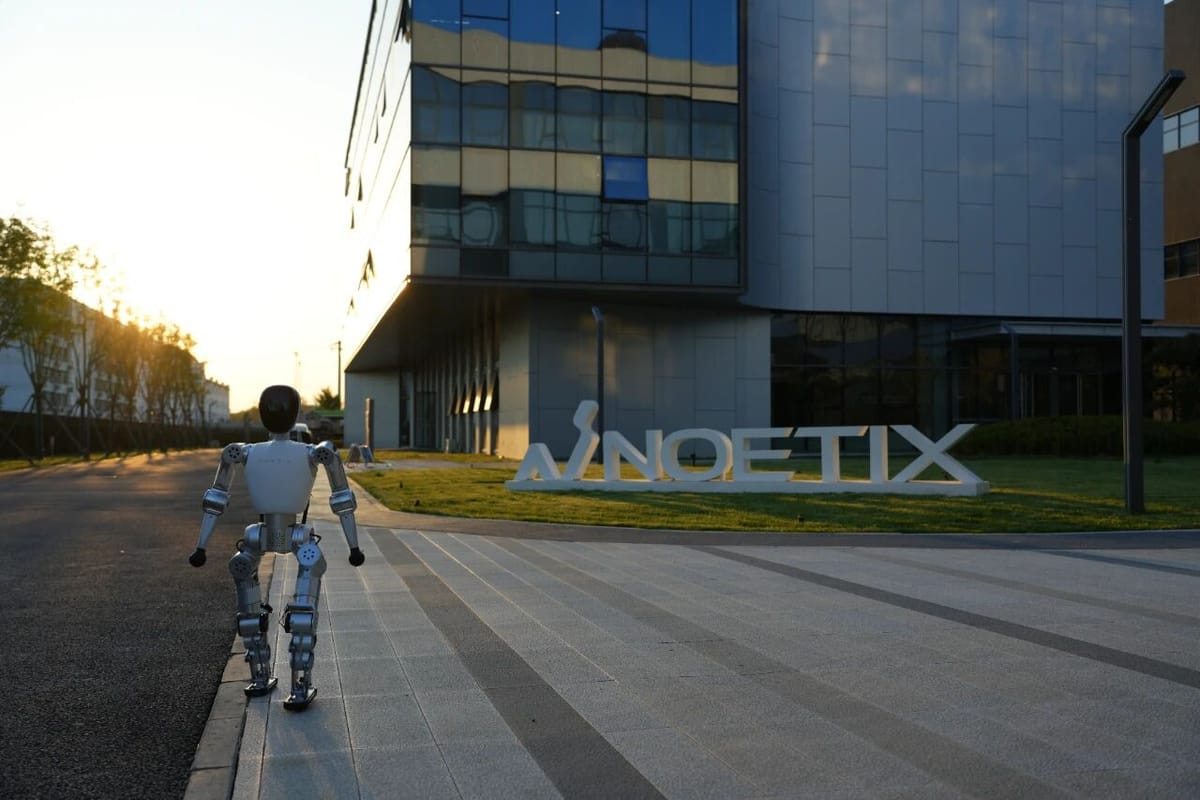
Noetix Robotics is launching a high-performance humanoid robot for under RMB 10,000, a disruptive move aimed at shattering the industry’s high-price barrier and accelerating the transition of humanoid robots from industrial labs to consumer living rooms.
The Chinese robotics firm, Noetix Robotics, announced on October 22 the upcoming release of its "Bumi" robot, priced at a limited-time RMB 9,998 yuan (approximately $1,380). The company claims Bumi is the world's first high-performance humanoid robot to break the RMB 10,000 price barrier, positioning it to compete in the consumer electronics space.
The launch represents a significant commercialization push in a sector grappling with how to move beyond research and development. Pre-sales for the Bumi robot are scheduled to run on JD.com during China's "Double Eleven" (Nov. 11) and "Double Twelve" (Dec. 12) shopping festivals, signaling a direct-to-consumer strategy designed to test mass-market appeal.
This pricing strategy directly challenges the industry's long-held convention that advanced robotics capabilities command premium prices. According to founder Jiang Zheyuan, the goal is to break the perception that "high-performance equals high-price," proving that capable humanoid robots can become accessible for everyday life, potentially ushering in an era of democratized robotics.
Redefining Performance at a Consumer Price
Noetix Robotics asserts that the Bumi robot’s low price does not come at the cost of capability. Positioned for entertainment, education, and companionship, the 94-centimeter-tall, 12-kilogram robot is capable of stable walking, running, and dancing. It also features voice interaction and a graphical programming interface designed for users with no coding experience.
Key design considerations were made for home use:
- Lightweight and Safe: The body is constructed from high-strength plastic with aluminum in key structural areas for stability. Rounded edges are intended to prevent injuries, making it safer for households with children.
- Engineering Balance: The 94cm height was deliberately chosen to be less intimidating to children than taller models, facilitating more natural human-robot interaction in a home environment.
- Sustained Operation: A 48V, ≥3.5Ah battery provides a runtime of 1-2 hours, sufficient for typical daily use scenarios. The company achieved this through a combination of lightweight materials and efficient energy management.
From Competition Podiums to Production Lines
Noetix Robotics' push into the consumer market is backed by a track record of technical achievements in global robotics competitions. In 2025, the company's robots demonstrated advanced motion control and stability, securing its reputation for engineering excellence.
In April, its N2 robot secured second place in the Beijing Yizhuang Half Marathon, completing the race in 3 hours and 37 minutes, while another team using the same model placed third. At the World Humanoid Robot Games in August, Noetix's E1 robot won the long jump championship, and its N2 model won the freestyle gymnastics title while also taking second place in a solo dance competition.
These successes are attributed to the company's proprietary motion control algorithms, which leverage imitation learning and reinforcement learning to achieve human-like gaits and complex movements. This technical foundation has already translated into early commercial traction, with total orders for the company's robots surpassing 2,500 units.
Education as a Gateway to the Consumer Market
Noetix is strategically targeting the education market as its primary entry point into the consumer segment. The Bumi robot’s graphical programming interface allows children to customize the robot's actions by dragging and dropping command blocks, aiming to foster an interest in STEM fields.
The company views the K-12 education scene as a market with strong user engagement and stable demand. As "embodied intelligence" becomes a popular topic, the demand for accessible robotics platforms for teaching and training is growing in schools and educational institutions. To build a robust ecosystem, Noetix is collaborating with educational content developers to create curricula for the Bumi platform and plans to open its underlying motion control interfaces to third-party developers.
This strategic focus on education and entertainment is part of a broader industry trend where companies are exploring consumer applications as a faster path to revenue and business model validation, compared to the longer development cycles required for industrial deployment.
A Calculated Bet on Mass Commercialization
The release of the Bumi robot comes as the humanoid robotics industry shifts its focus from achieving mass production to securing commercial viability. By pricing its robot at a level comparable to high-end consumer electronics, Noetix is making a calculated bet that it can create and lead a new mass-market category.
Cost control was critical to achieving the sub-RMB 10,000 price. The company credits its success to high levels of domestic sourcing for core components, an in-house developed core domain controller, and a modular design that optimizes for manufacturing efficiency.
While the RMB 9,998 price is an introductory offer for the holiday shopping season, Noetix plans to refine its pricing strategy based on market feedback and cost structures. The launch of Bumi represents more than just a new product; it is the first major test of the company's strategy to move from a technology-focused B2B model to a product-driven B2C one, a crucial step in its ambition to bring humanoid robots into the mainstream.