
China's Robotaxi Players Expand Globally as Waymo and Tesla Scale Up
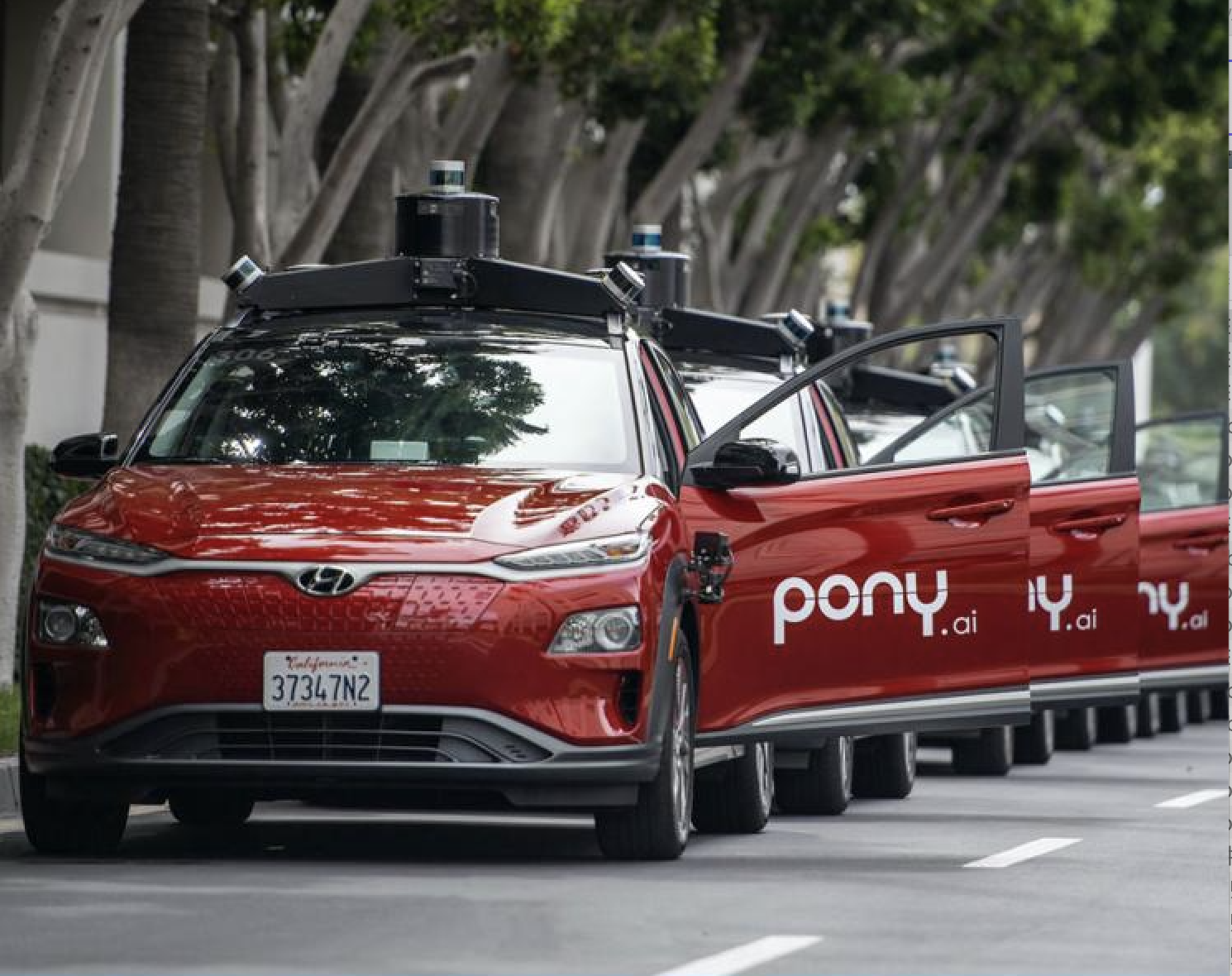
Chinese autonomous driving companies are deploying robotaxi fleets across three continents in 2026, undercutting Waymo's per-mile cost structure and exposing Tesla Inc.'s Cybercab program as a laggard in the race to commercialize driverless mobility at scale.
The global push marks a structural inflection point: firms that spent years grinding through Guangzhou's congested arterials have converted that operational data into exportable playbooks, with per-unit hardware costs slashed as much as 70% and fleet deployment timelines compressed to weeks. The market is responding to proof points — WeRide reported full-year 2025 robotaxi revenue of RMB 148 million (US$20.6 million), a 209.6% year-on-year surge — signaling that unit economics once dismissed as theoretical are now clearing real profitability thresholds.
The timing is deliberate. With Waymo's $16 billion February funding round accelerating its own multi-city land grab, Chinese operators face a narrowing window to establish regulatory footholds before global franchise maps are redrawn.
Middle East Revenue Premium Pulls Chinese Fleets Toward Gulf Cities First
The Gulf Cooperation Council markets have emerged as the preferred beachhead, and the economics explain why. WeRide CFO Li Xuan told reporters the company has maintained a per-kilometer fare of US$1.00–1.10 in Abu Dhabi since its first day of commercial operations — roughly three times the domestic Chinese industry average of approximately RMB 2 (US$0.28) per kilometer.
Pony.ai Vice President Zhang Ning confirmed the company entered the Middle East in 2025 and now operates across Abu Dhabi, Dubai, and Doha. Zhang characterized the Gulf as "a high-premium proof-of-concept market" with clear regulatory frameworks and fatter margins, while flagging a structural ceiling: Dubai's core urban mobility market supports roughly 10,000–20,000 vehicles in total, with government planning capping autonomous vehicle allocation at approximately 3,000 units. Once fleet sizes breach that threshold, the market tips into saturation.
That ceiling is forcing a sequencing strategy. Zhang projects the decisive competitive battles will erupt between 2028 and 2029, when Europe, Southeast Asia, and Japan — markets with substantially larger addressable populations — reach regulatory readiness. The 2026 expansion is therefore less a revenue sprint than a regulatory and operational credentialing exercise ahead of those larger prize markets.
Saudi Arabia and the UAE have formalized the timeline, committing to 25% autonomous vehicle penetration by 2030. Crucially, Li noted that the Gulf's reliance on expatriate labor for taxi and ride-hail services removes a layer of protectionist friction that would otherwise slow market entry in Europe or North America — a structural advantage that Chinese firms are explicitly factoring into their sequencing.
Geopolitical Risk Surfaces as Operational Variable in Dubai Deployment
The limits of market-access optimism were laid bare on February 28, when Iranian missile strikes on Abu Dhabi pivoted toward Dubai, forcing WeRide to suspend its driverless fleet and evacuate staff to shelters. UAE authorities intercepted 137 missiles and 209 drones within 48 hours, but debris impacts caused localized infrastructure damage. WeRide issued a suspension notice the following day; full operations resumed five days later.
Pony.ai's Zhang confirmed the company also halted self-operated services and activated individual safety protocols for every Dubai-based employee. The episode crystallizes a risk category that robotaxi business models were not originally designed to price: geopolitical force majeure in emerging-market deployments.
Both companies indicated they will maintain the Middle East as a priority market, contingent on the security environment stabilizing within months — a calculus that implicitly embeds a scenario-weighted discount rate into Gulf expansion valuations.
London's Horse-Carriage Streets Challenge Algorithmic Edge Cases
Western Europe presents a different category of friction. The UK passed an Automated Vehicles Act in 2025, with commercial robotaxi operations originally targeted for spring 2026. The incoming government subsequently pushed the approval timeline to the second half of 2027, citing Transport for London's concerns over the city's 1.5 million daily cyclists and the structural incompatibility between autonomous navigation systems and London's pre-automotive street geometry.
Unlike the grid-pattern roads of North American cities where most robotaxi systems were trained, London's road network — designed originally for horse-drawn carriages over 2,000 years of organic urban development — features narrow bends, irregular intersections without pedestrian crossings, and unpredictable mixed-use traffic including military horses, freight vehicles, and tourist pedestrians. The edge-case density per route-kilometer is materially higher than in Guangzhou or Phoenix.
European ride-hail platform Bolt, whose founder Markus Villig has publicly warned that the EU risks becoming "a disaster" by ignoring physical AI deployment, announced a partnership with Pony.ai to integrate its autonomous driving stack into Bolt's ride-hail network — an acknowledgment that European operators lack indigenous autonomous capability and must license it from Chinese or American developers.
Japan presents a parallel dynamic. Tokyo's decision to invite Waymo to operate in select urban zones reflects a government assessment that Japan's traditional automotive supply chain, structurally deficient in software and AI engineering talent, has left the country on the periphery of the global autonomous driving competition.
Cost Engineering Reshapes the Competitive Stack Against Waymo
The unit economics comparison between Chinese and American operators is tightening in ways that matter for global scalability. Waymo's fifth-generation Jaguar I-PACE fleet carries a per-mile operating cost of US$1.36–1.43. Deutsche Bank projects the sixth-generation vehicle — produced in partnership with Geely and Hyundai — will reduce that figure to US$0.99–1.08 per mile, still below the US$2–3 per-mile cost of a human Uber driver in the U.S.
Chinese operators are compressing costs through different levers. Pony.ai's seventh-generation "Kunlun" autonomous driving system cuts total vehicle cost by 70% versus prior generations, with a designed operational life of 600,000 kilometers and minimal maintenance requirements beyond tire replacement. The system's near-industrial-grade reliability directly addresses the cost-of-support problem that makes small international deployments economically unviable: a 100-vehicle fleet in a foreign city cannot sustain a traditional heavy after-sales infrastructure.
WeRide's approach layers in a separate efficiency vector. The company co-developed the GXR robotaxi model with Farizon Auto for factory-installed autonomous kits, with reported vehicle line-off times of under 10 minutes and a projected 15% reduction in per-vehicle cost. Its "WeRide One" software platform claims the ability to adapt to a new country's traffic environment within one month.
On the remote safety operator ratio — a key regulatory and cost variable — WeRide currently runs a 1:3 supervisor-to-vehicle ratio in the Middle East, with a target of 1:10 by year-end. Each ratio improvement requires presenting zero-accident operating data to regulators in quarterly reviews, making safety performance a direct input into the company's margin expansion trajectory.
Pony.ai Targets 3,000-Vehicle Fleet Deployment With 20–30% International Share
Pony.ai's Zhang disclosed that total robotaxi deployments in 2026 will exceed 3,000 vehicles, with 20–30% allocated to international markets. At the midpoint, that implies approximately 750 overseas units — representing nearly a tenfold expansion of its international fleet year-on-year. The company is actively recruiting mechanical technicians, overseas customer service staff, and project managers to support the ramp.
WeRide, which entered international markets as early as 2021 with Abu Dhabi operations and has since expanded to 12 countries, achieved operational profitability in its Middle East robotaxi subsidiary in 2025 — a data point that validates the multi-year gestation period required before international deployments generate positive unit economics.
The contrast with Tesla is instructive. Elon Musk's original vision of privately-owned vehicles autonomously earning ride-hail income has been effectively abandoned; the Cybercab now in U.S. testing is a purpose-built, steering-wheel-free dedicated vehicle with no confirmed international deployment timeline. While Cybercab remains in domestic validation mode, Chinese robotaxi fleets are accumulating regulatory approvals, local partnerships, and operational data across a dozen countries simultaneously.
The strategic doctrine crystallizing among Chinese operators — refine hardware and algorithms domestically, then replicate globally through asset-light local partnerships — positions 2026 as the year the "China-built, globally-deployed" model transitions from thesis to demonstrated playbook.
Related Coverage:
China’s Robotaxi Tipping Point: HSBC Sees 500,000 Vehicles By 2030—And A Half-Trillion-Yuan Prize