
Xpeng Leverages EV Algorithms to Enter Luxury Yacht Market Under 'Flying Fish' Project
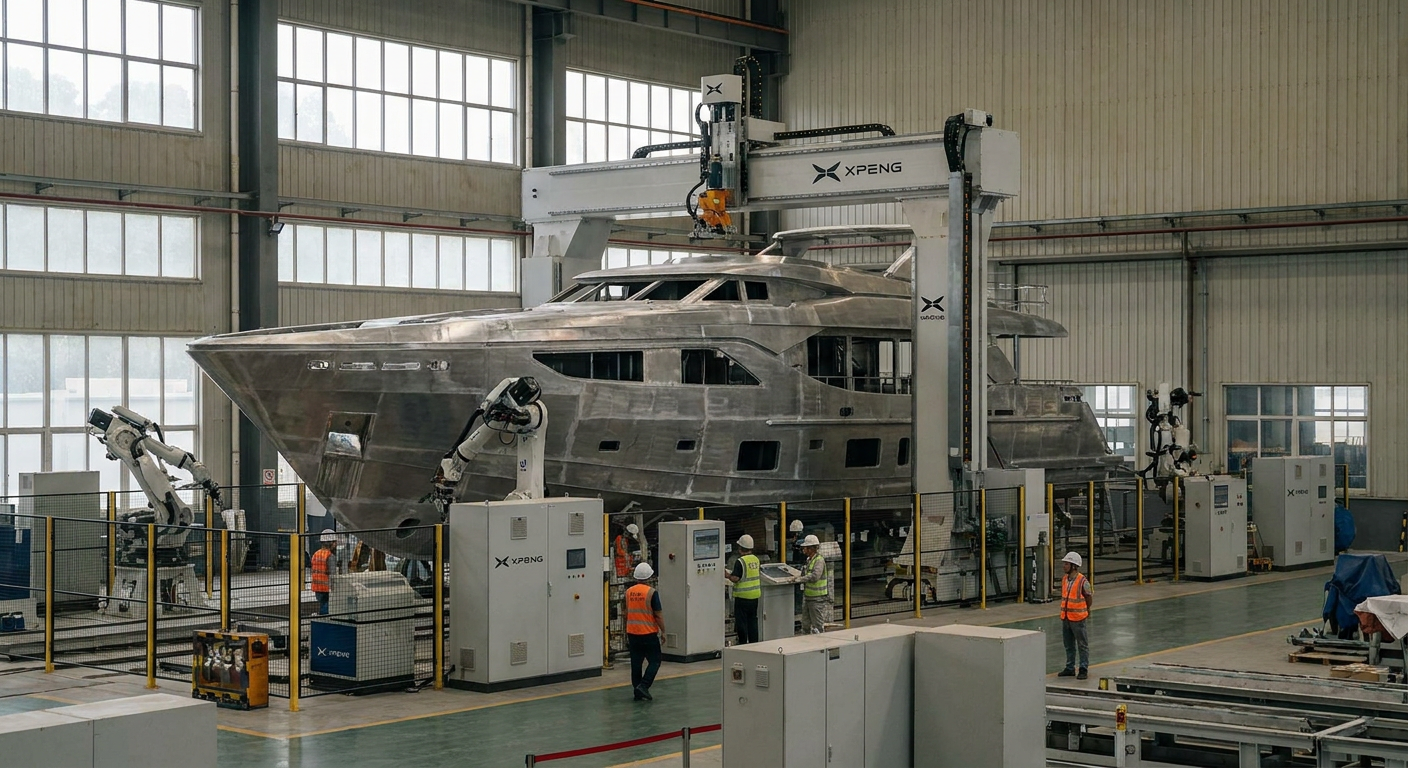
Xpeng is pivoting its proprietary electric vehicle software to the marine sector, initiating a secretive luxury yacht development program dubbed "Flying Fish" to capture high-net-worth mobility markets.
The strategic pivot, initiated in early 2026, marks the Chinese EV manufacturer's transition from terrestrial and aerial hardware into a comprehensive three-dimensional mobility ecosystem. Industry analysts view this diversification as a calculated attempt to amortize advanced autonomous and stabilization R&D costs across a broader portfolio of high-margin products, moving beyond the hyper-competitive passenger car segment.
While Xpeng has not issued an official statement regarding launch timelines or product specifications, supply chain sources indicate the project has entered an intensive research and development phase with structural teams already in place.
Migrating EV Technology Drives Marine Strategy
Unlike traditional marine manufacturers that rely on legacy nautical engineering, Xpeng is positioning its software architecture as its primary competitive moat. The company established a dedicated marine R&D team of nearly 100 engineers at the beginning of 2026. The division is spearheaded by Qian Zhanwei, Xpeng's head of vehicle architecture, underscoring the project's reliance on existing automotive foundations.
The core technological transfer involves migrating Xpeng's mature EV chassis control algorithms and dynamic posture stabilization systems to aquatic environments. By treating the yacht's hull dynamics similarly to a smart EV's chassis, the company aims to deliver highly differentiated, algorithm-driven stability and handling tailored for private, high-end water travel.
Historically, the intersection of automotive and marine engineering has been dominated by legacy luxury marques such as Mercedes-AMG, Lamborghini, and Porsche. Xpeng's entry represents a rare instance of a pure-play EV startup attempting to disrupt the traditional luxury watercraft space through software-defined hardware.
Billionaire Capital Fuels Market Competition
Xpeng's premium positioning arrives as China's intelligent marine market experiences a sudden influx of heavyweight tech capital. Earlier in 2026, Richard Liu, founder of e-commerce giant JD.com, injected RMB 5 billion (US$724.6 million) of personal capital to launch the independent yacht brand Sea Expandary.
However, the two tech entities are pursuing vastly different demographic strategies. While Xpeng explicitly targets high-net-worth individuals and wealthy families with luxury offerings, Sea Expandary is utilizing AI and robotics to push the price floor down to RMB 100,000 (US$14,492), attempting to commoditize yachts for the mass civilian market.
Expanding Hardware Ecosystem Tests Capital Efficiency
The "Flying Fish" initiative completes Xpeng's multi-domain mobility blueprint, which already includes its core passenger EV lineup, eVTOL (electric vertical takeoff and landing) flying cars, and smart robotics. By expanding its operational footprint from land and air to the ocean, Xpeng is testing the limits of its engineering bandwidth and capital efficiency.
For investors, the critical metric will be how effectively Xpeng can share its centralized AI and autonomous driving software stack across these disparate hardware platforms without diluting its focus on the primary EV price war currently defining the 2026 automotive landscape.
Related Coverage: