
China’s Rokid Takes Lead in Display AI+AR Glasses as Market Shifts Beyond Meta’s Audio-First Model
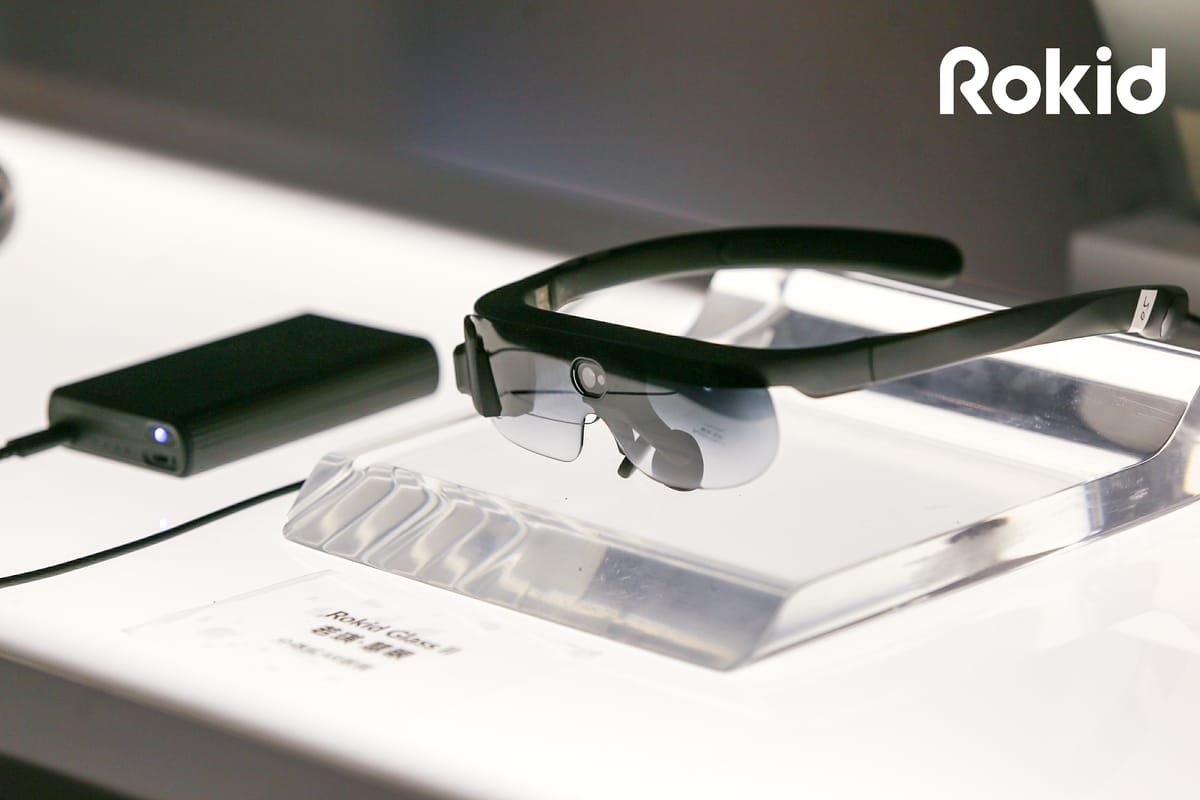
In the fastest-growing corner of wearables, Rokid has emerged as the top player in display-equipped AI+AR glasses—an inflection that suggests the industry’s center of gravity is moving from “voice-first” utility to visual, in-context computing.
Omdia data released this month shows global AI glasses shipments reached 8.7 million units in 2025, up 322% year on year. Meta Platforms Inc. still dominated “no-display” AI glasses with an 85.2% share and shipments of 7.4 million units, but China-based vendors captured 71% of the more strategically important “AI+AR with display” segment. The display segment shipped 730,000 units in 2025, up more than 150%, lifting its share of smart glasses to 8.4% from 3.3% in 2024.
The numbers are reshaping investor and supply-chain attention: as display penetration climbs, differentiation shifts from consumer-electronics scale and distribution to optics, power efficiency and developer ecosystems—areas where Chinese manufacturing depth and iteration speed can compress costs and product cycles.
Display adoption accelerates as use cases move from novelty to repeat utility
The Omdia split highlights a market bifurcation. Meta’s no-display approach—camera, speaker and an assistant in a conventional frame—scales quickly because it resembles fast-moving consumer electronics. But it also caps interaction at “listen and respond.”
By contrast, display-equipped AI+AR glasses turn translation, navigation and prompts into silent, persistent overlays. That matters commercially because it creates repeat-use scenarios that are hard to replicate with audio alone. Omdia’s data suggests buyers are beginning to pay for that difference, pushing the display category’s growth well ahead of the overall market.
Rokid’s supply-chain execution narrows the gap that incumbents rely on
Rokid’s rise is tied to hardware choices that target mass adoption constraints—weight, battery anxiety and ergonomics. The company has marketed a 49-gram design and a magnetic “charging capsule,” a form factor aimed at lowering friction versus bulkier “phone-on-the-face” designs that some rivals have struggled to avoid.
That design-led approach matters beyond one product cycle: when a feature such as magnetic charging becomes a reference design adopted by later entrants, it shifts bargaining power toward the vendor and its upstream partners in components such as waveguides, micro-displays, low-power chipsets, hinges and battery packs.
A diplomatic demo underscores enterprise pull for on-screen translation
In late February 2026, German Chancellor Friedrich Merz tried Rokid’s glasses during a visit to Hangzhou and tested real-time translation, according to local media accounts cited in the source material. Rokid says the device supports 89 languages with latency controlled within one second, and that Merz described the translation as “accurate” and “fast.” He then invited executives from Adidas, BMW and Siemens to try the glasses, with several placing orders on-site.
For the sector, the episode functions as a high-signal enterprise scenario: in meetings, audio translation can interrupt conversations and lacks persistence, while on-lens text can be reviewed and shared discreetly. That helps explain why display-equipped products can command attention even at lower unit volumes today.
An open model ecosystem raises switching costs as developers accumulate
Rokid’s strategy also differs from the closed-platform playbooks typical of major consumer hardware companies. The company positions its glasses as model-agnostic—supporting Google’s Gemini and enabling switching among models including Qwen, DeepSeek and Doubao, according to the source material. It also highlights integration with OpenClaw and a “smart agent store” that connects services such as 12306 and travel app Hanglvzhongheng, and can control Tesla vehicles.
By early 2026, Rokid said its ecosystem had more than 30,000 developers and its community exceeded 100,000 active users across five continents. If sustained, that developer density becomes a structural advantage: application availability and workflow customization can lock in users and enterprise buyers in ways that pure hardware iteration cannot. Rokid attributes its flexibility to YodaOS, its self-developed XR operating system designed for low power and fast response.
Related Coverage:
AI Glasses See Sales Surge but Face 50% Return Rate as Industry Questions Viability
Chinese AI Glasses Brands Race to Dominate Offline Retail as They Target 700 Million Myopic Users