
Chinese ATV Makers Accelerate Global Market Grab as Polaris Loses Ground
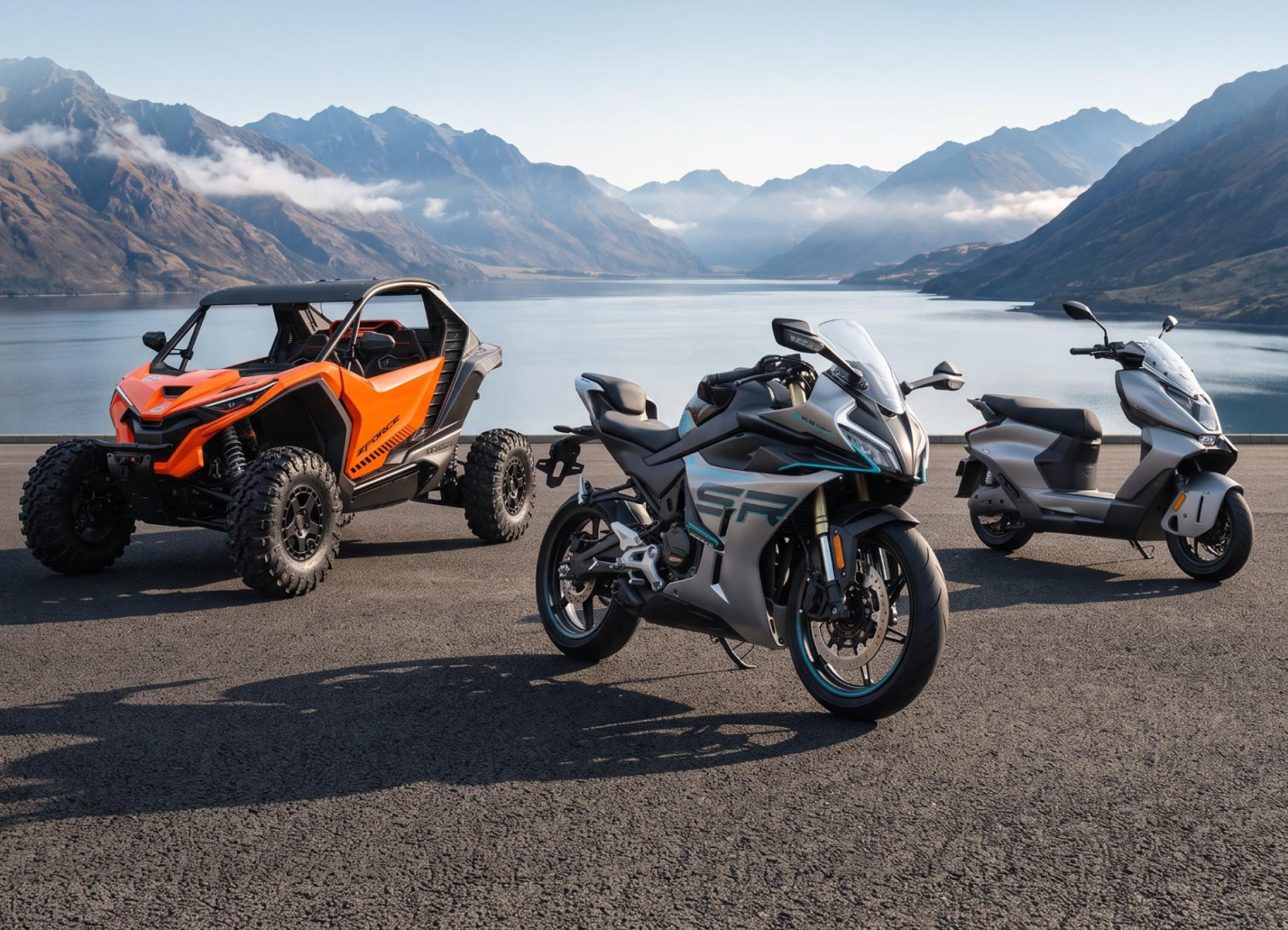
CFMOTO, Taotao Power Up Overseas Revenue as China's All-Terrain Vehicle Exports Hit $1.39 Billion
China's off-road vehicle manufacturers are rewriting the competitive hierarchy of the global all-terrain vehicle industry, with domestic leaders capturing market share at a pace that has eroded the dominance of North American incumbents within just two years.
The shift is both structural and swift. Chongqing-based CFMOTO grew its ATV and UTV revenues 51% year-on-year to RMB 7.146 billion (approximately US$992 million) in the first half of 2026, while Taotao Motor posted a 60.56% revenue surge to RMB 2.751 billion (US$382 million) over the same period — both companies drawing the overwhelming majority of that growth from the Americas. For investors tracking China's industrial export story beyond electric vehicles, the numbers suggest a second front has quietly opened.
The market's response has been visible in the composition of global ATV rankings. Industry estimates place CFMOTO's global market share at approximately 13% in 2025, up from 6% in 2023, vaulting it from fifth to second position globally — directly behind U.S.-based Polaris Industries (PII), whose share declined from roughly 35% to 18% over the same interval.
China Builds a Beachhead in a Market It Never Designed For
The origins of Chinese ATV competitiveness are rooted less in strategic ambition than in regulatory circumstance. Beginning with Beijing's motorcycle ban in 1985 — a restriction that subsequently spread to hundreds of Chinese cities over the following two decades — domestic manufacturers faced the collapse of a market once valued in the hundreds of billions of renminbi.
Rather than retreat, companies including CFMOTO and Longxin General Power (隆鑫通用) leveraged their existing motorcycle supply chains, engineering talent, and export relationships to pivot into ATV production. CFMOTO's first domestically developed ATV, the CF500, debuted at the EICMA Milan Motorcycle Exhibition in 2005, signalling the industry's ambition on an international stage. Two decades of incremental product development followed before the current commercial inflection point arrived.
The underlying industry logic is straightforward: ATVs and motorcycles share propulsion technology, chassis engineering, and — critically — the same North American and European recreational consumer base. The transition was adjacency arbitrage, not diversification.
Shifting Product Mix Amplifies Chinese Brands' Late-Mover Advantage
The global ATV market is not monolithic. Of the approximately 970,000 units sold worldwide in 2025 — generating a market value of around US$19.2 billion — traditional four-wheel ATVs accounted for roughly 395,000 units, while UTVs (utility task vehicles) and SSVs (sport side-by-sides) collectively represented 575,000 units. The premium, higher-margin UTV and SSV segment is growing faster.
This product evolution structurally advantages Chinese entrants. Polaris pioneered the UTV category in the mid-1980s, building incumbency advantage into a format that older Japanese brands — Honda, Yamaha, and Kawasaki — never fully prioritized, given their strategic focus on automobiles and high-displacement motorcycles.
Chinese manufacturers arrived in the UTV and SSV segments without legacy product anchors. CFMOTO, which now competes across ATV, UTV, and SSV formats, deployed the same high-specification, competitive-pricing playbook that Chinese EV manufacturers have employed globally — a strategy that forces comparisons on value-per-dollar metrics where incumbents are structurally disadvantaged by higher North American labor costs.
According to research firm The Brainy Insights, the global ATV market is projected to reach US$29.5 billion by 2033, implying a compound annual growth rate that rewards scale-builders now. China's total ATV exports reached 475,500 units and US$1.394 billion in value in 2025, a 15.39% year-on-year increase, with CFMOTO consistently accounting for more than 70% of the country's total export volume.
Taotao's Dual Listing Marks a New Capital Strategy for the Sector
Taotao Motor's trajectory illustrates an alternative growth architecture. Founded by Cao Matao in Zhejiang — with initial capital of RMB 28.5 million (US$3.96 million) provided by his grandfather, Cao Guicheng, and a royalty-free transfer of patents and production lines from the family-owned Taotao Group — the company entered ATV production with an unusually well-resourced starting position.
The company listed on China's A-share market in 2023 and recently secured approval for a Hong Kong Stock Exchange listing, positioning itself to become the industry's first company dual-listed on both A-share and H-share main boards. The strategic rationale is explicit: H-share listing provides more direct access to international institutional capital and enhances brand credibility with overseas distribution partners — both critical as the Americas market already accounts for the dominant share of Taotao's RMB 3.941 billion (US$547 million) in fiscal 2025 revenues and RMB 816 million (US$113 million) in net profit attributable to shareholders.
Net profit attributable to shareholders grew from RMB 280 million in 2023 to RMB 431 million in 2024 and RMB 816 million in 2025 — a near-tripling over two years that reflects both operating leverage and favorable product mix shift toward higher-margin UTVs.
Polaris Faces a Structural Challenge, Not Just a Cyclical One
The decline in Polaris's estimated global market share — from 35% in 2023 to approximately 18% in 2025 — deserves analytical context rather than simple tabulation. Polaris retains category authority in premium UTVs and has significant dealer network depth across North America. Its brand equity in working ranches, agricultural operations, and recreational off-road communities remains intact.
However, the price gap between Chinese and American-branded comparable UTVs has widened as Chinese manufacturers have closed the technical specifications gap. CFMOTO's products are increasingly reviewed by North American enthusiast communities as functional equivalents to mid-tier Polaris and Can-Am models at materially lower price points — a dynamic that tracks precisely with what Japanese and South Korean automakers experienced in the U.S. passenger car market during the 1970s and 1980s.
Bombardier Recreational Products, which holds the Can-Am brand, saw its estimated share compress from 25% to approximately 11% over the same period, suggesting the pricing pressure is sector-wide rather than brand-specific.
Two Models, One Direction: CFMOTO and Taotao Chart Divergent Paths to Scale
CFMOTO's strategy is concentration: deepen the ATV/UTV/SSV product stack, invest in motorsport sponsorships and off-road racing circuits to build aspirational brand equity, and scale the global distribution network. With ATV revenues now representing CFMOTO's single largest and fastest-growing business segment — RMB 9.608 billion (US$1.33 billion) in full-year 2025 revenues, up 33.26% — the logic favors continued category focus.
Taotao is pursuing breadth. Recognizing that competing for top-tier ATV positioning against both CFMOTO and Polaris requires capital and brand investment that may exceed near-term returns, the company has extended into off-road motorcycles, electric low-speed vehicles, e-scooters, electric skateboards, and self-balancing vehicles — creating what amounts to a "slow mobility" product ecosystem with multiple addressable markets.
Neither approach is inherently superior. CFMOTO's concentration generates operational efficiency; Taotao's diversification reduces category-specific risk. Both, however, share the same foundational bet: that the United States and European recreational vehicle consumer base will continue to absorb Chinese-branded off-road products at volumes that justify the supply chain and distribution investment already deployed.
Given that China's ATV export growth has maintained double-digit momentum even as the broader automotive export cycle shows signs of moderation, that bet appears, at present, well-placed.
Related Coverage:
BYD Exports Japan-Exclusive Micro EV to Global RHD Markets
China's AI Companies Race to Crack Japan's $172B Content and Enterprise Market