
Weiyi Intelligent Manufacturing Eyes Hong Kong IPO, Targets Global Growth
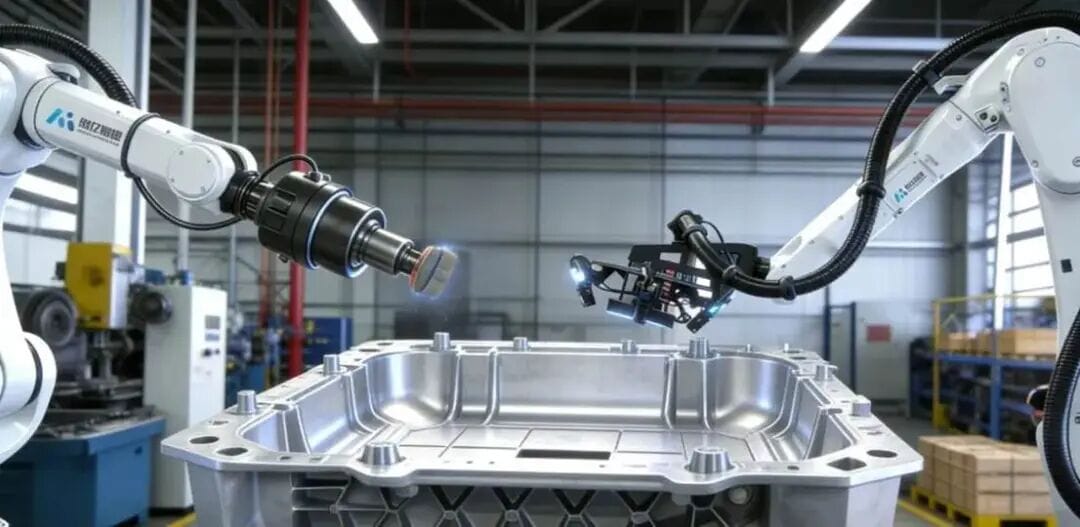
Weiyi Intelligent Manufacturing is defying the robotics industry's cash-burn orthodoxy, entering Hong Kong's public markets as China's largest industrial embodied intelligence robot provider with two consecutive profitable years and accelerating order momentum—a financial profile that stands apart from virtually every peer chasing the same theme.
The Suzhou-based company formally launched its Hong Kong global offering on October 20, 2026, pricing shares at HK$16.63 to HK$21.46 per share under the ticker "03275," with a listing on the Main Board of the Hong Kong Stock Exchange scheduled for October 28. The offering covers 37.275 million shares. At the midpoint of the price range, the deal values Weiyi at approximately HK$3.4 billion, positioning it as what the company calls "the first listed share in industrial embodied intelligent robotics."
Market reception to the deal will be a referendum on investor appetite for profitable hard-tech in a sector where pre-revenue narratives have dominated for years. Unlike humanoid robotics peers still burning capital on laboratory validation, Weiyi's 2026 first-five-month adjusted net profit already reached RMB 33.84 million (US$4.7 million), up 41.5% year-on-year—suggesting the commercial model has cleared its most critical inflection point before the bell rings.
"Physical AI" Architecture Drives Pricing Power Beyond Conventional Automation
To understand Weiyi's financial trajectory, investors must first grasp why its product is structurally different from the programmable industrial arms that have populated factory floors for decades.
Traditional robotic arms are, in essence, high-precision motion replay devices. Engineers hard-code every movement sequence; any change in part geometry or process specification requires reprogramming, often over weeks. Weiyi's Embodied Intelligent Industrial Robots (EIIR) are built on what the company terms a "Physical AI Brain"—a proprietary architecture that integrates perception, learning, decision-making, and execution into a closed-loop system capable of autonomous adaptation.
The company's differentiated "Fast-Slow Thinking" architecture addresses the two primary barriers to industrial robot deployment. The "Fast Thinking" layer incorporates human-expert guidance at onboarding, compressing deployment cycles from industry-average months to days. The "Slow Thinking" layer continuously converts on-line production data into training inputs, enabling the system to improve accuracy and throughput over time without additional engineering intervention.
The data moat underpinning this architecture is difficult to replicate quickly. According to Frost & Sullivan data cited in the prospectus, most competitors hold fewer than 5TB of genuine industrial precision-annotated data. Weiyi has accumulated more than 23TB, comprising 1.6 billion finely labeled production records sourced from live manufacturing environments. In industrial AI, data provenance and density matter more than raw parameter counts—and Weiyi's lead on both metrics represents a compounding competitive advantage.
That technical differentiation translates directly into pricing power. Average selling prices for EIIR products rose 67.3% year-on-year in the first five months of 2026 to approximately RMB 1.089 million (US$151,250) per unit, up from RMB 651,000 in the same period of 2025. The product roadmap is also migrating up the complexity curve: single-process machines are giving way to multi-process composite workstations that integrate inspection, grinding, sorting, and material handling into unified automated cells—each unit commanding a materially higher contract value.
Profitable Trajectory Separates Weiyi From a Loss-Heavy Peer Group
Sustained profitability in the embodied intelligence space is genuinely rare. Most players in the sector cite elevated R&D costs, hardware depreciation, and long sales cycles as structural headwinds to near-term earnings. Weiyi's numbers tell a different story.
The company reported net profit of RMB 15.7 million (US$2.18 million) in 2024 and RMB 5.1 million (US$708,333) in 2025, with first-five-month 2026 net profit accelerating to RMB 22.52 million (US$3.13 million) from RMB 7.06 million a year earlier. On an adjusted basis—stripping out listing expenses, share-based compensation, and other non-cash items—the underlying earnings profile is stronger: adjusted net profit reached RMB 44.15 million (US$6.13 million) in 2024, RMB 48.73 million (US$6.77 million) in 2025, and RMB 33.84 million in the first five months of 2026 alone.
Critically, these profits were generated while the company sustained one of the heaviest R&D investment ratios in its peer group. R&D expenditure in 2025 reached RMB 235 million (US$32.64 million), representing nearly 30% of revenue. First-five-month 2026 R&D spend rose further to RMB 101 million (US$14.03 million). The fact that product-level margins are sufficient to absorb that investment burden while still generating positive earnings indicates that the commercial model is structurally viable—not reliant on cost deferrals or asset disposals.
The cash flow statement adds another layer of credibility. Operating cash flow turned positive in 2025 at RMB 141 million (US$19.58 million), a reversal from negative territory in prior periods. First-five-month 2026 operating cash inflow of RMB 12.7 million (US$1.76 million) compares with a net outflow of RMB 108 million in the same period of 2025—a swing of nearly RMB 121 million that reflects not just earnings growth, but improving receivables management.
Accounts receivable aging data supports the same conclusion. Receivables within one year now account for close to 90% of the total. Receivables aged beyond two years dropped from 4.4% of the total in 2025 to 1.4% as of the latest reporting date. Days sales outstanding declined from 256 days in 2025 to 188 days in the first five months of 2026, approaching levels typical of the automotive and new energy sectors—industries with established procurement infrastructure and disciplined payment terms.
Revenue Mix Shifts Toward High-Margin EIIR Products, Lifting Overall Profitability
Weiyi's top-line growth has been both rapid and structurally improving. Total revenue expanded from RMB 434 million (US$60.28 million) in 2023 to RMB 796 million (US$110.56 million) in 2025, representing a compound annual growth rate of 35.4%. Within that aggregate, EIIR product revenue compounded at 99.3% over the same period, with its share of total revenue rising from 26.3% to 57.0%.
In the first five months of 2026, total revenue reached RMB 424 million (US$58.89 million), up 22.6% year-on-year. EIIR revenue of RMB 260 million (US$36.11 million) grew 39.7%, lifting its revenue contribution to 61.4%. Gross margin on the EIIR segment held at 54.8%—a level that most enterprise software companies would consider acceptable, and that few hardware-centric manufacturers achieve.
The product mix shift explains the steady overall margin expansion: group-level gross margin improved from 42.4% in 2023 to 48.4% in 2025. As EIIR continues to displace lower-margin legacy product lines within the revenue base, the trajectory suggests further margin accretion even in the absence of pricing increases.
Order visibility adds a forward-looking dimension to the growth story. New contract awards totaled RMB 1.196 billion (US$166.11 million) in 2025 and RMB 530 million (US$73.61 million) in the first five months of 2026—the latter representing a roughly 49% increase over the comparable 2025 period. Backlog of projects under execution reached RMB 666 million (US$92.5 million) as of May 31, 2026, more than seven times the RMB 87 million recorded at end-2023. Contract liabilities—advance payments already collected from customers—nearly doubled from RMB 49 million at end-2025 to RMB 94.9 million (US$13.18 million), providing a tangible indicator of near-term revenue conversion.
Market Leadership at Home Anchors a Deliberate Push Into High-End Global Manufacturing
Weiyi's domestic competitive position provides the stable base from which its international ambitions are being executed. According to IDC's China Industrial Embodied Intelligence Robot Market Share, 2025 report, the company ranked first nationally, with approximately 20.0% market share by 2025 revenue. The company holds "Specialized and Sophisticated" National Key "Little Giant" enterprise designation from China's Ministry of Industry and Information Technology, and has been included in Forbes China's Top 50 AI Technology Companies and the Fortune China Tech 50 list.
That domestic dominance is now being leveraged systematically in overseas markets. Since 2025, Weiyi has moved beyond pilot engagements to operational delivery across Europe, the United States, South Korea, Japan, Singapore, and Malaysia. The company's client roster includes more than 25 Fortune 500 companies and industry leaders. As of the latest practicable date in the prospectus, Weiyi holds 19 overseas backlog orders with a combined contract value of approximately RMB 35.7 million (US$4.96 million)—modest in absolute terms, but indicative of a pipeline that is transitioning from contract-signing to delivery and, ultimately, to repeat procurement.
The strategic rationale for the international push is straightforward: high-mix, low-volume manufacturing in Europe and Japan faces the same skilled-labor constraints as China, and the precision tolerances demanded by those markets provide a natural validation environment for Weiyi's adaptive AI capabilities. Successfully delivering against those standards de-risks the technology narrative for global institutional investors evaluating the IPO.
IPO Proceeds Positioned to Accelerate R&D and Global Infrastructure
The Hong Kong listing positions Weiyi to access capital markets at a moment when its financial metrics can support a growth-investment thesis without diluting an earnings story. Proceeds from the global offering are expected to fund continued development of the Physical AI Brain platform, expansion of the proprietary industrial data asset, and the buildout of overseas service infrastructure needed to support contracted international deployments.
For investors, the central question is whether Weiyi can sustain its margin profile while scaling internationally—a transition that typically introduces integration costs and execution risk. The company's current operating leverage, demonstrated by the near-doubling of first-five-month 2026 net profit on a 22.6% revenue increase, suggests meaningful room to absorb those costs without reverting to the loss-making pattern that defines most of its listed and pre-IPO peers.
With the listing date set for October 28, 2026, the market will shortly have a definitive answer on how investors price a profitable, data-moated, internationally expanding industrial embodied intelligence platform—and whether Weiyi's financial discipline can command a premium in a sector where that discipline has historically been the exception.
Related Coverage:
Robotics Unicorn Agibot Bets on Investment Blitz to Build Industry Ecosystem
Robotics Vision Startup Segen Intelligence Raises Funds as China VCs Shift to Upstream Tech