
Hello Robotaxi Co-Founder Yu Qiankun on One-Stage End-to-End Architecture and the Push for L4 Leadership
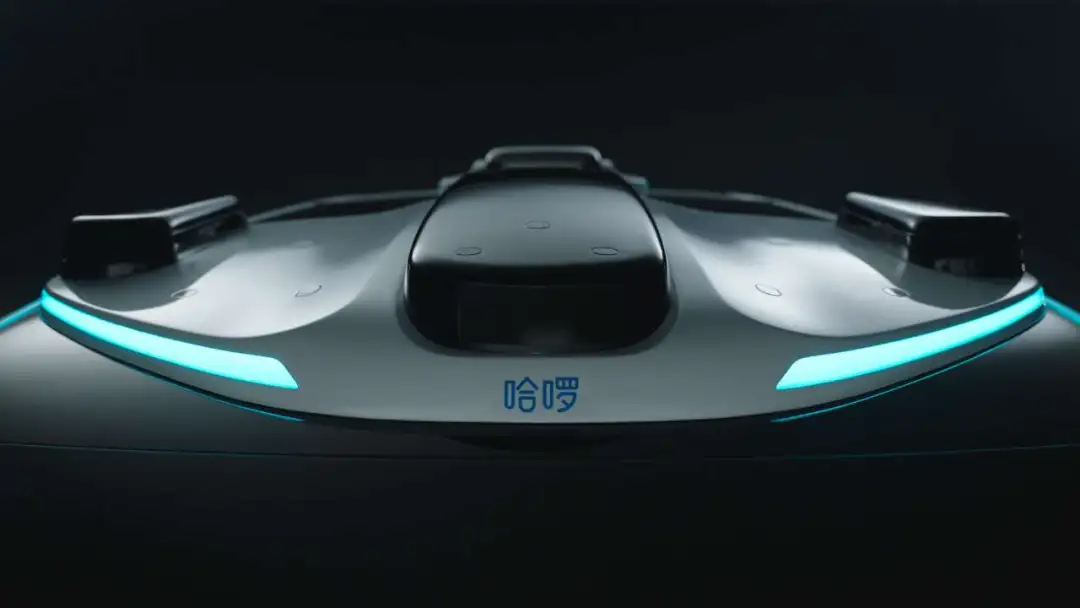
Hello Group's autonomous driving unit is making a bold entry into the robotaxi sector, backed by a one-stage end-to-end technical architecture, a fleet of hundreds of data-collection vehicles, and a co-built 10,000-GPU computing cluster with Alibaba Cloud. In an exclusive interview published on March 3, 2026, by Autonomous Driving Heart, a leading Chinese media platform focused on autonomous driving technology, Dr. Yu Qiankun co-founder of Hello Robotaxi, laid out the company's strategic rationale, technical roadmap, and long-term ambitions in the robotaxi space.
The interview offers a rare window into how a relative newcomer — Hello Group formally entered the robotaxi sector in April 2025 — is positioning itself against established players by leapfrogging earlier-generation rule-based systems and going directly to a single-stage end-to-end AI architecture. Dr. Yu, an eight-year veteran of the autonomous driving industry who completed his doctorate in robotics in 2018, spoke candidly about the company's team-building philosophy, safety redundancy design, data flywheel strategy, and milestone targets for commercialization.
Interview conducted by Gloria, Co-founder of Autonomous Driving Heart. The following is an edited transcript of the conversation.
Three Keywords: Safety, Openness, and Innovation
Gloria: Could you describe Hello Robotaxi's business in three words and explain why you chose them?
Dr. Yu: I would summarize with three core keywords: safety, openness, and innovation.
First, safety. The ultimate goal of autonomous driving is to safely transport passengers from point A to point B. Around that objective, we have done an enormous amount of work — including hardware-level sensor redundancy, chassis redundancy, and various other safety-oriented designs, as well as the integration of large AI models on the software side. We also have a strong operations team. People often see our staff at metro stations repositioning bicycles to manage tidal demand patterns. When our robotaxi service formally launches, we will leverage that same operational force to ensure passenger safety on the ground.
Second, openness. Hello Group formally entered the robotaxi sector in April 2025. Robotaxi operations require multi-party collaboration to ensure both safety and efficiency. Measured by the time since our founding, we are newcomers to this industry. Given that context, our approach to technology stack selection is one of full collaboration and open-mindedness. We want to leverage the advantages of being a late entrant — drawing on the mature upstream and downstream supply chain that has developed over many years of autonomous driving progress — and work with partners in multiple forms of cooperation to build our technological moat as quickly as possible. That is what openness means to us. Hello Group is also a mobility operations company, and we look forward to pursuing open and inclusive cooperation across the broader mobility sector. Our platform operates on the same principle.
Third, innovation. Just as Hello Group pioneered a number of innovative approaches in the shared bicycle sector, we intend to bring innovation in operations, product, and technology to the robotaxi industry. We want to use pragmatic methods to drive genuine industry prosperity.
Why Enter the Robotaxi Market in 2025?
Gloria: Why did Hello choose to enter the robotaxi business in 2025? At this moment, global autonomous driving competition is described by some as a "twilight of the gods." Why enter as a newcomer at this particular juncture?
Dr. Yu: That is an excellent question. Autonomous driving has been developing for a long time — from challenge competitions in the early 2000s to the present day, spanning more than two decades. Some domestic companies began laying the groundwork as early as 2009 or 2010. So the industry has a long history. Why did Hello choose this moment to enter? I see several key reasons.
First, we believe the upstream and downstream supply chain has now reached maturity. On the hardware side: in the early days of robotaxi development, Lincoln vehicles were the dominant platform — essentially the only option — because they offered the electronic control functions needed to command the steering wheel and pedals via signal. Today, virtually every vehicle sold on the market comes equipped with electronic control capability, making every car a potential platform for autonomous driving development.
Second, hardware costs have fallen dramatically. A single lidar unit once cost hundreds of thousands of renminbi, and a fully equipped vehicle could run into the millions. Today, lidar prices have dropped to the thousands or even hundreds of renminbi. This is largely thanks to the robust growth of L2 driver-assistance systems, which built up the entire industry supply chain and made it feasible to produce a commercially viable autonomous vehicle.
Third, computing power. AI's biggest bottleneck has always been compute, and the same applies to in-vehicle autonomous driving. Previously, achieving a high level of L4 Robotaxi capability required large onboard computing units that were extremely noisy and generated substantial heat. Today, many automotive-grade chips can deliver far greater computing power at much lower power consumption while meeting automotive-grade requirements. That is a significant hardware leap.
On the software side, the most important change is this: the prior approach — based on HD maps and rule-based methods — required constant patching to ensure safety and was largely confined to designated demonstration zones. Stepping outside those zones meant writing more rules and collecting more precise maps. The long-term cost of scaling and maintaining that system would be prohibitively high.
Over the past two years, with the advancement of AI, data-driven end-to-end solutions have largely converged. The industry broadly recognizes this as the future direction — and the only correct direction. Numerous successful implementations have validated this. Many users who have ridden in robotaxis, or used L2+ driver assistance in their own vehicles, are far more accepting of this technology than they were just a few years ago.
For all these reasons, we believe now is the best time to enter the robotaxi market.
Why a One-Stage End-to-End Architecture?
Gloria: Given Hello's confidence in entering at this stage, why specifically choose a one-stage end-to-end architecture as the technical entry point? What is the thinking behind that choice?
Dr. Yu: The most important consideration is fully leveraging our advantage as a late entrant. The risks and problems that industry pioneers have already encountered and validated — we do not need to repeat those same mistakes.
We are going directly toward the technical endgame. Moving from a two-stage end-to-end architecture to a one-stage end-to-end architecture reduces information loss in intermediate steps, going directly from sensor input to final trajectory output. This approach has already been deployed across many vehicles. As a late entrant, we want to go straight to the technical destination of autonomous driving rather than retrace a path that others have already walked.
Gloria: Can you elaborate on the specific preparations and investments Hello has made in support of this technical approach?
Dr. Yu: When planning our layout, we identified three core elements essential to AI development today: data, computing power, and talent.
On data: we have deployed hundreds of data-collection vehicles nationwide. In just a few months, we have already accumulated 4 million clips of data. Going forward, we will continue accumulating data at a rate of 80,000 to 100,000 clips per day, covering a rich variety of traffic scenarios. Data sourcing is the first problem we solved.
On computing power: one of our shareholders is Alibaba (阿里巴巴), and we have reached an agreement to co-build a 10,000-GPU cluster. We will fully leverage Alibaba Cloud's technical capabilities to build a large-scale compute infrastructure for us. We are already using this system, along with additional hardware compute support.
On talent: the autonomous driving industry has cultivated a large pool of skilled professionals over the years, and some universities have even established dedicated programs in the field, providing an excellent talent pipeline. We are also actively recruiting internationally.
These are the areas where we are currently making progress.
How Does L4 One-Stage End-to-End Differ from L2 Implementations?
Gloria: On the topic of end-to-end architecture — how does the L4 one-stage end-to-end approach differ from L2 implementations in passenger vehicles? And what lessons from the L2 iteration process can be directly applied?
Dr. Yu: End-to-end technology originated largely from L2+ driver assistance in passenger vehicles, driven by a specific pain point: when launching a vehicle model, you cannot target only one region — you must serve customers nationwide or even globally. That requirement to simultaneously open up autonomous driving capabilities across all regions gave birth to end-to-end autonomous driving.
L4 faces the same pain point. If you want to scale L4, the situation is identical to L2. Previously, L4 used rule-based methods primarily because it operated within limited local areas, where this problem did not arise. From the L2+ driver assistance perspective, the requirement for ride comfort is extremely high, which led to the adoption of multi-source data-driven strategies. This is a direction that L4 must follow from L2.
There are also important differences. L2 is fundamentally a driver assistance system — it assists the driver and is not permitted to fully replace human driving; the driver is always required to monitor the surrounding traffic environment. So the safety requirements, relatively speaking, are somewhat lower.
L4's fundamental product form is different: there is no one in the driver's seat — and potentially no driver anywhere in the vehicle, only passengers. Without a safety operator onboard, the system must be capable of handling emergencies and maintaining baseline safety protection on its own.
The safety requirements between the two are therefore quite different. My understanding is that L2+ evolves from enhancing driving comfort, gradually advancing to L4 and further strengthening safety; L4 starts from safety and continuously optimizes passenger comfort.
In terms of technical architecture — for example, end-to-end model development — I do not see a major difference between the two. But to guarantee absolute safety in model outputs, L4 requires extensive safety validation, remote driving control, emergency response handling, and rapid operational response. At that level, the two diverge significantly.
What Kind of Team Is Hello Robotaxi?
Gloria: This connects well to the keyword "safety" you mentioned at the outset. Many people are curious about your team. Given the compressed timeline and multi-city expansion goals, the demands on you and your team are very high. How would you describe the Hello Robotaxi R&D team today, and what types of talent are you looking to recruit?
Dr. Yu: The defining characteristic of our team can be captured in one word: young. And I mean that not in terms of age, but in terms of mindset. The team is also quite diverse in composition.
Autonomous driving R&D requires a vehicle as its foundation. Our engineering team lead has more than twenty years of industry experience; the vehicle models he has led to mass production exceed one million units in the market. His team members are chassis experts, interior and exterior specialists, and others with many years of experience at OEMs and Tier 1 suppliers — they are the guardians of our autonomous driving capability.
On the algorithm and R&D side — covering system architecture, model development, planning and control — we place particular value on people's ability to embrace new things.
Gloria: A young mindset and young technology.
Dr. Yu: Exactly. In recent months, AI development has entered another wave of acceleration. Internally, we have adopted the slogan of "not writing a single line of code" — fully leveraging AI programming capabilities to accelerate product and technology iteration. Many of our younger colleagues, including interns, adapt to this naturally from day one. If you want to solve a problem, you describe it clearly to the AI, and it handles the rest. That is the working model we are actively promoting.
So the first characteristic of our team is a young mindset. The second is innovation. One of Hello Group's core values is: do not worship authority — dare to think, dare to act. Young people find this easier to embody. We have many incoming campus recruits who are unafraid to challenge new technical problems. That is also an important reason we are able to attract talent — including some experienced professionals — who are not constrained by authority and are willing to innovate boldly and try new ideas.
We have already delivered a number of innovations. For example, our collision sensor configuration and domain controller design are already ahead of the industry. Some partners — including established robotaxi companies — have begun referencing our experience to improve their own systems.
This leads us to ask: what are we contributing to the industry? That is the innovation dimension.
The third characteristic is passion. Hello Group has been a startup for many years now. As our CEO Yang Lei (杨磊) puts it, this is a second startup. Our robotaxi unit is not fully absorbed into Hello Group's parent structure — it operates independently. Through this structure, we have built the entire team as an entrepreneurial, innovation-driven organization.
Gloria: What types of talent are you still looking to hire?
Dr. Yu: We need talent across all areas. Our team has been building for nearly a year and has already assembled a R&D team of several hundred people. In 2026, we will continue recruiting in AI infrastructure, model development — including end-to-end VLA (Vision-Language-Action) and reinforcement learning — as well as algorithmic perception, model development and deployment acceleration, and architecture. We also need people in product design and hardware.
How Is Hello Building Its Data Flywheel?
Gloria: You mentioned several technical directions earlier, including sensors, data loops, model training and deployment, infrastructure, and simulation. What is the area of greatest focus right now?
Dr. Yu: The area where we are investing the most resources is the data flywheel. We have deployed more than several hundred data-collection vehicles, and we plan to continue expanding that fleet. Our accumulated data has already exceeded 4 million clips.
We are currently adding 500,000 to 600,000 new clips per week, covering full-element scenario collection — rainy glare conditions, passenger pickup scenarios, and a wide variety of traffic situations. We have also built a data mining system in the cloud. The collected data is like a mine — to extract the steel, you need to refine the iron ore carefully. That is the challenge of data mining. Our data mining pipeline runs continuously, extracting complex and high-value scenarios from raw data.
We currently have more than 100 categories of obstacle scenarios. For perception needs, we mine scenarios such as U-turns, close-range cut-ins, and aggressive lane changes. We carefully classify all of this data to ultimately provide differentiated passenger experiences. For example, if a passenger is in a hurry, the vehicle can be set to drive more assertively; if not, the passenger can say "take it slow" — something along those lines.
On model training, we are co-building the 10,000-GPU cluster with Alibaba Cloud and have also built an AI scheduling platform to maximize utilization of compute resources.
On deployment and infrastructure, we use large models for data mining. For model inference frameworks — such as VLMs — we have adapted them to our cluster to accelerate inference efficiency, achieving several times the speed of open-source solutions. This supports rapid data flywheel iteration.
We are also investing close to half of our engineering headcount in building algorithm debugging platforms, data processing pipelines, and data retrieval pipelines.
Before any new software version is pushed to vehicles, in addition to standard on-vehicle generalization testing, we run it through a cloud-based simulation system. In that system, we load a wide variety of traffic scenarios — think of it as a question bank. To push a software version to a passenger vehicle, it must first score "excellent" in simulation. A perfect 100 may be difficult, but scoring 95 or above is the threshold for deployment. This is why world models and multi-agent frontier algorithms are a key area of focus for us right now.
How Is Hello Building a Safe and Human-Centered Robotaxi?
Gloria: Safety is unavoidable in autonomous driving — it was one of your opening keywords. From both a technical and product perspective, how does Hello Robotaxi maximize passenger safety?
Dr. Yu: At the hardware sensor level, we have equipped our vehicles with eight lidar units: four mid-to-long-range lidars on the roof and four blind-spot-free lidars on the body. We also have eleven high-resolution cameras for enhanced visual capability and millimeter-wave radar for all-weather perception.
On computing power, we have a dual Thor high-performance controller with a combined computing capacity of nearly 2,000 TOPS — one of the highest in-vehicle compute configurations available today.
In addition, we have installed a ring of collision sensors throughout the vehicle — on the front bumper, fenders, all four doors, rear bumper, and tailgate. When determining whether a collision has occurred, we also use visual capability: sensor data is fed into a model that directly outputs a collision flag. This is a fused model combining vision, lidar, and multiple other sensors.
On the software side, we run multiple software systems, including the one-stage end-to-end model. We work to capture as many corner cases as possible — including using our cloud-based simulator and world model to generate data for generalization. After model training, these long-tail scenarios — both predicted and actually collected — are covered as comprehensively as possible.
We also have a secondary safety verification mechanism, as well as baseline safety protection capabilities. Because deep learning has inherent interpretability limitations, there are residual risks in real-world deployment. Since there is no safety operator in the vehicle, we maintain a bottom-line level of safety protection for the vehicle at all times.
We also have remote control capability, enabled through dual-SIM, dual-carrier connectivity — two carriers simultaneously to ensure network continuity. If an emergency occurs in the vehicle — not just a vehicle malfunction, but also a passenger medical event — we can immediately call for cloud-side support. Through all of these measures, we establish a solid safety baseline and ensure operational safety.
Hello's Approach to Frontier Technology
Gloria: Let's talk about medium- to long-term planning — how Hello Robotaxi is laying out L4 technology over the next three to five years. Leading companies have invested heavily in reinforcement learning, world models, and VLA to make driving more human-like, achieve broader scenario coverage, and approach zero accidents. Is your team conducting research in these areas?
Dr. Yu: We have established forward-looking research teams to explore the industry's frontier. The areas you mentioned — VLA, end-to-end, world models — we have a dedicated department working on all of them.
The end-to-end model currently being tested in our vehicles already incorporates relevant techniques and methods from these areas.
On the world model front, our cloud-based AI infrastructure team is already collaborating with resources from shareholder entities including Qwen (千问) and Ant Group (蚂蚁集团) to jointly build a more realistic simulation environment in the cloud.
For the three-to-five-year roadmap: on the software side, the focus is on reinforcement learning, VLA, and world models. On the hardware side — and I can share this today — the robotaxi that will go into mass production in the second half of 2026 is our first-generation product. The second-generation robotaxi vehicle has already entered the design phase.
Rapid-Fire Questions
Gloria: From your perspective, what will be the milestone developments in China's domestic robotaxi sector over the next three years?
Dr. Yu: The first milestone is 10,000 vehicles. A few hundred or even a few thousand vehicles cannot achieve meaningful scale — it is very difficult to form a commercially viable pilot at that level, and closing the commercial loop becomes nearly impossible.
So I see the first milestone as 10,000 vehicles. At that scale, it becomes possible to achieve gross profit breakeven in one or two cities and reach operational profitability.
The second milestone is 50,000 vehicles. Based on our calculations, 50,000 vehicles can cover R&D costs. At that point, the company can operate with positive economics.
The third milestone will resemble the shared bicycle wars of the past — many more players will enter. Once the first two milestones are reached, the industry will recognize this as a commercially viable, scalable business.
The final milestone, in my view, is international expansion. Our autonomous vehicles should not only scale domestically — they need to expand internationally as well.
Gloria: You mentioned that more players will enter. If OEMs also enter the space, would you feel threatened?
Dr. Yu: Not at all. OEMs are primarily oriented toward the consumer (C-end) market, and we are actually a major customer for them. We do not manufacture vehicles — we partner with OEMs. For example, the vehicle model we have already announced is developed in partnership with Dongfeng Motor (东风汽车). Future vehicle models will also be developed with a strategic OEM partner. So I see us as very close collaborators with OEMs in this dimension.
Of course, it is not out of the question that some OEMs may develop their own robotaxi solutions. In that case, we would offer a unified platform. If their technology meets our requirements, we would consider cooperating with them on actual operations and commercial rollout, reaching more users through our operations and maintenance platform.
On the technology side, we are going directly to the most frontier direction. I believe that within one year, we will be among the top tier in China.
Gloria: Here is a pointed question: as a dark horse that has entered mid-race, are you disrupting the market?
Dr. Yu: I would not call it disruption. Many of our technical capabilities have already contributed value to the industry — other companies are referencing our experience to improve their own systems.
Our goal is to help this industry move toward genuine prosperity. Leveraging our operational foundation and technical innovation, we want to bring robotaxi — and the broader shared mobility industry — into everyday life in a more futuristic and technology-driven way.
Gloria: Finally, what is Hello Robotaxi's technology vision?
Dr. Yu: The technology vision in one sentence: use the power of AI to make mobility infinitely simple.
Gloria: On a road where more and more autonomous driving pioneers are pressing forward, that goal is within reach. As you said, this serves as a strong demonstration for the industry. I believe your team will continue to bring increasing value to the entire sector and reshape the way people move.