
Honor Unveils “YOYO Claw” Agent PCs, Targeting Lower AI Costs With 50% Token Cut and Local-First Security
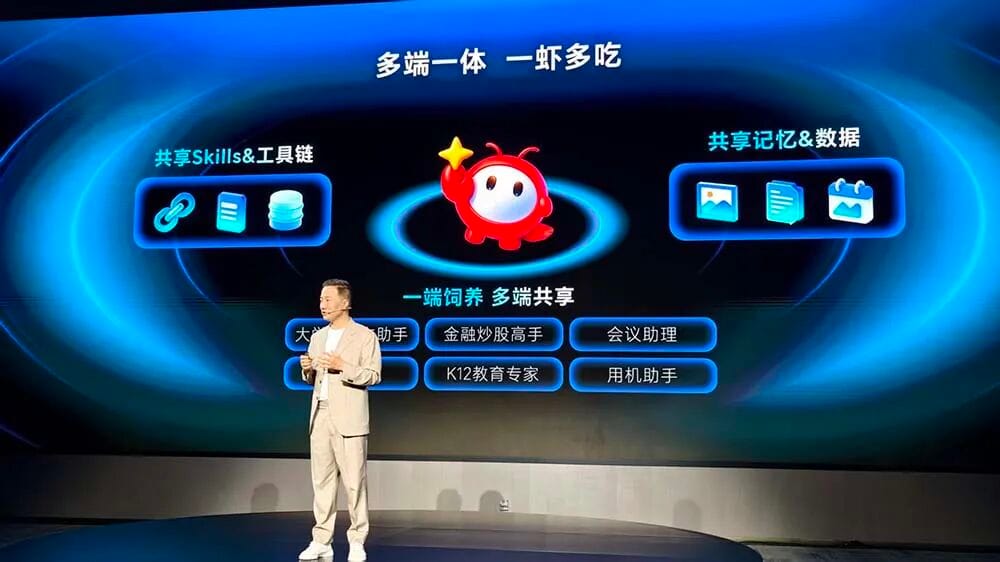
Honor is pushing AI deeper into the PC by shipping an on-device agent preinstalled out of the box, betting that lower usage costs and system-level security can turn “AI PCs” from niche experiments into everyday productivity machines.
At a product technology briefing in Xi’an on April 13, Honor introduced its self-developed terminal-side AI agent called “YOYO Claw”, which will debut on upcoming Honor MagicBook laptops. The company branded the device category as an “agent PC” that users can start using immediately without installing or configuring the agent.
Honor said YOYO Claw can reduce token consumption by as much as 50% versus OpenClaw in testing, while keeping “core data” 100% localized and protected with kernel-level encryption. The move targets three pain points Honor says are holding back agent adoption: poor usability, high costs and security concerns, with direct implications for device differentiation and total cost of AI-assisted work.
Preinstalling Agents Reframes PCs as “Partner Creators”
Honor PC product general manager Zhu Chencai said the company does not want to build “me too” products and argued that AI will reshape the PC industry’s competitive landscape. Honor’s stated goal is to shift the definition from “Personal Computer” to “Partner Creator”, positioning MagicBook as an always-on execution layer rather than a tool users manually operate.
From a market standpoint, preloading an agent changes the adoption curve: it removes setup friction and makes AI capability part of the hardware proposition at purchase, not a post-sale software decision. That can increase switching costs and strengthen ecosystem lock-in if the agent becomes a daily workflow entry point across documents, messaging and office tasks.
Connecting to WeChat and Feishu Turns Messaging Into a Command Layer
Honor said YOYO Claw can connect via QR code to commonly used apps including WeChat, Feishu, QQ and DingTalk, enabling users to issue instructions through chat interfaces. The company also highlighted mobile remote control support, allowing the phone to dispatch tasks while the PC “works 7x24”.
Honor preloads five “finished agents” and more than 20 “sub-agents” spanning education, office work, academic tasks, content creation and smart assistance. In demonstrations, these included tools for investment analysis and market queries, simulated trading, cooking guidance, homework grading and error classification, audio-text-image analysis for drafting, and one-click invitation creation and email sending.
For enterprise and household usage, Honor is also pitching “one-device training, multi-device sharing,” allowing multiple users to share one PC while keeping their agents independent.
Cutting Token Spend With Routing and Memory Control Targets Unit Economics
Honor attributed the claimed 50% token reduction to a “device-cloud collaboration, device-first” routing algorithm and a token scheduling engine designed for “link-level token control.” The company described five steps: task understanding, process token compression, precise memory matching, device-cloud model collaboration and result persistence.
Key design choices include routing simple, high-frequency or local-call tasks to on-device models with “zero token” consumption, while dispatching more complex planning and analysis to cloud models. The agent also inherits prior tool results, calls only task-relevant memory and can reuse historical outputs through task snapshots and execution logs when results don’t need updating.
If performance holds at scale, token efficiency becomes more than a technical metric: it directly reduces the marginal cost of AI work and could make “always-on” agent usage economically viable for a broader consumer base, especially when agents are invoked repeatedly for documents and workflow automation.
Hardening Security With a Non-Tamper “Safety Agent” Aims to Ease Adoption
Honor said it encrypts sensitive data at the kernel level and protects user skills, personal memory and privacy data through a device-grade security framework. It also introduced a dedicated “safety agent” that cannot be tampered with, monitoring other agents during execution, intercepting high-risk actions and triggering secondary confirmations for sensitive operations.
The security posture is central to Honor’s attempt to differentiate terminal-side agents from purely cloud-driven tools. Keeping “core data” local and adding system-level guardrails may lower user resistance to delegating tasks like document handling and messaging-driven automation, where data leakage concerns can stop adoption regardless of capability.
Related Coverage:
Honor Unveils 'Self-Evolving' AI in New Magic8 Smartphone, Challenging Rivals
Honor Unveils 'Robot Phone' and Humanoid Robot at MWC 2026, Signals Deeper AI Pivot