
Huawei-Backed Maextro Targets Ultra-Luxury Market With Aggressive Five-Model Blitz
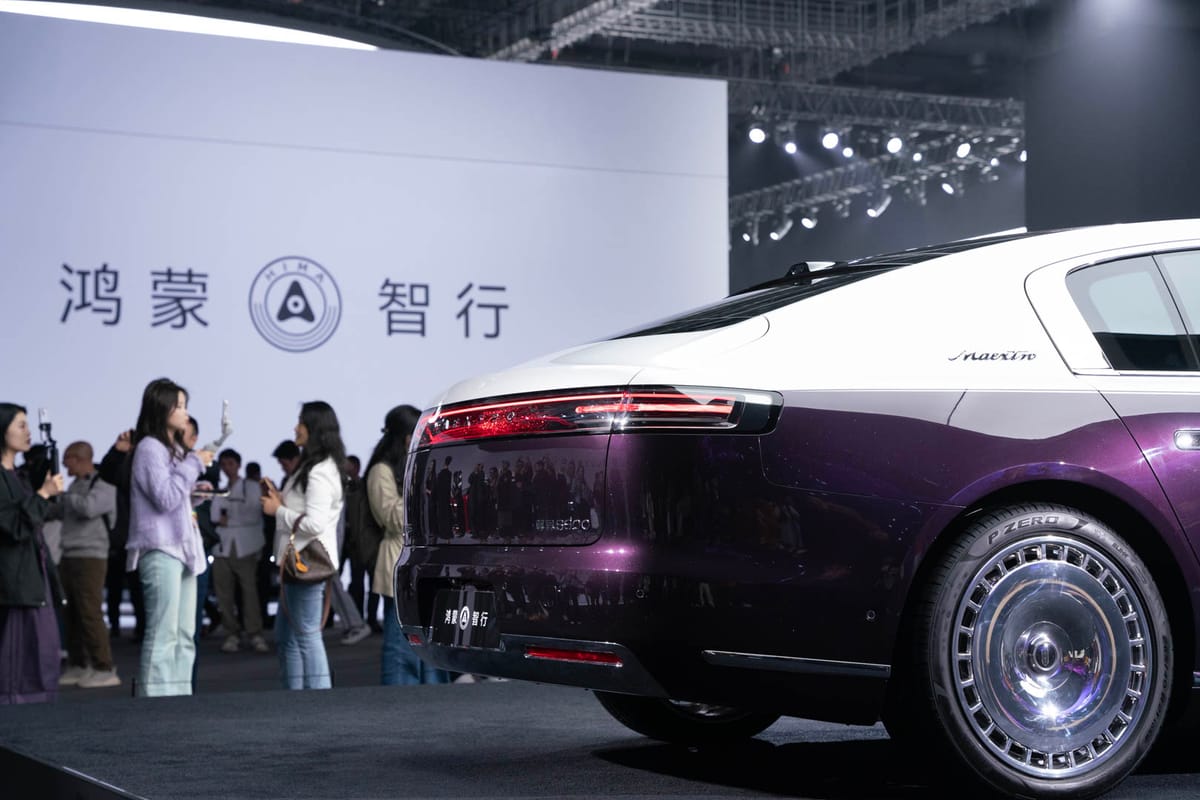
Maextro, the ultra-luxury electric vehicle brand co-developed by Huawei Technologies Co. and Anhui Jianghuai Automobile, is initiating a rapid portfolio expansion designed to upend the dominance of heritage manufacturers in the top-tier automotive segment. The marque plans to launch five new models in the coming year, transitioning from a single-product offering to a "corps combat" strategy rarely seen in the ultra-premium sector.
The aggressive roadmap reportedly includes new SUV and MPV lines, each offered in standard and long-wheelbase versions, alongside a new high-customization edition of its existing S800 sedan. This expansion aims to cover three major vehicle categories, positioning Maextro to challenge established rivals like Mercedes-Maybach and Bentley by leveraging Huawei’s advanced autonomous driving and smart cockpit technologies.
This strategic shift signals an attempt to reshape the pricing architecture of China's luxury market. While the upcoming SUV and MPV models will target a slightly lower price point than the current S800—potentially dipping below RMB 700,000 (US$96,500)—the high-customization S800 is designed to push the brand's price ceiling even higher. This creates a multi-tiered offensive intended to undercut legacy brands on price while outmatching them on technological integration.
The move has immediate implications for the competitive landscape of the world’s largest auto market. By saturating the ultra-luxury segment with a rapid succession of models, Maextro is testing whether a technology-first value proposition can displace the heritage-based prestige of European incumbents. However, analysts warn that such rapid proliferation carries risks of brand dilution and product homogenization.
Rapid Ecosystem Expansion
According to reports from local media, Maextro’s product matrix will expand to three series and six distinct models by next year. The planned SUV and MPV lines will ostensibly target both family and business users through their varying wheelbase configurations.
This rollout builds on the initial market traction of the Maextro S800, which is priced between RMB 708,000 (US 97,600) and RMB 1.018 million (US 140,400). Since its launch, the model has secured over 18,000 cumulative orders in 175 days, with October deliveries reaching 1,970 units. These figures place it ahead of electric competitors like the Nio ET9 and traditional rivals such as the Mercedes-Maybach S-Class in local monthly sales volume.
The brand's momentum has provided a financial lifeline to its manufacturing partner. Anhui Jianghuai Automobile reversed five consecutive quarters of revenue decline, posting growth in both revenue and gross margin in the third quarter, fueled by the brand's move upmarket.
Industrial and Technological Foundations
The feasibility of this rapid expansion rests on the TuLing platform, a scalable architecture developed by Huawei. Official data indicates the platform supports configurations ranging from dual to quad motors and is compatible with sedan, SUV, and MPV form factors. This modularity allows for the accelerated development of diverse body types without the long lead times associated with traditional luxury manufacturing.
To support this volume, a new "super factory" has been established. Environmental impact documents reveal a total investment of approximately RMB 3.98 billion (US$549 million) for the facility, which boasts a planned annual capacity of 200,000 new energy passenger vehicles.
If the upcoming five models can replicate the sales performance of the S800—averaging around 2,000 units per month—the brand could project a total monthly volume of 12,000 units, aligning well with the new facility's production capabilities. The brand argues its success is driven not just by price, but by addressing pain points via range-extender options and intelligent chassis systems that offer millisecond-level response times.
Differentiation Risks
Despite the ambitious targets, the "group warfare" model faces significant headwinds regarding product differentiation. Critics point out that launching multiple variants based on a shared platform risks falling into a "homogenization trap," where the distinction between models becomes merely cosmetic.
The strategy to offer standard and long-wheelbase versions to distinguish between household and business use is viewed by some industry observers as superficial. Unlike competitors such as BYD’s Yangwang, which differentiates its U8 Luxury and U8L editions through distinct, scene-specific hardware and executive configurations, Maextro’s current reported plans rely heavily on physical dimensions. Without deep customization in user scenarios, the brand risks confusing customers and diluting the exclusivity typically demanded by ultra-high-net-worth individuals.
The Premium Pricing Test
The second major hurdle lies in sustaining premium pricing power across a broader lineup. Maextro’s current valuation is heavily supported by Huawei’s technical endorsement and the novelty of the S800. However, the 500,000-plus RMB SUV market is already crowded with tech-heavy contenders like the Aito M9 (also Huawei-backed) and the Zeekr 009, alongside stalwarts like the BMW X5.
Maextro must articulate a clear value gap between its new offerings and existing Huawei-powered vehicles. If the new SUV cannot demonstrate a distinct "luxury" identity beyond the underlying software—which is shared with cheaper models—it may struggle to justify its premium against both internal and external competition. As the brand moves from a single hit product to a full lineup, the market will rigorously test whether its "tech-luxury" narrative can sustain an entire portfolio.