
Huawei's Aito Zhijie RX Bets on L3 Architecture as China Legalizes Conditional Autonomy
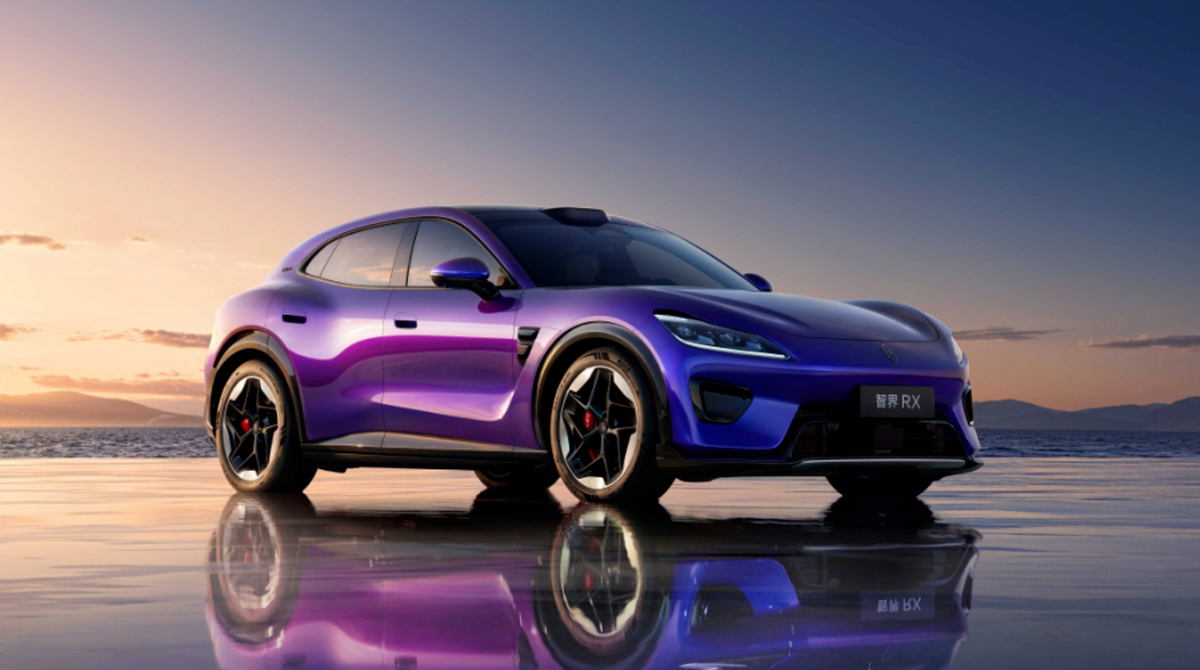
China's landmark L3 autonomous driving legislation, effective July 2026, is reshaping the premium EV market's value hierarchy—and Huawei's Aito Zhijie RX is positioning itself as the only mass-market SUV in the RMB 300,000 tier built from the ground up on a certified L3-compliant hardware architecture.
The regulatory shift has been swift and decisive. In December 2025, China's Ministry of Industry and Information Technology (MIIT) issued its first batch of L3 conditional autonomous driving production approvals, covering just two models for designated road trials. By July 2026, the Intelligent Connected Vehicle Admittance and Road Trial Management Measures formally legalized L3 operation nationwide. One month later, mandatory national standard GB 44721—2026 was ratified, requiring autonomous systems to perform at least as safely as a qualified, attentive human driver—effective July 1, 2027. The draft revision of the Road Traffic Safety Law, which for the first time embeds "autonomous vehicles" into national statute, followed in the same legislative cycle.
The market's initial response to this regulatory cascade has been unambiguous: when Zhijie, a sub-brand under HarmonyOS Autos —the joint venture between Huawei Technologies and Chery Automobile—opened pre-orders for the Zhijie RX, over 90% of reservation holders selected the L3-architecture trim, pushing the average transaction price to approximately RMB 380,000 (US$52,800).
Regulatory Timeline Accelerates Faster Than Industry Anticipated
The speed of China's L3 legislative march has caught even seasoned observers off guard. Within eight months—from MIIT's first pilot approvals in December 2025 to the August 2026 ratification of GB 44721—2026—Beijing constructed a near-complete legal and technical framework for conditional autonomy. That compressed timeline matters commercially: automakers that front-loaded hardware investment are now positioned to activate L3 functionality via over-the-air software updates the moment their specific model receives MIIT production certification, while competitors relying on retrofits face a structurally harder path.
As of July 2026, only a handful of models have secured MIIT L3 production permits. The Zhijie RX has obtained an L3 road-testing license and is actively conducting validation runs on urban expressways and complex road environments—a prerequisite stage before full production certification.
Hardware Redundancy Draws the Line Between L2 and L3 Architectures
The central technical fault line in China's autonomous driving market is not software capability—it is hardware redundancy. Under GB 44721—2026 and MIIT's admittance framework, L3-certified vehicles must demonstrate full-chain redundancy across steering, braking, power supply, computation, perception, and communications. The logic is unforgiving: L3 permits the driver to disengage eyes and hands within the system's Operational Design Domain, but the vehicle must execute a safe handover when system limits are reached. That handover window—the moment when the system is most stressed and the driver's situational awareness is lowest—is precisely where hardware backup is non-negotiable.
Software can be pushed over the air. Hardware cannot.
The Zhijie RX is engineered around eight full-chain redundancy dimensions: positioning, communications, power supply, computation, braking, steering, perception, and human-machine interaction. The flagship Zhijie RX Ultra integrates 38 fused perception sensors, including four LiDAR units. Zhao Changjiang, Executive Director and Executive Vice President of Zhijie Automobile, framed the market stakes bluntly: not buying an L3-architecture vehicle today is analogous to purchasing a non-5G handset in 2019—a depreciation decision disguised as a cost saving.
That framing has resonated. Pre-order data shows inbound demand from owners of traditional luxury marques and existing HarmonyOS Autos 9-series vehicles adding a second car—a demographic profile that typically prioritizes asset retention over specification novelty.
Zhijie RX and R7 Enter a Market Demanding Value Durability
On September 28, 2026, Zhijie launched two models simultaneously. The Zhijie RX—the brand's first "X"-series SUV—went on sale at RMB 259,800–389,800 (US$36,100–US$54,100). The comprehensively refreshed Zhijie R7 was priced at RMB 239,800–319,800 (US$33,300–US$44,400).
Huawei Consumer Business Group CEO Richard Yu positioned the Zhijie RX with deliberate precision: it is "HarmonyOS Autos' only L3-architecture model in the RMB 300,000 tier" and "the best-handling vehicle in the HarmonyOS Autos lineup." The dual claim is strategically coherent—the first addresses future regulatory value; the second addresses present-day ownership experience.
On the dynamics side, the Zhijie RX recorded a lap time of 1 minute 43.210 seconds at Zhejiang International Circuit an FIA-certified track, establishing the fastest lap by a Chinese-brand production SUV at that venue. The performance is underpinned by a front virtual kingpin four-ball-head full-aluminum double-wishbone suspension, rear five-link independent suspension, dual-chamber air suspension with continuously variable damping, and a 50:50 front-rear weight distribution. Dynamic performance advisory is led by Tobias Moers, former Chairman of AMG and former CEO of Aston Martin, with engineering input from veterans of BMW M5/X5M chassis development and Formula 1 tire programs at Michelin.
The drivetrain pairs Huawei's new-generation Huawei DriveONE electric drive system—with a sub-1ms torque response—with the Tuerling intelligent chassis platform. The all-wheel-drive variant achieves 0–100 km/h in 3.6 seconds and a top speed of 251 km/h, with a 100–0 km/h braking distance of 32.4 meters via six-piston fixed front calipers.
Battery and Body Safety Architecture Targets Systemic Anxiety
Beyond autonomous driving, the Zhijie RX addresses what remains the most persistent consumer concern in China's premium EV segment: structural and battery safety.
The battery system deploys an arch-bridge structural design, five-layer floor protection, five-layer cell safety, and five-layer thermal safety. The vehicle passed a combined water immersion, underbody scrape, collision, and nail penetration certification, receiving China Automotive Technology & Research Center TOP Safety and TOP Electric dual certification.
A notable engineering choice is the battery black-box system, inspired by aviation flight recorders. Using Huawei's NearLink wireless technology with triple power and communications redundancy, the system maintains data uplink under extreme conditions—addressing a longstanding evidentiary gap in post-accident liability determination, a gap that becomes more consequential as L3 shifts responsibility attribution between driver and system.
Body construction incorporates electromagnetic-thermal integrated die-casting technology, achieving a 55% increase in yield strength and a 15.5% weight reduction versus conventional methods. The rear floor area expands 26.8% compared to the Huawei Xunjie V9's equivalent structure.
Asset Depreciation Risk Reframes the Purchase Decision
The investment calculus for premium EV buyers in China has fundamentally shifted. Rapid model iteration has historically compressed residual values sharply—a structural disadvantage that L3 hardware architecture now partially offsets. Vehicles carrying certified L3-capable hardware can receive regulatory activation via software update, sustaining functional relevance across the 2027 implementation of GB 44721—2026 and beyond. Vehicles marketed as "L3-upgradeable" but built on L2 hardware platforms cannot make the same claim.
This creates a bifurcation in asset value that is not yet fully priced into the secondary market but will likely become apparent as the July 2027 mandatory standard implementation date approaches. For buyers in the RMB 300,000–400,000 segment—where cross-shopping against German luxury incumbents remains significant—the depreciation argument may prove more durable than any single specification comparison.
The Zhijie RX's 90%-plus L3-architecture trim selection rate, at an average price of RMB 380,000 (US$52,800), suggests that premium Chinese EV buyers are already discounting the future optionality value into their current purchase decisions.
Related Coverage:
Huawei, Seres Restructure AITO Partnership as Surging Smart Hardware Costs Squeeze EV Margins
Huawei Reengineers AI Infrastructure With Early Ascend 960 Launch