
NIO and Geely Forge Cross-Shareholding Alliance to Reshape China's EV Charging Landscape
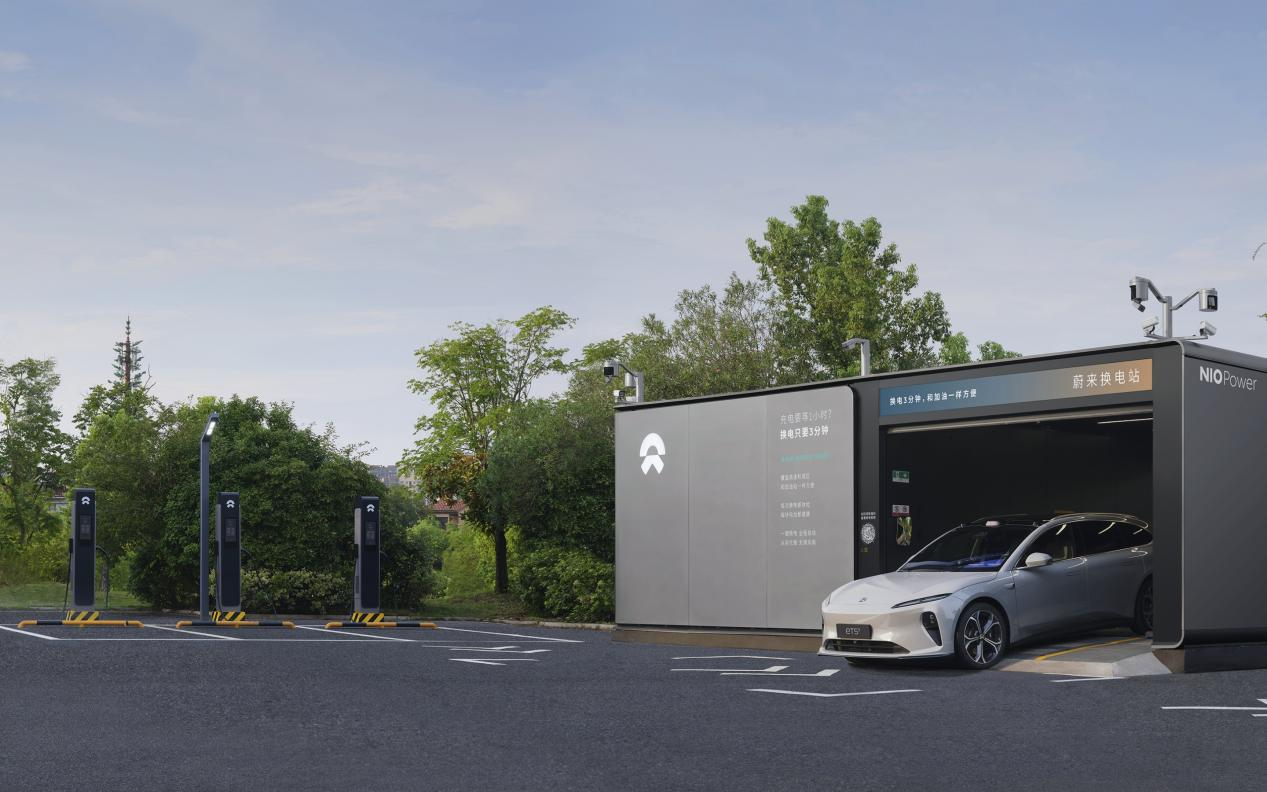
A capital-backed infrastructure merger between NIO and Zhejiang Geely Holding Group marks the most consequential consolidation in China's fragmented EV charging sector, replacing a three-year-old technical pact with equity stakes, asset transfers, and a unified swap standard targeting 10,000 stations by 2030.
The deal, announced September 28 in Hangzhou, moves well beyond the symbolic cooperation agreements that have defined China's charging wars. Geely will inject its wholly-owned subsidiary Yi Yi Hulian plus RMB 640 million (US$88.9 million) in cash to acquire a 30% stake in NIO Energy. In return, NIO takes a 10% counter-stake in Geely's Haohan Energy. The cross-shareholding structure is a deliberate mechanism to align incentives on infrastructure investment—a problem that bilateral agreements have repeatedly failed to solve.
Market reaction underscores the strategic weight of the transaction. For investors tracking NIO's path to profitability, the deal addresses a persistent drag: the capital intensity of building and operating a proprietary swap network that, as of September 27, 2026, comprises 4,126 swap stations and 5,307 charging stations with 30,598 charging guns across China—a total of 9,433 charging and swapping facilities.
Cross-Shareholding Dissolves China's Charging Silo Problem
China's charging infrastructure has long suffered from a structural paradox: the more aggressively automakers built proprietary networks, the more fragmented—and underutilized—those networks became. Battery swapping compounds the problem. Unlike plug-in charging, swap technology demands near-perfect standardization across battery pack dimensions, vehicle platforms, swap equipment, and backend operating systems. Technical cooperation protocols alone cannot resolve who bears construction costs or how revenue is divided when a third-party vehicle uses a rival's station.
The equity structure announced this week attempts to settle those disputes at the ownership level. By holding 30% of NIO Energy, Geely gains a direct financial interest in maximizing station utilization—including through its own vehicle lineup. By holding 10% of Haohan Energy, NIO acquires exposure to Geely's charging rollout without duplicating capex. The arrangement converts a zero-sum infrastructure race into a shared-return model.
Yi Yi Hulian's commercial-vehicle swap operations will be folded entirely into NIO Energy, which will continue running that business segment. This immediately adds high-frequency, predictable B2B demand—including from Caocao Mobility, Geely's ride-hailing platform—to NIO Energy's utilization base, a critical variable for a network whose economics depend on throughput per station.
Geely's Vehicle Scale Unlocks NIO Energy's Unit Economics
The more transformative element is the consumer-vehicle layer. Under the agreement, the two groups will co-develop a unified C-segment (passenger car) swap standard: Geely Holding is responsible for engineering swap-compatible passenger vehicles; NIO Energy is responsible for swap service delivery. In practical terms, future Geely-branded passenger cars—spanning Geely Galaxy, Lynk & Co, and Zeekr—could enter NIO's swap network as paying users.
For NIO Energy, this is a volume argument. The company has publicly stated a target of 10,000 cumulative swap stations by 2030, with annual power demand projected to exceed 10 billion kWh at that scale. Reaching those numbers requires not just continued station construction but a materially larger pool of compatible vehicles. Geely's multi-brand architecture—one of the broadest in China's domestic auto industry—provides exactly that.
Geely's own charging footprint is not trivial. As of the announcement date, the group operates more than 2,500 charging stations and 12,000 charging guns across 232 cities, with over 1,500 ultra-fast charging sites. Haohan Energy already aggregates charging maps for Galaxy, Lynk & Co, and Zeekr, and is open to third-party EV users. Geely's stated target: more than 22,000 charging stations and 100,000 charging guns by end-2027, including 15,000-plus "smart charging" stations and 50,000-plus smart guns, with coverage extending to every county-level city in China.
Three Years From Protocol to Equity: A Timeline of Escalating Commitment
The partnership's origins trace to November 29, 2023, when Geely Holding and NIO signed a swap cooperation agreement in Hangzhou, committing to a co-investment, co-build, co-share, co-operate model for both private and commercial vehicle swap standards. Geely became the second automaker to enter a swap partnership with NIO.
That agreement produced measurable progress on technical alignment but left the harder questions—asset ownership, cost allocation, return distribution—unresolved. The September 2026 transaction answers those questions through equity. The three-year gap between protocol and capital commitment reflects how long it takes to negotiate the financial architecture of infrastructure sharing at scale, particularly when battery swap standardization requires platform-level coordination across vehicle design cycles.
Impact Assessment: Who Gains, Who Watches
NIO Energy receives fresh capital (RMB 640 million / US$88.9 million), a commercial-vehicle utilization base via Yi Yi Hulian, and access to Geely's multi-brand passenger car pipeline—all of which improve the unit economics of its heavy-asset swap network.
Geely Holding acquires a 30% stake in the market's most extensive swap infrastructure without building from scratch, preserving its lead in commercial-vehicle swap through Yi Yi Hulian while gaining a credible C-segment swap entry point for its passenger brands.
Independent charging operators and smaller OEMs face a more consolidated competitive landscape. Two of China's largest EV-adjacent infrastructure players have now pooled assets, setting a de facto standard that smaller networks will struggle to match on coverage or utilization.
Investors in NIO Inc. (NYSE: NIO; HKEX: 9866) will focus on whether the capital injection and demand consolidation accelerate the timeline for NIO Energy's standalone profitability—a metric the parent company has flagged as material to its overall path to positive operating cash flow.
The deal does not eliminate competition in China's charging sector, which remains crowded with state-backed operators, independent charging networks, and OEM-affiliated platforms. But it establishes a new benchmark: that infrastructure consolidation in battery swapping requires equity alignment, not just technical handshakes.
Related Coverage:
NIO’s H1 Revenue Jumps 86% as Investors Question the Cost of Profitability
NIO, Xiaomi and Chery Race to Lock In China’s DRAM Supply
NIO's GeniTech: How a Captive Auto Chip Unit Is Becoming an AI Silicon Platform