
JD.com Returns to Profit, but Growth Engines Are Faltering
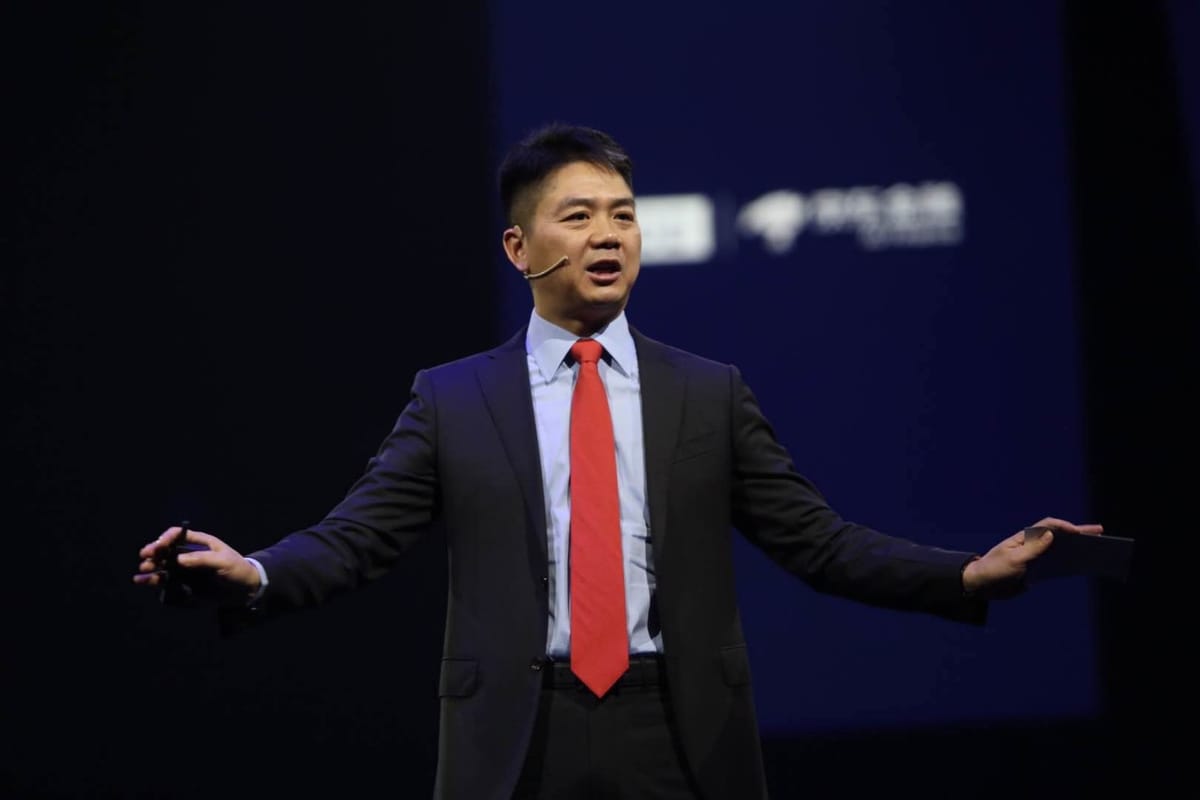
JD.com returned to operating profitability in Q1 2026, but the recovery masks a deteriorating earnings quality: net profit more than halved, its electronics core is shrinking, and three simultaneous cash-burning ventures — food delivery, lower-tier market expansion, and European retail — are offsetting the temporary earnings support created by the subsidy cycle.
The e-commerce giant reported Q1 2026 revenue of RMB 315.7 billion (US$43.8 billion), up 4.9% year-on-year, a 53.2% year-on-year collapse from RMB 10.9 billion in Q1 2025. Operating profit recovered to RMB 3.8 billion after three consecutive quarters of losses, but profitability pressures remain significant.
The results, published May 12, arrived as investors are reassessing whether JD.com's aggressive pivot into food delivery — a market dominated by Meituan and Ele.me with a combined share exceeding 90% — can ever generate returns commensurate with its cost.
Fading Subsidy Tailwinds Expose Electronics Revenue in Freefall
JD.com's retail arm, which contributed RMB 268.6 billion (US$37.3 billion) in Q1 2026 revenue — or 85% of group sales — grew just 1.8% year-on-year, the weakest performance among all three business segments. The breakdown reveals a bifurcated reality that is increasingly difficult to paper over.
Electronics and home appliances, the segment historically synonymous with JD.com's identity, posted revenue of RMB 132.2 billion (US$18.4 billion), contracting 8.4% year-on-year. The decline is a direct consequence of what analysts have termed a "subsidy hangover." China's national consumer electronics trade-in subsidy program, which began disbursing funds in Q3 2024, turbocharged JD.com's electronics segment growth to 15.8%, 17.1%, and 23.4% across Q4 2024 through Q2 2025. That demand was borrowed from the future. By Q4 2025, the same segment had already swung to -12% growth, and the contraction deepened in Q1 2026.
A secondary headwind is now compounding the subsidy fade: rising upstream costs for memory chips and other components are pushing consumer electronics retail prices higher, suppressing unit volumes at precisely the moment when base effects from peak subsidy spending are most punishing.
General merchandise, by contrast, continues to outperform. Revenue from that category reached RMB 112.6 billion (US$15.6 billion) in Q1 2026, up 14.9% year-on-year — consistent with growth rates of 12.1% to 18.8% sustained across the prior four quarters. The divergence is not coincidental. JD.com's food delivery push, while loss-making, is functioning as a high-frequency traffic engine that is migrating users toward daily consumables. The February 2026 launch of the "Billion-Yuan Supermarket" channel — covering fresh produce, snacks, beverages, personal care, and pet products — is a deliberate attempt to convert delivery app engagement into general merchandise transactions.
The strategic logic is sound. The unit economics, at this stage, are not.
Food Delivery Burns RMB 103.5 Billion in Operating Losses, Margin Deteriorates Despite Spending Cuts
JD.com's new business segment — encompassing food delivery, JD.com Logistics' industrial development unit, Jingxi, and international operations — reported Q1 2026 revenue of RMB 6.3 billion (US$874 million), up 9.1% year-on-year from RMB 14.8 billion in Q2 2025. On the surface, the trend appears encouraging.
Beneath it lies a more alarming signal. The operating loss margin for the new business segment has deteriorated dramatically: from -23.1% in Q1 2025 to -106.7%, -100.9%, -105.1%, and -164.9% across the subsequent four quarters. In other words, for every RMB 100 of new business revenue generated in Q1 2026, JD.com is losing RMB 164.9 in operating costs. The absolute loss is shrinking because JD.com CEO Xu Ran explicitly committed at the Q4 2025 earnings call to reducing total food delivery investment in 2026 relative to 2025. Marketing expenditure confirms the pivot: quarterly spend fell from RMB 27.0 billion in Q2 2025 to RMB 21.1 billion in Q3 2025, rose to RMB 25.3 billion in Q4 2025, then dropped sharply to RMB 15.4 billion in Q1 2026.
Yet the year-on-year marketing spend increase in Q1 2026 still stood at 45.8%, underscoring that JD.com has not exited investment mode — it has merely moderated the pace of escalation. The worsening margin-to-revenue ratio signals that JD.com's food delivery operation has not yet reached the density or network efficiency required to bend the cost curve. Until it does, JD.com's retail segment — itself growing at only 1.8% — must continue subsidizing the venture.
JD.com Logistics Outperforms, but Cannot Offset Group-Level Drag
One segment is delivering unambiguous results. JD.com Logistics, which serves both internal fulfillment needs and third-party customers, generated Q1 2026 revenue of RMB 60.6 billion (US$8.4 billion), up 29% year-on-year.
The logistics outperformance reflects two dynamics: continued penetration of external enterprise clients and the structural advantage of JD.com's owned warehouse-and-delivery infrastructure in a market where same-day and next-day fulfillment has become a baseline consumer expectation. However, at RMB 1.02 billion, logistics operating profit covers less than 1% of the new business segment's operating losses, limiting its role as a financial buffer.
Jingxi and Europe Represent Long-Duration Bets With Uncertain Payoffs
Beyond food delivery, two additional investment fronts are extending JD.com's financial stress horizon. Jingxi, the company's lower-tier market platform targeting price-sensitive consumers in China's smaller cities and rural areas, is being repositioned as a direct competitor to PDD Holdings' Pinduoduo. In April 2026, Jingxi announced a renewed RMB 10 billion-plus "Factory Goods Subsidy" program, channeling funds into supply-chain-origin manufacturers across JD.com's established industrial belt network. The initiative is strategically coherent — founder Richard Liu has consistently identified the lower-tier market as a decade-defining opportunity analogous in importance to JD.com Logistics — but Jingxi's track record warrants caution. The platform generated operating losses exceeding RMB 10 billion in 2021, and its social commerce unit Jingxi Pinpin was one of the deepest casualties of JD.com's 2022 restructuring.
Internationally, Liu has publicly stated his intention to eventually hand domestic operations entirely to the management team and focus full-time on global expansion. JD.com has accelerated its push into European retail, including a formal acquisition bid for CECONOMY, Germany's largest consumer electronics retailer. The company's European online retail brand JOYBUY faces a market characterized by high consumer standards, entrenched logistics incumbents, and regulatory complexity. Building the warehouse network, fulfillment speed, and service quality required to compete meaningfully will demand sustained capital allocation over a multi-year horizon.
Operating Profit Recovery Masks a Structural Inflection Point
JD.com's return to operating profitability in Q1 2026 — RMB 3.8 billion after three consecutive loss quarters — is a necessary but insufficient milestone. The group's financial architecture remains fragile: a retail core growing at sub-2%, an electronics segment in contraction, and three concurrent investment programs each requiring nine-figure annual funding.
The subsidy-driven growth cycle that briefly restored investor confidence between late 2024 and mid-2025 has closed. What replaces it — whether food delivery achieves viable unit economics, whether Jingxi can displace Pinduoduo in lower-tier markets, and whether European expansion generates returns before it strains the balance sheet — will define JD.com's investment case for the next two to three years.
For now, the numbers suggest the company is managing its cash burn more deliberately than it was six months ago. That is progress. It is not yet a turning point.
Related Coverage:
JD.com Q4 2025 Earnings: Operating Loss Driven by New Business Drag, Leverage Rises