
Nio's Onvo L90 Democratizes Premium Autonomous Tech at $37,000
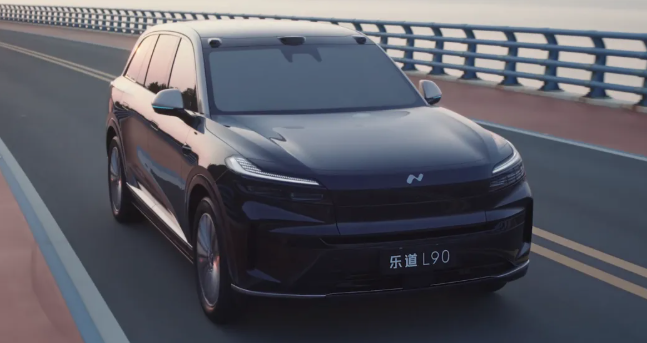
Nio's mass-market brand Onvo launched its refreshed L90 electric SUV on April 21, bringing flagship autonomous driving hardware previously reserved for six-figure vehicles to a starting price of RMB 265,800 (US$36,917). The move marks a strategic inflection point for the parent company, which posted its first quarterly profit in Q4 2025 and aims to scale deliveries to 500,000 units annually while maintaining full-year profitability.
The 2026 Onvo L90 becomes the only three-row electric SUV under $42,000 to combine three technologies typically limited to luxury segments: a self-developed 5nm autonomous driving chip (Shenji NX9031), lidar sensors, and a proprietary world model for predictive decision-making. Battery-as-a-Service (BaaS) pricing reduces the entry point to RMB 179,800 (US$24,972), undercutting hybrid rivals like Li Auto's L9 by 30% in upfront cost.
Flagship Tech Cascades Down Price Ladder
Nio's decade-long, RMB 60 billion (US$8.3 billion) R&D investment is now yielding returns through platform-sharing between its premium brand and Onvo. The L90's Max+ trim inherits hardware identical to Nio's ET9 flagship sedan, including:
- Shenji NX9031 Chip: Built on 5nm automotive-grade process with 50+ billion transistors, the chip delivers equivalent performance to four Nvidia Orin-X units while processing 6.5 gigapixels per second with sub-5ms latency. Cumulative shipments exceed 150,000 units as of Q1 2026, enabling economies of scale that CEO William Li publicly confirmed have yielded "observable cost reductions" in self-driving hardware.
- Nio World Model (NWM): The AI system simulates 216 traffic scenarios within 100 milliseconds, enabling long-horizon trajectory planning. Combined with high-definition lidar, it supports Level 3-equivalent urban navigation across weather conditions—functionality previously limited to vehicles priced above RMB 500,000 (US$69,444).
Lower trims retain Nvidia Orin-X vision-only systems, scheduled for a July 2026 software update to enhance urban navigation capabilities. All variants share Nio's 900V architecture, delivering 0–100 km/h acceleration in 4.7 seconds (all-wheel drive) while maintaining 605 km CLTC range on an 85 kWh battery.
Architectural Advantages Target Extended-Range Incumbents
Pure-electric three-row SUVs account for less than 10% of China's large family vehicle segment, dominated by extended-range hybrids from Li Auto and Huawei-backed Aito. Onvo's third-generation cell-to-chassis (CTC) platform eliminates internal combustion engine components, reallocating space to a 240-liter front trunk and 30-liter rear cooler—storage capacity 15–20% superior to plug-in hybrid competitors of similar exterior dimensions.
Access to Nio's 2,000+ battery-swap stations resolves the charging infrastructure gap that historically favored hybrids. Three-minute swaps match refueling speed without requiring users to locate charging stalls, a critical advantage for families on multi-day trips. China Passenger Car Association data shows extended-range vehicle sales growth decelerated to single digits in 2025, while battery-electric vehicles gained 8 percentage points in the midsize-to-large SUV category.
Profitability Pivot Hinges on Volume Scaling
Nio crossed into quarterly profitability in Q4 2025 with RMB 283 million (US$39.3 million) net income and 18.1% vehicle margin, supported by RMB 45.9 billion (US$6.4 billion) in cash reserves. However, sustaining annual profitability requires lifting delivery volumes from 300,000 units currently to Li's stated target of 500,000, with Onvo serving as the primary volume driver.
The L90 has delivered over 50,000 units since launch, claiming the best-seller position in the RMB 300,000+ electric large SUV segment. By repurposing Nio's proprietary silicon and software across both brands, the company amortizes R&D costs while avoiding third-party chip premiums. Onvo's upcoming L80 five-seater and refreshed L60 compact SUV, both debuting in Q2 2026, aim to complete a three-vehicle lineup covering the RMB 150,000–300,000 mass market.
Nio's mainline brand will counter with the ES9 flagship SUV later this year, reinforcing its positioning above RMB 400,000 (US$55,556) and protecting margin structure. The dual-brand strategy mirrors Volkswagen's taxonomy, with Nio pursuing technological prestige while Onvo pursues penetration—a structure Li believes can sustain gross margins above 20% at 500,000-unit annual run rates.
Market Implications
The L90 refresh intensifies pressure on Li Auto, which reported 11.5% margin erosion in Q1 2026 amid extended-range vehicle saturation. Li's forthcoming pure-electric SUV, slated for H2 2026, will compete directly with Onvo on battery-swap convenience and autonomous capability parity.
For global automakers, Nio's vertical integration into silicon design illustrates China's playbook for cost leadership in premium features. While Tesla's Full Self-Driving hardware costs an estimated $1,500 per vehicle, industry analysts estimate Nio's in-house Shenji stack reduces per-unit expense by 40%, enabling downmarket deployment without margin sacrifice.
The strategy's sustainability depends on software execution. NWM currently handles complex urban scenarios but lags Tesla's FSD in edge-case robustness, according to third-party testing by Chinese media. Nio's decision to bundle Max+ hardware at sub-$40,000 pricing telegraphs confidence that software improvements will justify premium positioning versus vision-only alternatives—a bet that will crystallize as 2026 over-the-air updates deploy to Onvo's growing fleet.
Related Coverage: