
StepX Neo Debut Signals China's Sharpest Bet Yet on Agentic Hardware
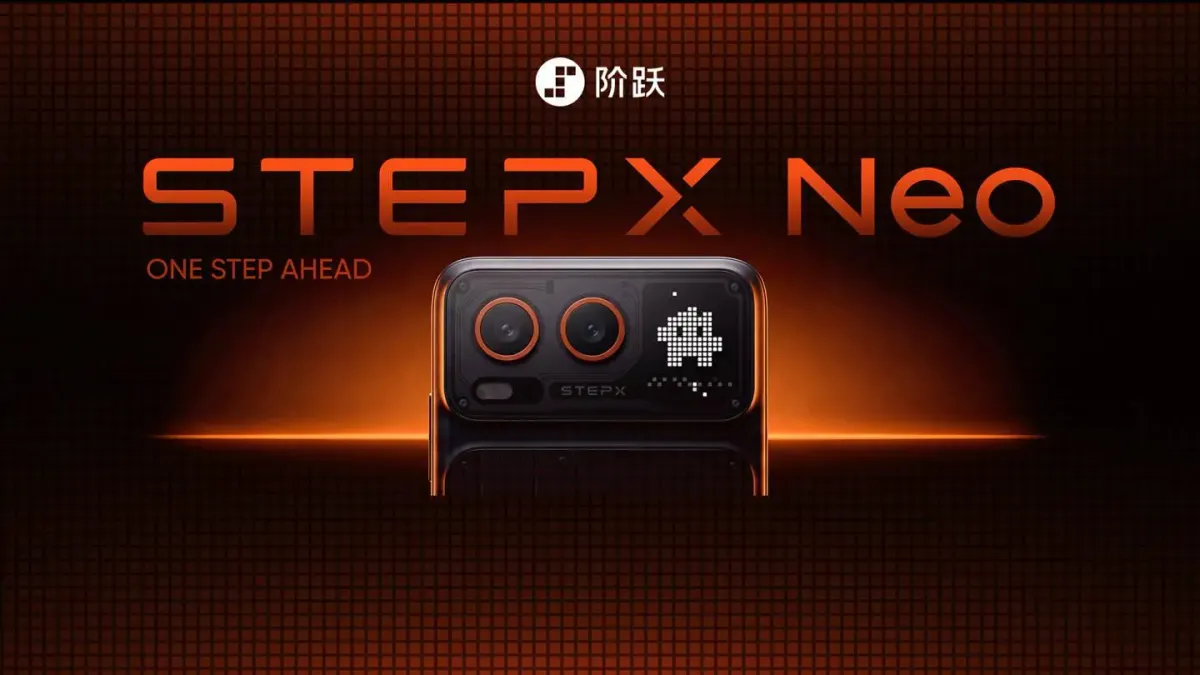
StepFun launches what it calls the world's first agent-native smartphone, backed by a 10-plus-partner app ecosystem including Alipay and Meituan — reframing the device as an AI orchestration layer rather than a handset.
The Shanghai-based large model unicorn unveiled three products simultaneously on July 13, 2026: the Step AOS (Step Agentic-native OS) operating system, a system-level personal agent called Amoo, and an AI-native hardware brand, STEPX. The flagship device, STEPX Neo, made its first public appearance at the same event — though founder Yin Qi was careful to call it a "preview," not a formal launch, signaling that the product roadmap remains deliberately open-ended.
The market framing is pointed. By assembling a first-tier app coalition — Alipay, Meituan, Amap, DiDi, JD.com, Baidu, Weibo, Tongcheng, CapCut, and WPS — before disclosing a single hardware specification, StepFun is prioritizing ecosystem credibility over device benchmarks. That sequencing reflects a hard lesson absorbed from earlier agentic phone attempts: without cross-app permission grants, the hardware is inert.
Ecosystem Lock-In Drives the Strategy, Not Specs
STEPX Neo's commercial logic rests almost entirely on Step AOS's ability to dissolve what Yin Qi describes as three structural barriers facing today's agents: a "memory wall" caused by siloed app data, a "decision wall" from single-model architectures, and an "action wall" imposed by existing app permission frameworks.
Step AOS addresses all three at the OS level. Its dual-domain, three-stage memory architecture separates user context from agent knowledge accumulation, processing interactions through recording, consolidation, and retrieval stages. Compute scheduling unifies CPU, GPU, and NPU resources into a single pool, enabling flexible on-device versus cloud task routing — what Yin Qi frames as "edge-first, cloud-deep," where simple tasks like setting alarms run locally while complex multi-step chains escalate to cloud inference.
Critically, Step AOS introduces an atomic capability engine that decomposes existing app functions into agent-schedulable micro-services. This is the technical mechanism that makes partner integrations more than cosmetic: Alipay, Meituan, and DiDi are not merely accessible via the agent interface — they are, in principle, decomposable into callable actions that Amoo can chain without user-initiated app switching.
A 1.5-Trillion-Parameter Model Anchors the Cloud Side
The hardware announcement arrived one day after StepFun released the Step Edge family of on-device foundation models, which the company claims ranked first globally across 29 benchmark evaluations for edge-class models, and first domestically on GUI, agent, and terminal task benchmarks. The model family spans 300 million to 400 billion parameters, covering the full edge-to-cloud continuum.
More consequentially for investors tracking China's frontier model race: StepFun disclosed that its Step Pro flagship reasoning model — with a parameter count exceeding 1.5 trillion — is nearing release. If that figure holds at launch, it would represent one of the largest publicly disclosed parameter counts among Chinese large language models, placing StepFun in direct competition with Alibaba Group's Qwen series and Baidu's ERNIE at the high end of the reasoning model segment.
The timing is deliberate. A 1.5-trillion-parameter cloud model paired with a purpose-built edge model family and an agent-native OS creates a vertically integrated inference stack — one that, if it performs as described, would be difficult for pure-software competitors to replicate without equivalent hardware distribution.
Comparing Trajectories: StepX Neo vs. the "Doubao Phone" Benchmark
Yin Qi acknowledged ByteDance's Doubao-branded phone experiment as "an extremely important exploration that brought the agentic phone concept into public consciousness." The implicit positioning is clear: StepFun views itself as the execution-focused successor, not the concept pioneer.
The comparison cuts both ways. Where the Doubao phone surfaced ecosystem friction early — app developers proved reluctant to grant agents the cross-app permissions that make agentic orchestration useful — STEPX Neo arrives with signed ecosystem agreements already in place. That is a measurable structural advantage at the same stage of development.
However, signed agreements and functional integrations are not equivalent. The depth of permission grants — whether partners are exposing full action APIs or merely allowing agent-triggered deep links — will determine whether Amoo delivers genuine task completion or sophisticated app-launching. StepFun has not yet disclosed technical integration specifications for any partner.
100-Day Co-Definition Period Shapes a Staged Commercialization Path
Rather than committing to a ship date, StepFun is running a 100-day community co-development program. The initiative, branded in partnership with Bilibili, invites 1,000 early creators to test the device and build agents. A follow-on event in approximately 100 days — mid-October 2026 by the timeline implied — is when Yin Qi says "more agents will appear" and further product details will be disclosed.
This structure serves multiple functions. It extends the runway for hardware finalization without triggering pre-order expectations, generates real-world agent use cases that can be packaged as launch content, and creates a developer community with vested interest in the ecosystem's success before general availability.
For institutional observers, the staged approach also signals that StepFun is not optimizing for first-quarter shipment volume. Terminal President Ni Jiayue confirmed the near-term goal is scale — not raw unit output — prioritizing early adopter density over market share metrics.
Impact Assessment: What This Means for China's AI Hardware Stack
StepFun's entry reconfigures the competitive map in three directions.
For Qualcomm and MediaTek: An OS that routes inference dynamically between on-device and cloud compute places new demands on chipset NPU performance and power envelopes. If Step AOS gains traction, it creates pressure on silicon partners to optimize for agent workload profiles rather than traditional benchmark suites.
For super-app incumbents: Alipay, Meituan, and DiDi joining the ecosystem as first-batch partners is not neutral. It validates the agentic phone category for their own product roadmaps while simultaneously conceding some interface control to StepFun's OS layer. The longer-term tension — between driving transactions through their own apps versus enabling OS-level agent orchestration — will surface as the ecosystem matures.
For China's LLM competitive landscape: StepFun is now simultaneously a model lab, an OS developer, and a hardware brand. That vertical integration mirrors the strategy Huawei Technologies employed to insulate its AI stack from external dependencies. Whether a startup-scale organization can execute across all three layers without diluting model research quality is the central execution risk.
Yin Qi's closing observation at the event may be the most strategically revealing: in his vision of the mature agentic phone, users will interact less, not more — the device completes tasks through minimal inputs rather than sustained engagement. That inversion of the attention-economy model, if it proves commercially viable, would represent a structural disruption to the engagement metrics that underpin China's mobile advertising industry.
The market has 100 days to watch the first data points arrive.
Related Coverage:
StepFun Secures $7 Billion in Largest Chinese AI Funding Round, Marking New Era in Physical AI