
Unitree Robotics Founder Predicts Embodied AI’s 'ChatGPT Moment' Is Still Years Away
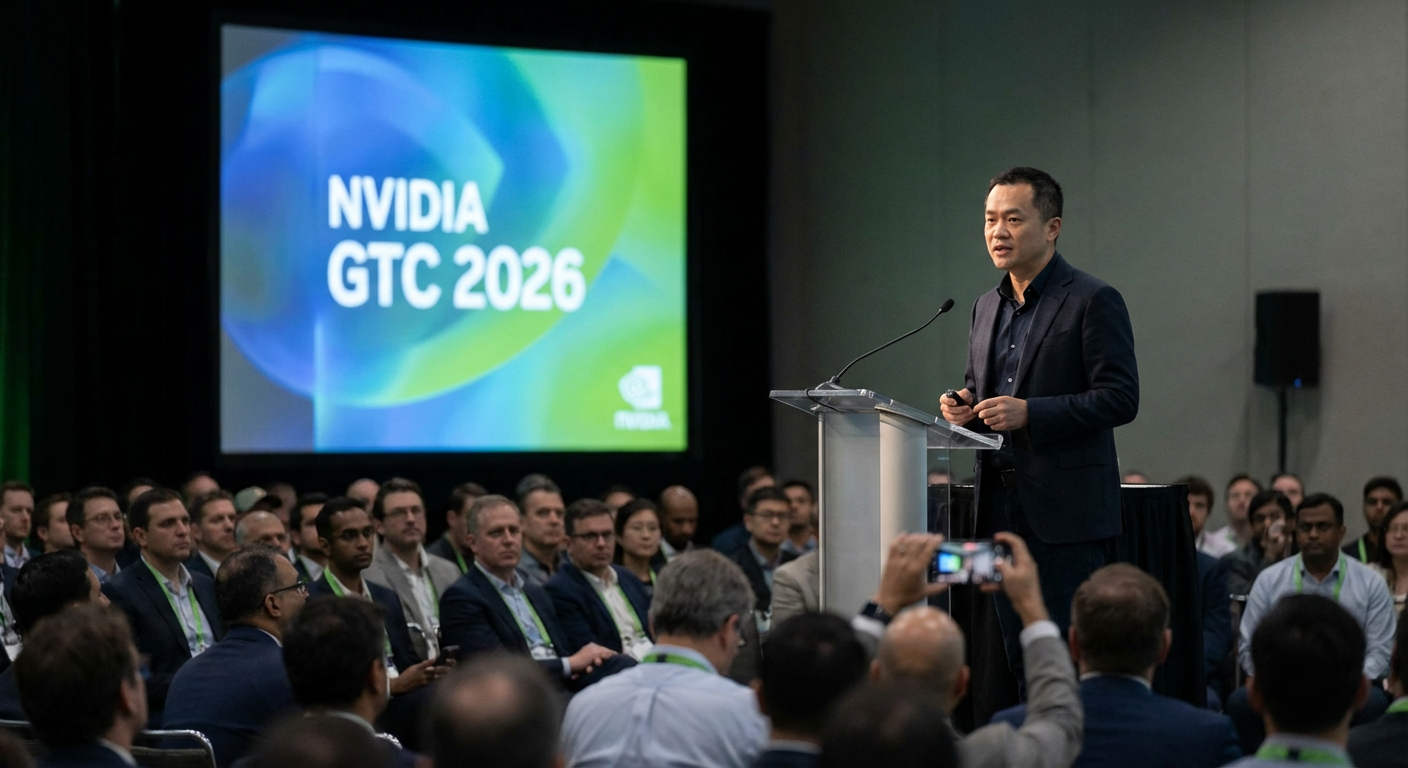
The founder of a leading Chinese robotics firm has stated that while embodied artificial intelligence has become a focal point for the global technology sector, the industry remains a significant distance from achieving a breakthrough comparable to the "ChatGPT moment."
Speaking at the NVIDIA GTC 2026 conference, Wang Xingxing, the founder and CEO of Unitree Robotics, the executive outlined the technical hurdles preventing robots from seamlessly operating in unfamiliar environments.
Wang argued that the current primary bottleneck is the absence of a model with strong generalization capabilities capable of executing tasks stably in unstructured settings. He predicted that the industry might reach this critical tipping point in the next one to two years at the earliest, though a timeframe of two to three years is also possible. Wang defined this "ChatGPT moment" specifically: it will arrive only when a robot can perform 80% of assigned tasks within 80% of unfamiliar scenarios using solely verbal or textual instructions.
To bridge this gap, Wang identified three critical areas requiring development. First, the industry must enhance the model's ability to express tasks and actions to overcome generalization limits. Second, there must be an improvement in the efficiency of utilizing diverse data sources—such as video and simulation—to reduce reliance on large-scale data collection from physical hardware. Third, reinforcement learning needs to achieve a scale effect where data is reusable and cumulative.
Regarding technical pathways, Wang expressed optimism for "World Models" and video generation models over current Vision-Language-Action (VLA) models. He noted that World Models have a higher development ceiling and can better leverage the vast amounts of video and text data already available on the internet.
Reflecting on product development, Wang highlighted the company’s G1 humanoid robot, released in May 2024, describing it as a "classic" design that will remain relevant even two decades from now due to its compact structure and high flexibility. He also discussed the company's recent participation in the Spring Festival Gala, where Unitree utilized a pre-trained full-body reinforcement learning model to enable robots to perform complex martial arts maneuvers, demonstrating the potential for combining agile movement with stable execution.
Wang concluded by emphasizing that physical movement capabilities and task execution intelligence must advance simultaneously. He noted that achieving true embodied AI will likely require global collaboration across the tech sector, suggesting that a breakthrough by any single player would serve as a catalyst for the entire industry.
Related Coverage:
Unitree Robotics Launches App Store for Humanoid Robots in Push for Ecosystem Monetization