
Voyah Targets Premium Hybrid Market With Huawei-Powered 800V Sedan
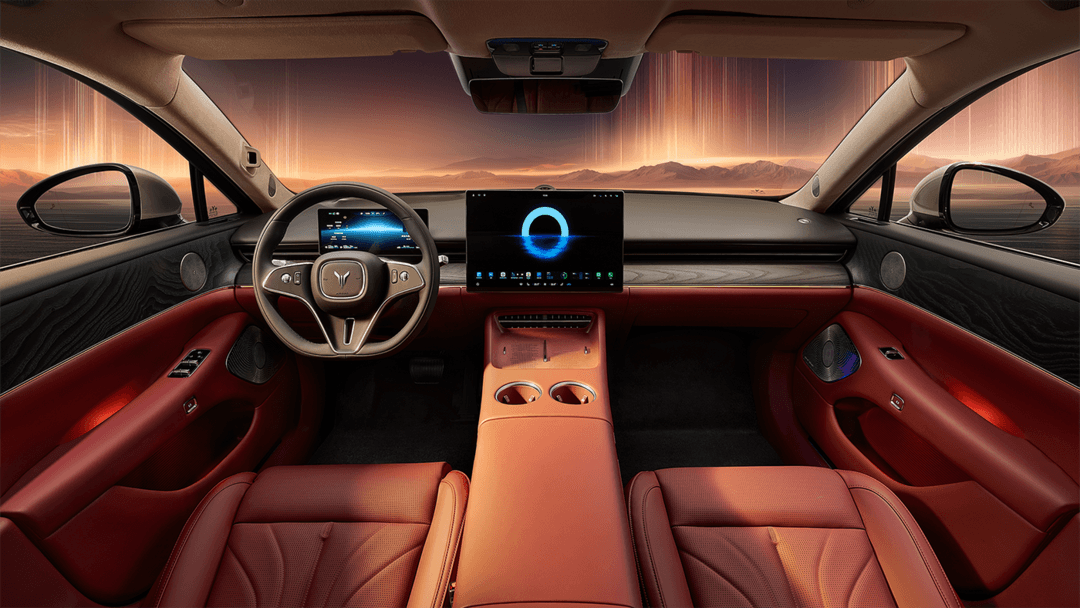
Voyah, the premium new energy vehicle division of Dongfeng Motor Corporation, has launched the Zhuiguang L, the first Chinese plug-in hybrid sedan utilizing an 800-volt high-voltage architecture. The model integrates Huawei Technologies Co.’s latest autonomous driving system and smart cockpit, signaling a strategic push to capture the premium executive sedan segment through advanced electrification specifications.
Released on December 10, the Zhuiguang L lists between 279,900 yuan (US38,500) and 309,900 yuan (US42,650). Its standout feature is a 63-kilowatt-hour battery pack, enabling a pure electric range of 410 kilometers. This figure represents the longest electric range currently available in the plug-in hybrid sedan market, surpassing competitors in both the extended-range and electric sectors.
The launch aims to disrupt a market polarized between budget-friendly hybrids and established luxury internal combustion models like the Mercedes-Benz E-Class and Audi A6L. By offering high-end specifications such as rear-wheel steering and ultra-fast charging, Voyah is justifying a higher price point compared to sub-200,000 yuan competitors from BYD and Geely Automobile.
Investors are watching whether the inclusion of Huawei’s technology ecosystem can replicate the sales success seen in other partner models in the luxury segment. The vehicle targets a gap in the executive market for a stable, luxury-oriented aesthetic, diverging from the sportier, youth-focused designs currently saturating the sector.
Strategic Technology Partnership
The Zhuiguang L incorporates Huawei’s Qiankun ADS 4 intelligent driving system. Recent competitive testing suggests the system achieves highly anthropomorphic behavior and robust active safety performance in complex scenarios, serving as a core differentiator for the vehicle.
Inside, the vehicle utilizes the HarmonyOS 5.1 cockpit system. This upgrade facilitates seamless cross-device connectivity and supports a rich application ecosystem. The centerpiece is a 16.1-inch 3K resolution control screen, offering an interface experience comparable to a high-end tablet for users familiar with Huawei’s operating system.
Powertrain and Architecture
Voyah’s adoption of 800V architecture marks a technical milestone for domestic plug-in hybrids. The vehicle supports 5C supercharging with a peak power of 320kW, capable of replenishing the battery from 20% to 80% in 12 minutes—significantly faster than standard benchmarks like the Tesla Model 3 V3 supercharging.
The powertrain combines a 1.5T engine with electric motors to deliver a total output sufficient for a 0-100 km/h sprint in 4.8 seconds. The 63kWh battery utilizes cell-to-pack (CTP) technology within the ESSA architecture, maximizing volume utilization to maintain interior space despite the large pack size.
Design and Chassis Dynamics
Measuring 5,125mm in length with a 3,010mm wheelbase, the sedan offers executive-level dimensions. The design language emphasizes stability and width, drawing aesthetic comparisons to the high-end Maextro S800. This "Mini Maextro" styling targets prospective buyers seeking presence and conventional luxury.
The chassis configuration includes double wishbone and five-link suspension with aluminum alloy components, air suspension, and continuous damping control (CDC). Notably, the inclusion of a rear-wheel steering system reduces the turning radius to 5.55 meters, enhancing maneuverability for a vehicle of this size.
Market Positioning
The Zhuiguang L faces a competitive landscape dominated by aggressive pricing. While volume leaders in the plug-in hybrid sector, such as the BYD Han DM-i, typically price below 250,000 yuan with a focus on cost-efficiency, Voyah is effectively targeting the sub-300,000 yuan premium bracket.
Sales data indicates demand for budget hybrids is high, but the 27.99 million yuan starting price places the Zhuiguang L in a higher tier. Voyah is betting that the lack of conservative, executive-style options in the current market, combined with reduced operating costs from the large battery, will attract wealthier demographics similar to the customer base of the Aito M9.