
World's First Embodied Agentic OS Enables Humanoids to "Think While Working"
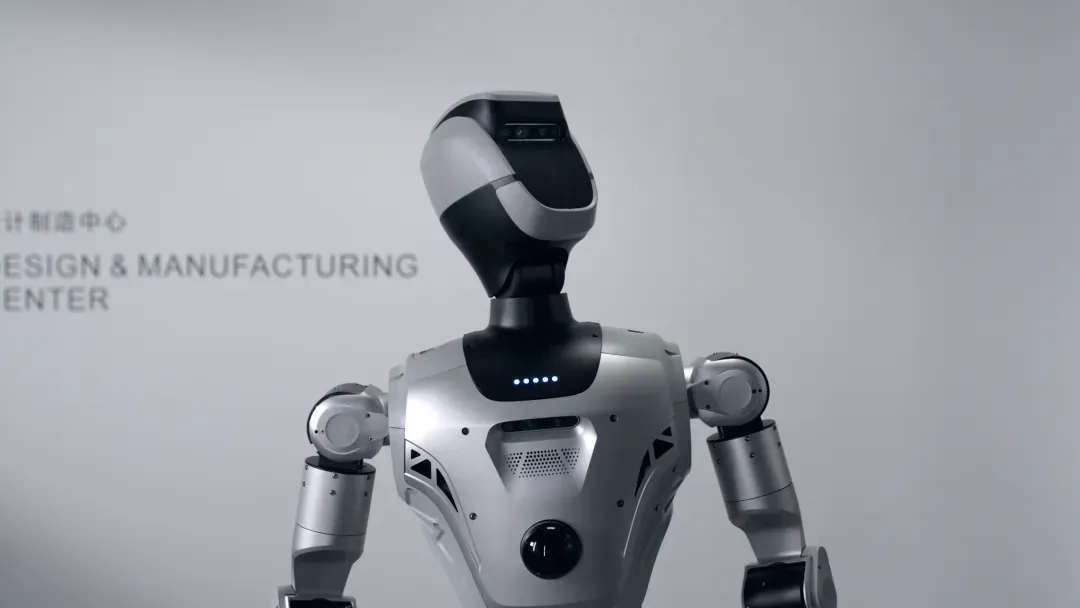
Shenzhen-based LimX Dynamics has unveiled COSA (Cognitive OS of Agents), marking a fundamental departure from the demo-driven approach dominating global humanoid robotics. The system enables full-size humanoid Oli to execute continuous, autonomous tasks in unscripted environments—without teleoperation or editing. Unlike competitors grafting large language models onto robot platforms, COSA represents an architectural rethink: a complete operating system where cognition and physical action function as a unified closed loop, rather than sequential processes.
This matters because the industry has reached an inflection point. Models can now understand complex instructions, yet translating that understanding into reliable physical execution remains the bottleneck preventing commercial deployment. COSA addresses this by natively integrating the robot's body and physical environment from the ground up, rather than treating motion control as an afterthought.
Architecture vs. Application: The Figure Helix Contrast
The distinction between COSA and recent high-profile releases like Figure's Helix illuminates diverging technical philosophies. Helix functions as a powerful AI model—essentially an advanced application layer. COSA operates as a complete operating system, analogous to Android or iOS rather than a standalone app. This architectural difference manifests in performance: while Helix demonstrations still segment mobility from manipulation tasks, Oli executes seamless "move-manipulate-move" sequences in single, unedited takes.
The comparison extends beyond marketing claims. Helix processes instructions and generates actions, but COSA manages resources, coordinates subsystems, and maintains persistent state across task interruptions—capabilities intrinsic to operating systems. When Oli receives a mid-task request to deliver a package while carrying water bottles to reception, the system doesn't simply queue commands. It dynamically reassesses priorities, confirms feasibility with the human requester through natural language, and resequences its execution plan in real-time.
Three-Layer Fusion: Bridging the "Large Brain-Small Brain" Divide
COSA's technical foundation rests on integrating three distinct capability layers that traditionally operate in isolation. The base layer deploys a whole-body control foundation model—the "cerebellum"—providing robust atomic actions. Rather than pre-trained movement libraries, this layer generates any full-body motion on demand, ensuring stable walking, balance recovery, and disturbance rejection.
The middle layer represents COSA's critical innovation: a high-order skill library that aligns large language model outputs with physical control commands. This translation layer converts abstract instructions into modular, reusable behaviors—navigation, obstacle avoidance, stair climbing, object grasping—each environmentally aware and independently iterable. When Oli encounters a package blocked by boxes, this layer provides the "move obstruction then retrieve target" skill set that the decision layer can orchestrate.
The top layer implements autonomous cognition through integrated foundation models and native agentic decision mechanisms. This "cerebrum" handles natural language interaction, semantic memory, and dynamic task planning. Crucially, it doesn't merely chain skills sequentially. The system demonstrates value-based priority adjustment: when spotting a discarded cup mid-delivery, Oli autonomously generates and executes an environmental maintenance subtask—exhibiting goal-driven behavior beyond explicit instructions.
Physical Reasoning, Persistent Memory, Continuous Operation
Three core capabilities differentiate COSA from model-centric approaches. First, physical-world reasoning enables decomposition of high-level instructions into executable subtasks with dynamic priority weighting. A household robot preparing dinner that detects infant distress immediately elevates "attend to baby" above "continue cooking"—a value judgment requiring context beyond the original task specification.
Second, semantic memory across time and modalities builds persistent world understanding. Oli doesn't simply process "my cup" as a detection task, but recalls the specific blue mug in the study and the user's 3pm coffee routine. This persistent state enables proactive behavior: when information proves insufficient for decision-making, the system actively observes or queries rather than waiting for complete instructions.
Third, real-time sensory-motor integration eliminates the "editing intelligence" plaguing demonstration videos. When navigating crowded spaces while carrying coffee, Oli simultaneously plans collision-free paths and microadjusts full-body posture to maintain upper-body stability—parallel processing of safety and task completion rather than sequential trade-offs.
From Technical Maturity to System Integration
COSA's release signals that industry competition has shifted from proving individual capabilities—advanced models, stable locomotion, dexterous manipulation—toward systems engineering that unifies these elements. LimX Dynamics' full-stack approach, spanning hardware design through motion control to cognitive decision-making, enabled this integration. The company previously demonstrated technical leadership with its TRON series multi-form bipedal robots; COSA represents vertical advancement into the cognitive layer.
The timing aligns with growing recognition that 2026 may mark humanoid robotics' transition from research demonstrations to commercial pilots. That transition depends less on incremental model improvements than on robust systems capable of sustained autonomous operation in unstructured environments. An operating system designed specifically for embodied AI—rather than repurposed from digital domains—addresses reliability, resource management, and fault tolerance in physical contexts where failures carry material consequences.
The global race to commercialize humanoid robotics now encompasses not just hardware performance or AI sophistication, but fundamental architectural choices about how these elements combine. COSA's approach—treating the robot body and physical world as native primitives rather than external interfaces—offers one answer to that design question.
By ChinaBiz Insider Analysis Desk