
Xiaomi EV Strengthens Global Operations as Overseas Expansion Takes Shape
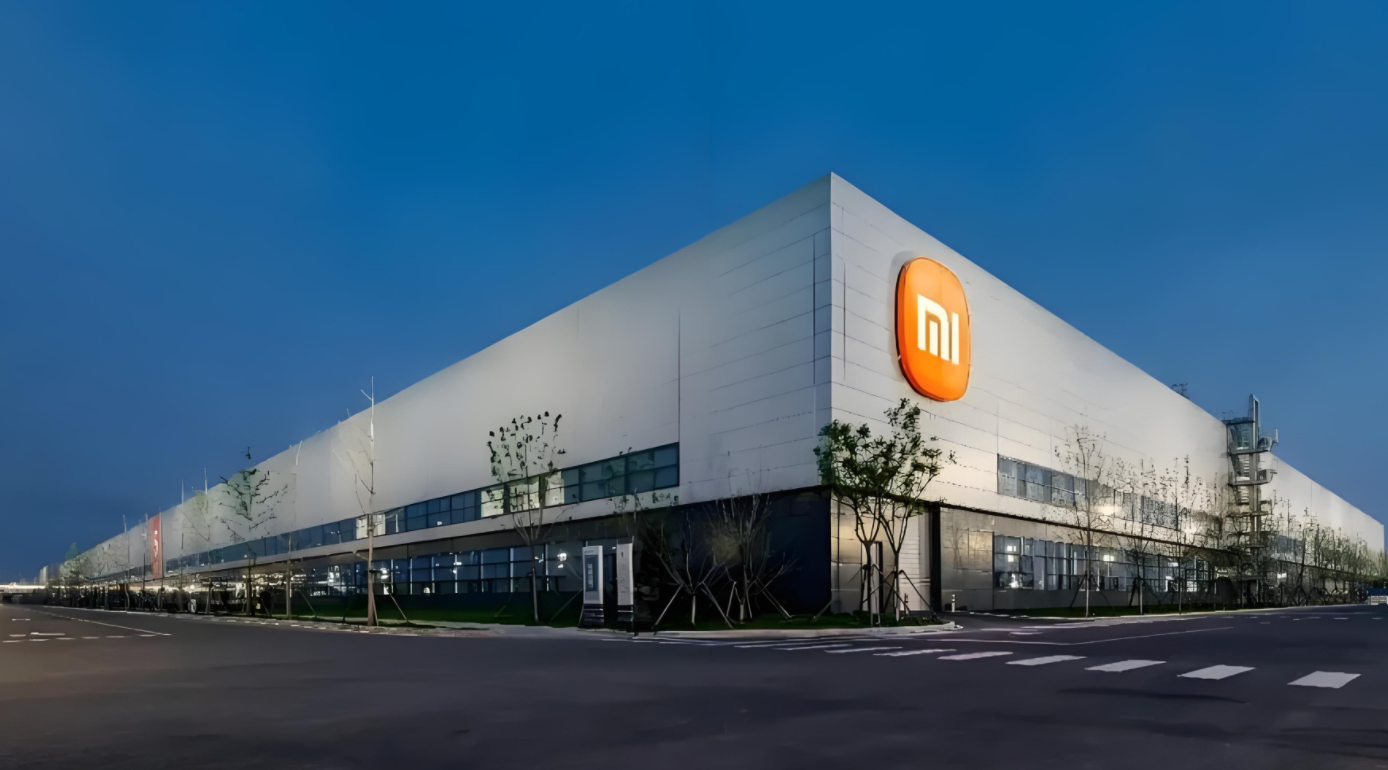
The world's fourth-largest smartphone maker is rewriting its European playbook — this time with four wheels.
Xiaomi Corporation has formalized its electric vehicle internationalization drive by establishing a dedicated International Business Division within its automotive unit, appointing Yu Liguo, vice president of the auto division, as general manager. The new structure — encompassing market strategy, go-to-market execution, sales, network development, delivery logistics, and user service — signals a transition from exploratory groundwork to systematic execution. The move comes as Xiaomi Auto faces a narrowing window to establish a European beachhead before competitive and regulatory dynamics harden further.
The timeline is not ambiguous. Xiaomi Group President Lu Weibing confirmed at the company's Q1 2026 earnings briefing that full global commercialization launches in H2 2027, with Europe as the first market, followed by right-hand-drive markets in H1 2028. At the IFA Berlin trade show earlier this year, Xiaomi Auto signed agreements with eight German dealership groups — including Ernst Dello, Hahn Automobile, and LUEG Mobility — and dispatched test vehicles to seven proving grounds across Sweden, Germany, Spain, and Italy.
Organizational Architecture Anticipates Complexity, Not Just Volume
The granularity of the new division's internal structure is itself analytically significant. The creation of distinct sub-units for GTM, network development, and delivery logistics suggests Xiaomi Auto has internalized a critical lesson from peers: European automotive distribution cannot be bolted onto an existing consumer electronics supply chain.
Xiaomi's smartphone operations in Europe span more than a decade. According to IDC data, Xiaomi held a top-four position in the European smartphone market in 2025, capturing first place in select Eastern European countries. That brand equity is real. Lu Weibing's public framing of the "Human × Car × Home" integrated ecosystem — positioning the vehicle as a smart-life hub rather than a standalone transport product — carries natural resonance among the estimated tens of millions of existing Xiaomi device users on the continent.
However, automotive analyst Zhong Shi cautioned that Xiaomi's durable competitive advantage lies not in discrete technological breakthroughs but in its consumer-grade smart ecosystem integration. The strategic implication: brand familiarity provides a lower customer acquisition cost, but it does not substitute for the physical service infrastructure that European car buyers expect across a vehicle's full lifecycle.
This distinction explains the dealership strategy. Rather than replicating the direct-to-consumer or online-first model that has worked in China, Xiaomi Auto opted for a capital-light partnership with established German dealer groups — entities with decades of operational experience, existing showroom footprints, and certified repair networks. For a new entrant, the tradeoff is margin compression in exchange for speed-to-market credibility.
Tariff Arithmetic Shapes the Product Decision Before Launch
The European regulatory environment imposes a structural cost that no organizational redesign can fully neutralize. The European Union's anti-subsidy tariffs on Chinese-manufactured electric vehicles, stacked on the baseline 10% import duty, push combined levies to as high as 45% for certain manufacturers. Xiaomi Auto is not currently on the EU's tariff-specific list — a meaningful, if temporary, cost advantage over rivals such as BYD and SAIC, which face higher rates.
That window is not guaranteed to remain open. The German automotive industry association (VDA) has consistently advocated for broader tariff coverage, and the EU's trade enforcement mechanisms have demonstrated a willingness to expand scope as Chinese EV export volumes grow. Xiaomi's 2027 commercial launch date therefore carries implicit urgency: establishing brand presence and dealer relationships before any potential tariff reclassification locks in a more favorable competitive position.
Beyond tariffs, type-approval regulations, Euro NCAP safety standards, GDPR-compliant data handling for connected vehicle functions, and intellectual property exposure on design elements all represent compliance costs that must be front-loaded. Notably, Xiaomi Auto previously navigated an exterior design patent dispute that was eventually withdrawn by the opposing party — a reminder that design-similarity scrutiny intensifies for new entrants operating in markets with entrenched incumbents.
Pengcheng Series Emerges as the Strategically Coherent Export Candidate
Xiaomi Auto currently fields three models: the SU7 sedan, the YU7 SUV, and the Pengcheng extended-range SUV, launched in 2026. The choice of which vehicle leads the European campaign is not merely a product decision — it is a signal about Xiaomi's risk tolerance and market positioning thesis.
The SU7 and YU7 carry aggressive, sport-oriented design language that has generated sustained discussion domestically. In the European context, where automotive design heritage is both a commercial asset and a litigation tool, that aesthetic posture invites incremental legal and reputational risk. At least one analyst, speaking to industry publication Gasgoo, assessed that Xiaomi Auto's overseas push would likely center on a new brand identity anchored in original styling — pointing directly to the Pengcheng as the probable lead vehicle.
The Pengcheng's market fit rationale is quantitatively grounded. Xiaomi equipped the model with its Kunlun Super Extended-Range powertrain, delivering pure-electric and combined range figures calibrated to European daily driving patterns. J.D. Power research on the model's target demographic — urban, rational consumers aged 32 to 45 — maps closely onto the European family SUV buyer profile, a segment that has sustained consistent volume demand across Germany, France, and Benelux markets.
Critically, the extended-range architecture addresses a structural European market constraint that pure battery electric vehicles have not fully resolved: uneven public charging infrastructure density outside major urban corridors. For a brand without an established European charging network of its own — unlike Tesla or Volkswagen's affiliated networks — an EREV powertrain reduces dependency on third-party fast-charging availability, lowering a key purchase objection.
Impact Assessment: What Investors and Suppliers Should Monitor
For investors tracking Xiaomi Corporation (HKEx: 1810), the formation of the International Business Division represents an operational commitment that will begin generating observable costs — in R&D localization, compliance certification, dealer development subsidies, and logistics infrastructure — before it generates revenue. The 2027 commercial launch implies that incremental EV export revenue remains outside any near-term earnings forecast horizon.
For the European automotive supply chain, Xiaomi's entry — however modest in initial volume — adds another data point to the ongoing reconfiguration of the competitive landscape. Tier-1 suppliers with Chinese EV exposure, including Continental and Bosch, are already navigating dual-sourcing pressures. A successful Xiaomi European launch would likely accelerate partner interest from other Chinese OEMs monitoring the market's response.
The more consequential near-term variable is regulatory: whether the EU expands its anti-subsidy tariff list to include Xiaomi Auto before or after its 2027 launch date will materially affect the economics of the entire go-to-market model. That single policy decision — not Xiaomi's organizational readiness — may ultimately determine whether this expansion is transformative or merely symbolic.
Related Coverage:
Xiaomi Redraws AI's Price-Performance Frontier with MiMo-V2.6 launch