
Maserati Taps Huawei-Backed Zuni to Revive Electric Ambitions With Dual-Brand Gambit
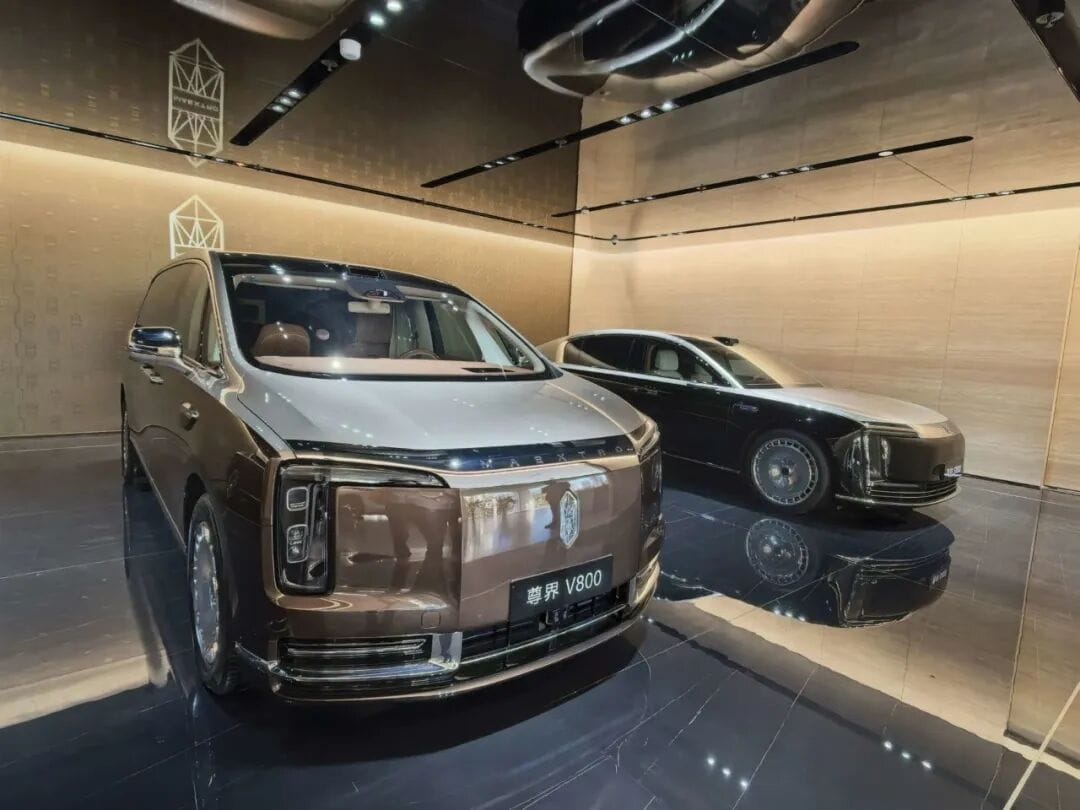
A tripartite alliance between Stellantis, Huawei, and JAC Motors positions the struggling Italian marque to sell electrified luxury vehicles under two separate identities — Zunjie domestically and Maserati internationally — marking one of the most structurally unconventional partnerships in China's premium EV race.
The collaboration, formally branded "Maserati Design," targets two all-electric models: a mid-to-large luxury SUV and a full-size GT, both destined for production at Zun界's Hefei super-factory. Industry sources indicate exterior styling has been finalized, with a mass-production milestone expected in Q4 2027. The deal crystallizes a deepening reality: Western luxury OEMs increasingly require Chinese technology partners to remain commercially viable in the world's largest auto market.
Market reaction to the announcement reflects cautious optimism — the dual-badge structure simultaneously protects Maserati's heritage equity in export markets while allowing Zun界to extend its ultra-luxury footprint without diluting an already-premium domestic positioning.
Dissecting the Architecture: Three Partners, One Platform, Zero Redundancy
The division of labor is surgical. Huawei handles product definition and intelligent systems — its HarmonyOS cabin software, Qiankun ADS advanced driver-assistance suite, and high-voltage e-drive technology are all within the scope of negotiation. JAC Motors shoulders full-vehicle engineering and manufacturing. Maserati contributes design language and, critically, its international dealer network — the one asset neither Huawei nor JAC can replicate organically.
Stellantis's regulatory constraint sharpens the logic: the Franco-Italian-American conglomerate holds no independent vehicle manufacturing license in China. Its existing mainland production hub — Dongfeng-PSA joint venture Shenlong — has no footprint in the ultra-luxury segment. Partnering with JAC, which co-produces Zunjie's flagship S800 sedan in Hefei, was the path of least resistance and maximum synergy.
The Hefei facility is not an incidental choice. It represents one of China's most advanced high-voltage EV production lines, purpose-built for vehicles priced above RMB 1 million (US$138,900).
Zunjie's Delivery Record Gives the Alliance Its Commercial Credibility
The partnership draws direct legitimacy from Zunjie's demonstrable traction in China's hyper-luxury tier. The Zunjie S800 — Huawei's answer to the Mercedes-Maybach S-Class — recorded cumulative deliveries exceeding 20,000 units through September 2026, maintaining the top-selling position in the RMB 700,000-and-above (US$97,200+) sedan segment for ten consecutive months. Its December 2025 single-month delivery figure of 4,223 units was four times that of the Maybach S-Class in the same period.
The newer V800, launched as a derivative, sold 2,080 units in its first full delivery month of September 2026 — a credible debut for a vehicle in that price bracket.
These numbers matter to Stellantis board members reviewing the Maserati Design proposal. They demonstrate that Chinese consumers will pay European-luxury prices for domestically engineered intelligent EVs — provided the brand narrative holds.
Maserati's Financials Expose the Urgency Behind the Deal
Stellantis's 2025 annual report makes the strategic imperative unmistakable. Maserati shipped 7,900 vehicles globally in 2025, a 30.1% year-on-year decline. Net revenue contracted to €726 million, while the brand posted an adjusted operating loss of €198 million. Both the Grecale crossover and Levante SUV are actively working through inventory overhang in North America and China.
The brand that once sold on the strength of its trident badge alone now operates in a market where intelligent cockpit integration, over-the-air update capability, and sub-five-second full-stack autonomous navigation have become baseline expectations at the RMB 500,000+ (US$69,400+) price point. Maserati's existing electrification roadmap — centred on the GranTurismo Folgore and Grecale Folgore — has struggled to generate momentum in China precisely because it lacks the local software ecosystem that buyers in this segment increasingly demand.
The "Maserati Design" structure effectively outsources that deficit to Huawei.
JAC's Balance Sheet Underscores the Mutual Stakes
JAC Motors is not negotiating from strength. The company reported revenue of RMB 34.372 billion (US$4.77 billion) for the first three quarters of 2026, up 11.33% year-on-year — but net losses attributable to shareholders reached RMB 1.141 billion (US$158.5 million), with stripped-of-non-recurring losses widening to RMB 1.466 billion (US$203.6 million). Third-quarter revenue of RMB 12.242 billion (US$1.70 billion) came alongside a net loss of RMB 392 million (US$54.4 million).
For JAC, the Maserati Design contract is more than a prestige win — it is a margin lifeline. Manufacturing high-ASP (average selling price) luxury EVs for a globally recognized Italian brand, with Huawei's technology stack as the differentiator, provides a path toward factory utilization rates that justify the Hefei super-factory's capital cost.
Dual-Badge Strategy Signals a Replicable Template — With Risks
The domestic-Zunjie, overseas-Maserati configuration is structurally novel in the Chinese auto industry. It allows Huawei's Hongmeng Zhixing ecosystem to reach international consumers through a channel it could not independently access, while giving Maserati access to Chinese EV architecture without engineering a parallel development program from scratch.
However, the arrangement carries execution risk. Brand identity bifurcation at the ultra-luxury tier is inherently delicate — a buyer in Milan or Miami purchasing a "Maserati" must receive a product experience consistent with the trident's heritage, even if the underlying platform was designed in Shenzhen and assembled in Hefei. Quality parity management across two brand narratives, two regulatory environments, and two after-sales networks will be the operational challenge neither partner has fully solved publicly.
Separately, Zunjie is reportedly evaluating a new sub-brand positioned at RMB 400,000–500,000 (US$55,600–69,400), a price band that directly overlaps with Huawei's own AITO Wenjie flagship M9. That intra-ecosystem tension — Zunjie potentially cannibalizing Wenjie's ceiling — adds a layer of strategic complexity to Huawei's portfolio management that the Maserati Design announcement does not resolve.
Wider Implications: Western Luxury Brands Accelerating China Tech Dependency
The Maserati-Zunjie framework is likely to be studied as a template. As homegrown Chinese EVs displace foreign brands across mass-market price points, the ultra-luxury segment remains one of the few tiers where Western heritage still commands a price premium. But sustaining that premium increasingly requires Chinese intelligent-driving and software capabilities that European OEMs cannot develop indigenously at competitive speed or cost.
If the Maserati Design models reach volume production by 2028 — a reasonable extrapolation from the Q4 2027 milestone — the alliance will have demonstrated that brand equity and hardware manufacturing can be fully decoupled across geographies. That would have significant implications for how Stellantis, BMW, and Mercedes-Benz structure their next-generation China product strategies.
Related Coverage:
Zunjie V800 Brake Test Passes, but Critics Question Its Relevance