
JD.com's €2.2 Billion Ceconomy Bet: Buying a Seat at Europe's Retail Table
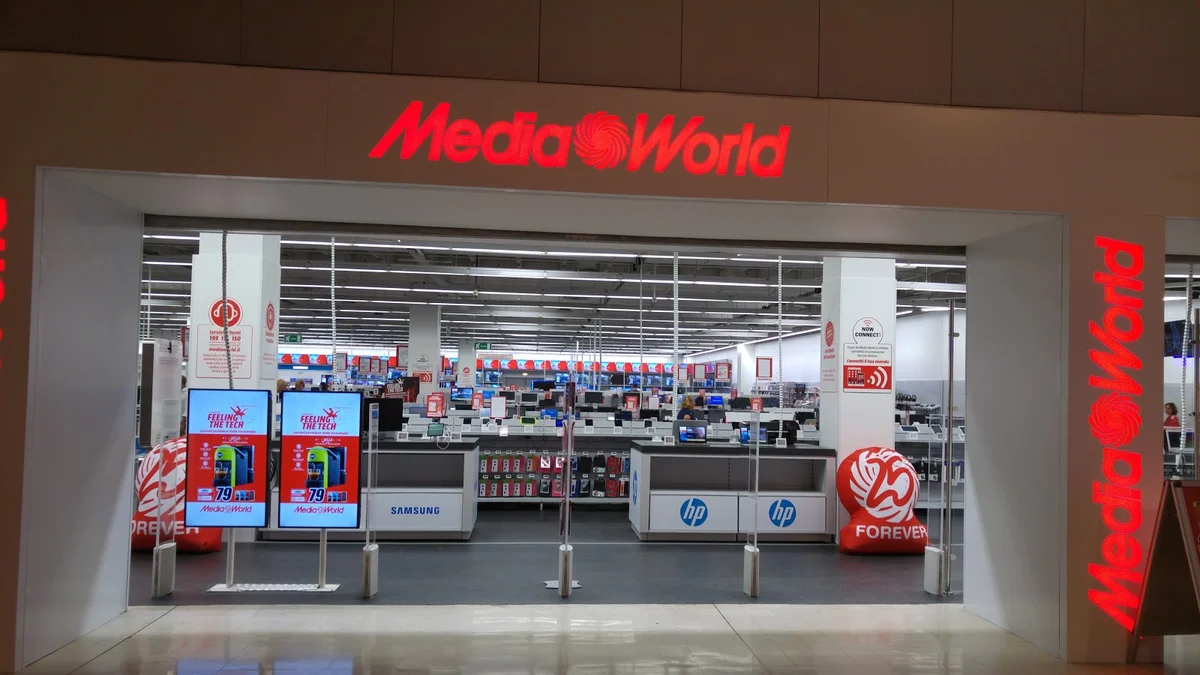
JD.com is paying roughly €1.335 billion in cash for a 59.8% stake in Germany's Ceconomy, parent of MediaMarkt and Saturn, in a deal that marks the most significant attempt by a Chinese commercial operator to seize control of a mainstream Western retail distribution network — not merely to sell through it.
The European Commission granted conditional approval on November 3, 2026 under the EU Foreign Subsidies Regulation (FSR), with closing targeted before November 12. At full equity valuation, the deal is priced at approximately €2.2 billion (US$3.06 billion at reference rate $1≈€0.72). The conditions attached are substantive: JD.com must conduct all commercial and financing arrangements between itself and Ceconomy on market terms, and must offer equivalent warehouse, logistics, and technology services to third parties on the same basis — a commitment binding for ten years.
Capital markets have been absorbing two simultaneous signals: a Chinese e-commerce heavyweight extending its balance sheet into loss-making territory in Europe, while Ceconomy's existing shareholders receive a de-facto valuation floor. The deal's strategic logic, however, runs deeper than the transaction price.
Sluggish Domestic Margins Force JD.com to Redraw Its Growth Map
JD.com's Q2 2026 results illustrate the pressure driving this expansion. Revenue reached RMB 346.4 billion (US$48.1 billion), declining 2.9% year-on-year against a high base, with an operating margin of just 1.3%. The company's "new businesses" segment — encompassing food delivery, Jingxi, JD Property, and overseas operations — posted a quarterly operating loss of RMB 9.854 billion (US$1.37 billion). Management noted that food delivery losses are narrowing, but the drag remains material.
The balance sheet provides headroom: as of end-June 2026, JD.com held RMB 235.1 billion (US$32.6 billion) in combined cash, restricted cash, and short-term investments. The question was never whether JD.com could afford the deal. The question is what it reveals about where management sees the next defensible profit pool.
The domestic Chinese e-commerce market has matured. The era in which platforms could ride structural consumer migration from offline to online — and generate outsized returns simply by scaling — has passed. JD.com can still grow incrementally at home through vertical expansion: food delivery, healthcare, and financial services layered onto an existing user base. But replicating double-digit top-line growth through that channel alone is no longer credible. Europe represents the horizontal axis of the company's next growth chapter.
Ceconomy's 1,068-Store Network Offers What No Greenfield Strategy Can Replicate
Ceconomy's preliminary fiscal 2025/26 results underscore why this specific asset attracted JD.com's capital. The company operates 1,068 stores across 11 European markets, generating approximately €24 billion in annual sales. Its adjusted EBIT for the fiscal year reached roughly €515 million — a 2.1% margin on a €24 billion revenue base, modest in absolute terms but representative of the structural economics of large-format consumer electronics retail.
The more strategically valuable asset is not the profit figure. It is the integrated retail infrastructure: a physical store network, an established e-commerce platform, a supplier procurement system spanning hundreds of brands, and a last-mile service capability covering installation, exchange, and repair. For consumer electronics — JD.com's core domestic competency — after-sales service reliability consistently outranks initial price as a repurchase driver. This is infrastructure JD.com already knows how to operate; it simply does not yet own it at scale in Europe.
Building from scratch would require years of site-by-site lease negotiations, sequential staff recruitment, and slow brand recognition accumulation. The acquisition compresses that timeline by buying a network already embedded in European consumer habits.
Chinese Manufacturers Have Shipped Goods to Europe for Decades — But Rarely Decided How They Were Sold
The deeper analytical frame for this deal is not about JD.com's own retail ambitions. It is about the structural distribution of profit margins along the global supply chain — and who, historically, has captured the value closest to the European consumer.
The pattern has been consistent: Chinese factories produce goods to foreign-buyer specifications, capture manufacturing-side revenue, and hand commercial control to overseas brands, distributors, and retailers. Those downstream intermediaries — operating the shelves, the websites, the service networks, and the brand relationships — retain pricing power, consumer data, and the margin that comes with it.
The economics are visible in multiple data points. Third-party sellers on Amazon, after accounting for fulfillment fees, warehousing, advertising, and returns processing, may retain as little as mid-teens cents on every dollar of gross merchandise value, according to estimates cited by Marketplace Pulse. Anker Innovations, one of China's most successful overseas consumer electronics brands, generated RMB 15.955 billion (US$2.22 billion) from Amazon channels in 2025 — representing 52.29% of total revenue — while platform promotion costs alone consumed over 8% of revenue. Even at that scale, Amazon's structural fee architecture limits margin retention.
Offline retail presents analogous dynamics. Walmart's gross margin runs approximately 24%, with net margin near 3% — not a high-return business in isolation, but a procurement machine that can demand price concessions from suppliers simply by virtue of purchase volume. Following the 2025 tariff escalations, Bloomberg reported that Walmart requested price reductions of up to 10% from certain Chinese suppliers — a demand that, applied to manufacturers already operating on thin margins, can eliminate net profitability entirely.
What JD.com is purchasing, in structural terms, is a seat on the other side of that negotiation.
EU Conditions Cap Integration Upside — But Define the Game's Rules Clearly
The European Commission's approval is conditional in ways that materially constrain JD.com's integration options. The requirement to transact with Ceconomy on market-equivalent terms, and to offer identical logistics and technology services to third parties, prevents JD.com from converting Ceconomy's store network into a captive distribution channel for Chinese-sourced goods. Ceconomy's management has separately confirmed that its local leadership team will retain operational and strategic responsibility, with existing employees, partner brands, and stores protected by explicit commitments.
This is not a minor footnote. It means JD.com cannot replicate domestically proven playbooks — preferential shelf placement for JD-sourced SKUs, proprietary supply chain integration, or selective exclusivity arrangements — without risking regulatory scrutiny. The ten-year compliance horizon extends well beyond any single management cycle.
The practical implication is that the near-term synergy case rests on more modest levers: shared procurement scale, logistics network optimization between Ceconomy's European footprint and JD.com's existing Joybuy (Joybuy) operations in the region, and incremental technology transfer in inventory management and delivery scheduling. These are real efficiency gains, but they are evolutionary, not transformational, in the near term.
The Demonstration Effect May Matter More Than JD.com's Own P&L
Ceconomy's adjusted EBIT of approximately €515 million on €24 billion in sales confirms that European consumer electronics retail is a low-margin, high-volume business. JD.com will not generate a rapid cash-on-cash return from this acquisition. The strategic calculus operates on a different timescale.
If JD.com can demonstrate — over a horizon of three to five years — that Chinese commercial ownership of a mainstream European retail network can improve supply chain responsiveness, reduce landed costs for Chinese-manufactured goods, and channel better consumer demand data back upstream to manufacturers, the template becomes exportable. Other Chinese capital allocators, surveying the same structural bottleneck in global distribution, would have a proof of concept to reference.
That is a significant "if." Integration risk is real: Joybuy and Ceconomy must achieve operational coordination across different regulatory environments, labor markets, and consumer cultures. European consumers must accept product and service changes without perceiving quality degradation. And all of this must be accomplished within the EU's mandated arm's-length commercial framework.
What is clear is that JD.com's founder Liu Qiangdong has consistently made the same analytical bet across two decades: that owning the logistics, warehousing, and delivery infrastructure — rather than outsourcing it — eventually generates durable competitive advantage. The Ceconomy acquisition extends that logic to a new geography. The company paid a premium for infrastructure already in place, in a market it could not have built organically in any reasonable timeframe.
Whether European retail margins ultimately justify that premium will depend on execution factors that no acquisition announcement can resolve. What the deal has already accomplished is simpler, and perhaps more consequential: it has placed a Chinese commercial entity inside the distribution layer of European consumer electronics retail — not as a vendor, but as the owner of the network itself.
Related Coverage:
JD Logistics’ 3 Million Robot Commitment Signals the Next Phase of China’s AI Infrastructure Race
JD.com Returns to Operating Profit, But Revenue Decline Exposes Structural Growth Gap