
XPeng Pivots to Generative “World Models” to Scale Autonomy Testing as Simulation Miles Surge
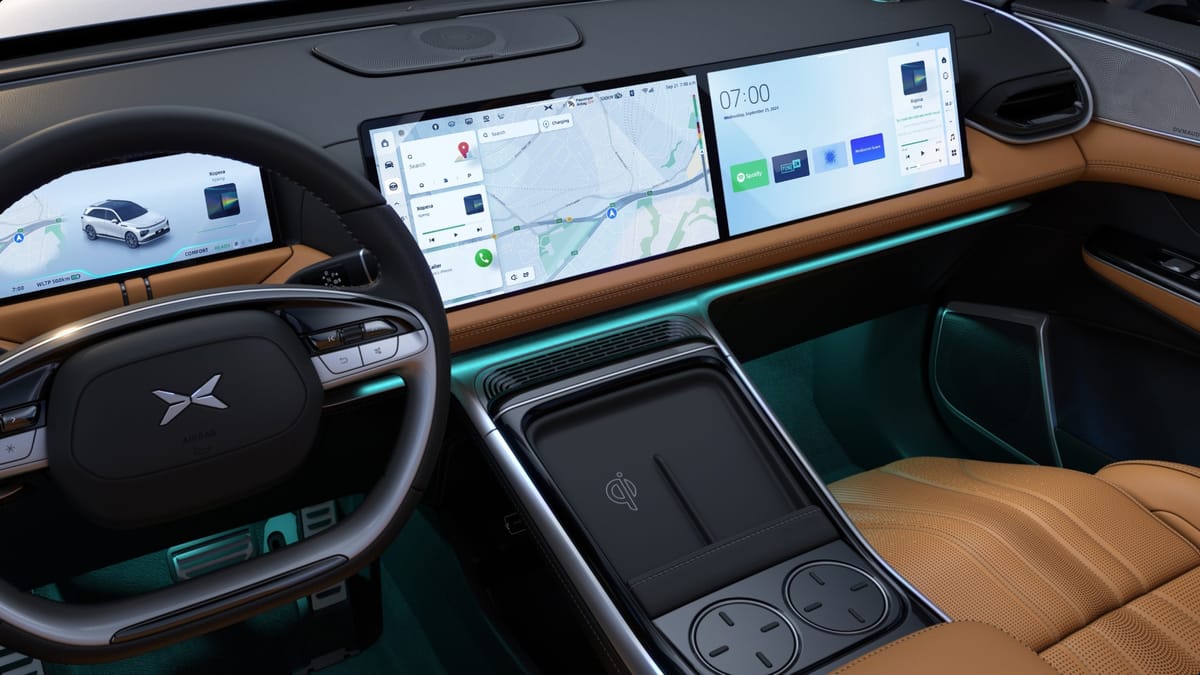
XPeng is betting that generative AI can shrink the cost and time of validating advanced driver-assistance systems, publishing a technical report on its X-World “world model” and deploying it in development of the company’s second-generation VLA autonomous driving stack.
The report marks a shift from conventional simulation pipelines—often built on 3D Gaussian Splatting (3DGS)—toward a video-diffusion-based system designed to keep producing plausible future scenes even when an autonomous policy deviates sharply from recorded trajectories. That limitation has kept much of the industry reliant on expensive real-road testing that is hard to reproduce for safety-critical edge cases.
Initial market relevance comes down to throughput: XPeng said its autonomous-driving simulation library expanded to more than 500,000 scenarios from 30,000 a year earlier, and its daily simulation runs now equal about 30 million kilometers of real-world driving—numbers that, if sustained, could compress iteration cycles for software releases and lower dependence on fleet-based validation.
Replacing 3D Reconstruction Expands Test Coverage
Traditional 3D reconstruction methods can replay captured environments, but they struggle when a model under test performs actions such as large lane changes or detours that move outside the reconstructed space. XPeng’s approach aims to remove that boundary by generating multi-camera future video streams conditioned on driving actions, allowing engineers to probe “what happens next” under controlled interventions rather than only replaying what was recorded.
XPeng positions X-World as a “real-world simulator” that takes historical video from multiple cameras plus an intended action (or action sequence) and outputs future multi-view video. In practice, that design targets one of autonomy’s cost drivers: the need to repeatedly validate the same risky scenario—such as cut-ins or sudden pedestrian appearances—without waiting for them to occur again on public roads.
Using Streaming Autoregression Enables Closed-Loop Evaluation
At the architecture level, XPeng said X-World is built on a leading video generation model WAN 2.2, using a latent video generation setup that combines a video VAE with a DiT-based latent-space denoiser. A high-compression 3D causal autoencoder reduces compute and memory needs and supports longer time-horizon video modeling, which XPeng argues helps cut inference latency.
The company’s key engineering choice is runtime behavior: unlike bidirectional diffusion systems, X-World runs as a streaming autoregressive simulator that can generate future frames step-by-step for real-time interaction. That matters for closed-loop testing, where the driving policy’s action changes the next state; XPeng says the design makes X-World “naturally suitable” for closed-loop scenarios and for online reinforcement learning.
Scaling Scenario Libraries Changes Release Economics
XPeng said X-World is already used in production workflows including closed-loop simulation testing, online reinforcement learning, and data generation. For second-generation VLA verification, XPeng said the model has been used extensively for environment simulation and model evaluation as software is rolled out to users.
The company also described an evaluation engine that can run second-generation VLA inside X-World and score safety-relevant metrics such as collision rate, goal progress, and ride comfort. For investors, the implication is not only safety validation but regression testing at scale: a larger scenario library can increase confidence that software updates do not degrade performance in previously solved conditions—an increasingly important requirement as Chinese EV makers compete on software cadence.
Turning Data Generation Into a Globalization Lever
XPeng also framed X-World as a “generative data factory,” aimed at producing long-tail corner-case data and augmenting datasets to improve robustness. The company said the system can generate overseas data for model training, which it positioned as a way to accelerate autonomous-driving rollout beyond China—an approach that could reduce the need to collect equivalent volumes of labeled foreign-road footage before shipping features.
XPeng began pushing its second-generation VLA to users from March 19, underscoring that the world-model effort is tied to near-term product iteration rather than a purely research initiative.
Related Coverage: