
AI² Robotics Founder Guo Yandong: China's Robotics Breakthrough Hinges on 'Technological Confidence'
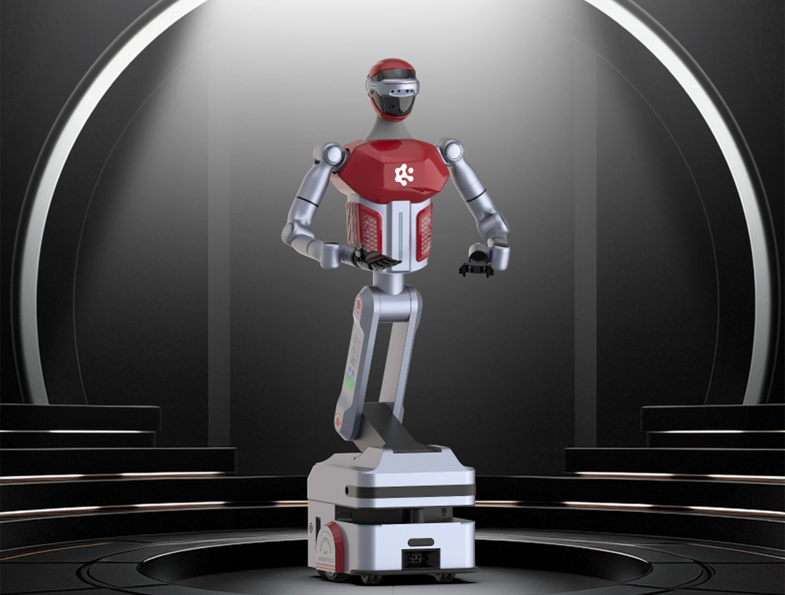
In a recent interview, Guo Yandong, founder and CEO of AI² Robotics, shared his insights on the company's strategy, the state of China's robotics industry, and his belief that technological self-assurance is the key to innovation. Guo is a high-profile figure in China's embodied intelligence boom, having previously served as a principal scientist at Microsoft Research, led AI development at electric vehicle maker XPeng, and acted as Chief Scientist at smartphone giant OPPO, making him one of the highest-ranking tech executives to venture into robotics entrepreneurship.
Founded in 2023, AI² Robotics took a significant bet by committing to the Vision-Language-Action (VLA) model as the core of its general-purpose robots, a path that at the time was only being pursued by global giants like Google and Tesla. This strategic gamble appears to be paying off. Two years on, Guo states that AI² Robotics has become a leader in the VLA approach within China's robotics sector. He notes that in public benchmark tests, the company’s model outperformed the PI-0 model released last October by US-based embodied intelligence startup Physical Intelligence by 30%. With seven funding rounds completed and over a thousand commercial orders from high-end manufacturing sectors, the company is also making inroads globally, having been added to Mercedes-Benz's global supplier list.
"Robots must first be general-purpose before they can enter households; otherwise, you can easily turn a robot into just another robotic vacuum cleaner."
By Li Zinan | Edited by Song Wei
Guo Yandong is a robotics entrepreneur in the truest sense. He has a history of academic excellence, strong technical skills, and an impressive resume, having managed large R&D departments at major corporations and worked on both software and hardware. He is the highest-level tech executive to leave a large company to join this wave of embodied intelligence startups.
Guo has been a top performer his entire life, even achieving a perfect score in the math portion of his college entrance exam, which got him into Beijing University of Posts and Telecommunications. He later earned his Ph.D. in artificial intelligence from Purdue University in the United States. He chose the most demanding academic advisor, an academy fellow, and would collect data for experiments in the cornfields of Purdue in -30°C weather. He says he doesn't know what a 'B' grade is, as he only ever received 'A's and 'A+'s.
After his Ph.D., he finally met people with even better academic records. When he joined Microsoft Research in the U.S., the company had five Turing Award winners. Guo felt immense pressure. His senior comforted him, saying, "Don't be afraid. Once you're here, you'll become as strong as them." Guo choked up when recounting this experience. He spent an idealistic period at Microsoft, which also fostered his habit of seeing tech titans as peers. "What's important is technological confidence. Even the greats make mistakes."
In 2018, Guo wanted to apply deep learning concepts to automobiles, so he left Microsoft to join XPeng Inc. in its early days. In 2020, he joined OPPO as its Chief Scientist. XPeng and OPPO taught him business philosophy. He Xiaopeng told him that selling B2B software might only fetch one dollar, but integrating it with hardware could sell for ten. Chen Mingyong advised him not to burn money too quickly, to keep a healthy cash reserve, whether by saving or earning.
In 2023, Guo founded AI² Robotics and immediately made a big bet: building robots using the VLA (Vision-Language-Action model) approach. At the time, only Google, Tesla, and AI² Robotics were pursuing this path globally. Many did not understand and questioned him, but he persisted with VLA, convinced it was the ultimate path to achieving robotic intelligence.
Two years later, he says AI² Robotics has become a leader in the VLA approach in the robotics industry. Its model has shown a 30% performance improvement in public benchmarks compared to the PI-0 robot model released last October by the American embodied intelligence startup Physical Intelligence.
Guo is aggressive in his technological choices but pragmatic in business. While most robotics companies were spending money on demos and dance videos, AI² Robotics had already earned tens of millions of RMB (several million US dollars) from its model services. By 2025, AI² Robotics has completed seven funding rounds. Guo says that at the current pace, the company has enough cash to operate for 10 years.
In April 2025, AI² Robotics launched its second-generation robot, AlphaBot 2, which has a humanoid upper body and a four-wheeled chassis, distinguishing it from bipedal robots like Tesla's that pursue extreme biomimicry. The reason is simple: wheels offer better stability and are more efficient for movement than bipedal walking.
Guo is aware that China's environment is less tolerant of "table-flipping," limitless risk-taking, as companies don't have the infinite resources of their U.S. counterparts. Today, there are an estimated 400-plus robotics companies in China.
Guo hopes to get robots into real-world scenarios gradually through a "learning-by-doing" approach. He states that AI² Robotics' robots have already secured commercial orders from several high-end manufacturing sectors, including automotive, semiconductor, and biomanufacturing, with total orders exceeding one thousand units.
But this is not enough. Guo also aspires to be a pioneer in global expansion for the robotics sector, selling robots overseas and competing on a global stage, much like China's electric vehicle industry. They are now on the global supplier list for Mercedes-Benz and will be sending their robots to provide services around the world next year.
The Life of a Top Student: "I Only Had A+"
LatePost: Zhang Wei, the founder of Googolplex, was your classmate during your Ph.D. He also works in robotics. Did you contact him before starting your own company? Why didn't you start a company together?
Guo Yandong: We both did our Ph.D.s in the Department of Electrical and Computer Engineering at Purdue. Zhang Wei's advisor was a giant in control systems, and my advisor was an academy fellow in artificial intelligence (pattern recognition). So, when it comes to robotics, he takes a bottom-up approach, starting with the legs, which is a forte in the control field. I come from an AI background, so I take a top-down approach, starting with generalized manipulation through intelligence.
After graduation, Zhang Wei secured a tenured professorship at a top North American university, which is a dream for many. This fully demonstrates his top-tier academic ability and his strong academic pursuits at the time. After I graduated, I passed what was probably one of North America's most difficult interviews (a nine-hour non-stop challenge) and joined Microsoft as a researcher. I love developing new technologies, creating new products based on them, and having more people use my technology and products.
LatePost: Who had better grades when you were in school?
Guo Yandong: I don't know his grades. Someone once asked me what a 'B' grade was at our school, and I said I didn't know because I only had 'A's and 'A+'s.
LatePost: You don't seem like a typical straight-A student. You're quite talkative.
Guo Yandong: I've always had the best grades. I got a perfect score in math on my college entrance exam to get into Beijing University of Posts and Telecommunications. After my master's, I worked at China Mobile for a year, a job for which they interviewed tens of thousands to hire just a dozen people.
But I wanted to continue my studies, so I went to Purdue for my Ph.D. and chose the most demanding advisor.
LatePost: In what way was your advisor demanding?
Guo Yandong: He was "pathologically" demanding. He made us take the hardest courses in the physics department, as well as in the math and statistics departments, and required us to score better than their own students. At the same time, he demanded research output.
So we could only do research during the day and study for our doctoral courses at night.
I often stayed up until past 6 a.m., then I'd just lie on the sofa in the office hallway. If I went back to my dorm, I might sleep until noon, which would waste the all-nighter. I slept on the sofa and waited for the undergrads to come to class and wake me up. That way, I could get back to work before 8 a.m.
We used to research low-light imaging (capturing images in insufficient light). Older phones couldn't see anything at night; it was just pitch black. To solve this, I went out in Purdue's freezing -30°C weather at midnight, collecting data at various points in the cornfields for experiments. My fingers were frozen stiff like carrots.
LatePost: Did you contact your advisor before starting your company? What advice did he give you?
Guo Yandong: I didn't tell them at first. I felt I needed to achieve something before I could face them.
On the company's second anniversary, I emailed them, and both of my advisors, Professor Charles A. Bouman and Professor Jan P. Allebach, specially recorded videos to congratulate us. We have a great relationship. Although Charles A. Bouman was strict academically, he was full of love for his students. My advisor, Professor Charles A. Bouman's (Professor in ECE/BME at Purdue, NAI Fellow) daughter is now a professor, continuing her father's research direction. The first-ever image of a black hole was her work, a scientific achievement celebrated by all of humanity.
(Image caption: Guo Yandong with his advisor, Professor Charles A. Bouman, and Bouman's daughter. Source: AI² Robotics.)
LatePost: Joining Microsoft after your Ph.D. seems like a natural choice.
Guo Yandong: When I was doing my Ph.D., Microsoft was very influential. Many of the textbooks we studied were written by Microsoft researchers. In that era, when corporate research labs were ranked for influence, Microsoft Research was at the very top, even higher than the best university computer science departments in the U.S. at the time.
At that time, I felt that if I could get into Microsoft, I wouldn't go anywhere else.
LatePost: When you were at Microsoft, the company had five Turing Award winners. What was it like working with geniuses?
Guo Yandong: I talked to my senior at the time, saying, "These colleagues are all so brilliant. The textbooks I studied at Purdue were written by them. What should I do?" He said, "It's okay. Once you're here, you'll become as strong as they are."
After I joined, I felt it wasn't so magical after all; they were all normal people. How should I put this... it's a bit emotional to talk about this. (He choked up for about 30 seconds.)
LatePost: What made you choke up?
Guo Yandong: Microsoft cultivated in me the habit of seeing tech titans as peers rather than blindly worshipping them, which gave me technological confidence and the courage to stick to my own judgment. In 2023, when many were pessimistic about end-to-end VLA, I dared to hold on to my ideas.
Microsoft also instilled in me the right values—the person in charge must understand the technology. The manager must first be an expert for the company to be a top-tier company. Steve Jobs also said that excellent people only want to work with excellent experts, not be managed by "people managers." Microsoft did an outstanding job in this regard.
That's the power of role models, when you are surrounded by Turing Award winners and people like Harry Shum and Qi Lu. When I left work at 11 p.m. every night, Qi Lu's car was still there.
LatePost: So you became emotional just now thinking about the atmosphere of everyone working together at Microsoft?
Guo Yandong: Yes, that and other things.
Microsoft has immense respect for young people, and the logic behind this is respect for innovation and breakthroughs. Every year, Microsoft would go to the best schools and invite the most outstanding Ph.D. students for internships, providing them with beautiful, fully-furnished apartments. They'd invite students to concerts in Seattle by top stars like Bruno Mars and Maroon 5.
Microsoft's workplace philosophy is excellent; it's the foundation of its 40-year-long success. During Microsoft's first wave of glory, Yahoo hadn't even emerged. It outlasted Yahoo until Yahoo faded, and Microsoft is still here. Google is actually 20 years younger than Microsoft. Google will need another 20 years to prove it can maintain vitality for as long as Microsoft. Microsoft's market cap recently broke $4 trillion.
Microsoft also has a human touch. In 2013, before Microsoft's cloud platform was fully built, my direct manager bought two NVIDIA cards and put them in my office, asking, "Is that what you want?" I was happier than if I had received my year-end bonus.
LatePost: What were your KPIs as a researcher? People at Google Research later reflected on what went wrong that led to OpenAI building GPT first, with some blaming the research lab's organizational model and evaluation methods.
Guo Yandong: The task of a research lab manager, as Harry Shum, who once led Microsoft's global research, shared with us, is first and foremost to find the best people.
When I first joined OPPO, we organized a visit to Microsoft to learn from them. The then-head of the lab also emphasized that the most important thing is to find the best people and give them the best working environment and conditions. Remarkable results will naturally follow. Excellent people plus meaningful goals lead to extraordinary achievements, not KPIs.
Why could my colleagues write the best Ph.D. textbooks in all of America? It's inseparable from the free working atmosphere, the ability to truly focus without distractions.
When I was in Seattle, I didn't have to worry about buying a house or a car; I had both in the first year. If housing is too expensive and the venture capital scene is too active, employees inevitably start thinking about how to make money all day. Someone joked that in Silicon Valley, you might need to have two successful startups on average to afford a decent house. To do the most groundbreaking deep research and product development, you can't be too focused on short-term gains.
LatePost: So Microsoft Research was better than Google's because Seattle's housing prices were lower than Silicon Valley's?
Guo Yandong: Maybe.
But I have to admit, when everyone saw the dividends of deep learning, they began poaching people from Microsoft aggressively. Recruiters would sneak into the company and stand downstairs handing out offers. If you were willing to leave, it was a $1 million annual salary. That was quite exaggerated for that time, though of course, it's even more so now. Meta is offering salaries comparable to basketball stars. At its core, it's about respecting talent.
In Your Twenties, Learn in the Best Places; in Your Thirties, Work with the Best; in Your Forties, You Have to Lead
LatePost: Why didn't you stay at Microsoft or join another American company, instead choosing to return to China in 2017?
Guo Yandong: In 2017 at Microsoft, I was leading a project called "Connected Vehicle" in collaboration with Volvo, exploring how to apply Microsoft's deep learning technology to cars. Halfway through the collaboration, Volvo went on summer vacation. When they finally came back, it was September, and Christmas was just around the corner.
I was really driven to get this project done, but due to the overly relaxed collaboration model between two large companies, I felt it was getting nowhere. So when an opportunity came up with XPeng, I took it.
LatePost: Why not start your own company directly then?
Guo Yandong: Different stages in life have different goals. In your twenties, you go to the best places to learn. In your thirties, you work for the best companies and follow others. In your forties, you have to do it yourself and have others follow you to do the most remarkable things.
LatePost: What was your impression of XPeng?
Guo Yandong: XPeng was an excellent school. If I hadn't been at XPeng, hadn't met He Xiaopeng, and hadn't worked at OPPO, I might not have been able to start a robotics company. My experience at Microsoft was more focused on AI and systems. After my time at XPeng and OPPO, I knew that a startup must integrate software and hardware.
He Xiaopeng once told me that a company can fail for two main reasons: political incorrectness and quality issues.
LatePost: What were you responsible for after joining XPeng?
Guo Yandong: XPeng initially set up a separate AI Center. Just before the official announcement, the name was changed to AI Product Center. I had just come from a research institute and had too much of an academic air about me. The name change was to remind me that the company didn't hire me for research, but to deliver products.
LatePost: What was the biggest lesson you learned at XPeng?
Guo Yandong: When I first left Microsoft, much of my thinking was software-oriented. There were many lessons learned about how to integrate AI with hardware, making it consistent and progressively stronger on millions of vehicles. This included the need for rigorous testing before deploying software to each car. I now require my robotics team to have strict testing procedures to ensure quality. My belief that hardware development must get into real-world scenarios as quickly as possible also stems from my time in the auto industry; hardware developed in isolation won't be good.
One of my most interesting experiences at XPeng was working on rain detection. Previously, rain detection was done with sensors, which were inaccurate and added extra cost, and were quite separate from the overall intelligent driving system. Many people internally thought it was a waste of effort; why go to all that trouble when you could just buy a cheap sensor?
But we persisted, and our method was clear: collect real-world data from our mass-produced cars on the road. You simply can't gather such rich and authentic scenarios in a lab. We needed cars on the road to continuously send back data to iterate our models. It was through this project that we built XPeng's first data feedback loop system and truly achieved vision-based rain detection.
Later, Elon Musk tweeted that Tesla had developed a remarkable feature—rain detection for autonomous driving. He Xiaopeng looked up and said, "Damn, how is this so amazing?" Then he asked around and found out we had it six months earlier, and the patent was searchable online.
I later realized how crucial it is to persuade others and articulate the value of a project within a large corporation. The biggest problem with scientists is that they don't speak in plain language.
LatePost: So the fact that you no longer seem like a typical top student is a sign of progress.
Guo Yandong: I feel I've gotten a step closer to Yu Kai (founder of Horizon Robotics). He was also a top student and changed a lot after starting his own company.
LatePost: Looking at it from another angle, what have you lost?
Guo Yandong: I think he might have lost some of the joy of exploring technology. It's an unavoidable trade-off. Once you run a business, you are forced to give up much of the exploratory fun of being a tech expert.
LatePost: In 2020, you left XPeng to join OPPO to lead AI R&D. What were your achievements at OPPO?
Guo Yandong: Our team was quite competitive. OPPO has a huge number of patents, ranking among the top globally each year. At OPPO, our team filed hundreds of AI patents annually. With two Reno series launches each year, plus the high-end Find series, the R&D pace was very fast. In addition, there were new business initiatives like mobility and robotics. The scope of my management at OPPO was much larger than at XPeng.
LatePost: What advice did Chen Mingyong (OPPO's founder) give you when you started your company?
Guo Yandong: The first piece of advice was not to rush into burning money. Whether through fundraising, earning, or saving, always keep a good amount of cash on hand.
The second piece of advice was that the true hero is the one who serves existing customers well, makes them happy, and earns their repeat business. I think many of OPPO's business philosophies are very solid—make good products, provide good service, no fluff. In OPPO's own words, it's about "benfen" (duty/integrity): "Keep the technical difficulties for ourselves, and pass on the beauty to the users."
I've benefited greatly from this advice. I once happened to be on the same flight as him, and he recognized me first. It felt like fate, and we had a good long chat.
LatePost: Chen Mingyong was probably flying first class. Do you also fly first class as a startup founder?
Guo Yandong: I once ran into another CEO at the first-class security check. We both explained to each other, "I used my points to upgrade." "Oh, me too, I used my points."
Flying first class as a startup founder is a sin.
The Robotics Scene Today Is Hotter Than EVs Were Eight Years Ago
LatePost: In early June, you announced that your robots have entered the factory of Dongfeng Liuzhou Motor. Besides Dongfeng, which other factories have you entered? How many robots have been deployed in factories?
Guo Yandong: Last year, we also obtained global supplier qualification from Mercedes-Benz and are collaborating with Geely as well. Startups don't compete on quantity but on the quality of delivery. We plan to deliver over a thousand robots next. We have been in contact with other industry leaders as well.
My main focus right now is to deliver robots to our clients stably. We have many clients, and not enough R&D and delivery personnel. My top priority is to serve our existing customers well.
LatePost: How long does it typically take for you to enter an automotive factory? Why do they choose you?
Guo Yandong: The process is very fast, which is related to our previous work. We started developing our embodied large model in 2023 and have been training it for over two years. Robots equipped with this embodied large model have a "smart brain" and learn new tasks quickly, making them very suitable for flexible tasks on production lines. This is the main reason clients choose us.
Although the robots are not yet plug-and-play, they can learn a new task within hours to a few days after entering a factory. Today, a robot might be moving boxes, and tomorrow it could learn to do the same. It learns to press switches and plug/unplug things very quickly.
LatePost: What do your robots do in the factories?
Guo Yandong: We've identified spots in the factory for our robots that don't require high speed and don't significantly impact the production rhythm. For example, in a material-loading scenario, a human has to wait for a minute after loading materials. They can't walk away or do anything else, just wait. There are many such tasks in a factory. From another perspective, I think robots can still provide value even if their peak speed doesn't match a human's.
I call this the "awkward for humans" scenario. People who don't know the industry might say, "That's such a simple task, a robotic arm could do it, that's too low-tech." People who do know the industry might say, "That's such a difficult problem, if you can do that, you must be bluffing." There are many jobs that outsiders think are too simple to be worth doing, and insiders think are too hard to be done. We are now tackling these scenarios.
LatePost: Do they pay you when you enter their factories?
Guo Yandong: Of course, these are all commercial collaborations. Although we are relatively expensive now, the cost will come down in the future.
LatePost: If your robot breaks something in the factory, who compensates for it?
Guo Yandong: The industry standard is that the robotics company pays.
LatePost: Why did you choose to build a robot with a wheeled chassis instead of a fully humanoid robot?
Guo Yandong: Bipedal robots have relatively low mobility efficiency. Wheeled robots have a stable chassis, are less likely to fall, have higher mobility efficiency, and the chassis can hold more batteries for longer endurance. We once wanted to sign up for the Beijing Robot Marathon, but they wouldn't let us. If I had entered, I would have definitely won.
I once saw a food delivery guy in my neighborhood riding a two-wheeled self-balancing scooter to deliver food. I thought about taking a picture and sending it to Zhuihui Jun of ZHIYUAN (a former colleague from my OPPO team), but I didn't.
LatePost: Will you make bipedal robots in the future?
Guo Yandong: Bipedal is a different category; it's a dream for many. I think this is something for companies that are already public, don't have to worry about a business model, and don't have cash flow issues. We can start focusing more on that business in two years.
We actually have a small bipedal team, but it won't be our main business model for now. The main business model will definitely be using the robot's upper body to provide services and free up hands. What makes humans human is not that we have two legs, but that our hands are freed. So, a stable platform plus two hands can do a lot.
LatePost: Why don't you make robotic arms?
Guo Yandong: Robotic arms can't do many things in a factory. The general-purpose intelligent robots we're making are designed to handle the flexible tasks they can't do.
LatePost: We previously spoke with UBTECH Robotics, and they believe that for robots to enter factories, they must be bipedal because many areas in factories are narrow and wheeled chassis can't get in. Tesla and Figure also insist on humanoid forms.
Guo Yandong: Tesla's robot is going to Mars, and there are no roads on Mars yet, so it has to be humanoid.
Tesla is not short on money. Tesla's approach is a typical American "table-flipping" style of entrepreneurship: work in stealth for 3 to 5 years, then burst through the door and blow everyone away. OpenAI is like that too.
In China, it's hard for a startup to take such unlimited risks. Our robot design is much more pragmatic than Tesla's. For us, it's more important to get the robot into scenarios as soon as possible, to start using it, rather than trying to disrupt the industry overnight.
Moreover, robots should learn while they are being used. Unlike language models, a robot's embodied large model must continuously evolve through actual use. This requires data feedback from real scenarios. The scenarios will, in turn, define the hardware form. Only after application in real scenes will we know what the robot's hardware should look like and what needs to be changed. And what kind of robot can be adopted by people earlier? A wheeled, dual-armed robot.
LatePost: Why do you think China cannot support a "table-flipping" style of entrepreneurship?
Guo Yandong: The financing environment is different. A large model company in China might be valued at 30 billion yuan, while OpenAI is valued at 300 billion dollars. So OpenAI can afford to be a "table-flipper."
LatePost: Then why didn't you start your company in the US? Wouldn't your company's valuation be much higher?
Guo Yandong: China has the highest usage of industrial robots, providing the broadest application scenarios for robots, and China's hardware supply chain is the most complete.
I once told my former colleagues at Microsoft that if you want to start a robotics company, you must do it in China. Otherwise, your technology will remain stuck in the lab.
LatePost: Its-Stone, founded by former Huawei Auto BU chief scientist Chen Yilun, raised $120 million in its Series A round early this year. China's financing environment doesn't seem bad?
Guo Yandong: Figure AI raised 1 billion in its latest round, with a valuation of 39 billion.
Currently, no one in China's embodied intelligence field has raised truly big money, no one has established an absolute advantage in financing. Our business style is quite practical; we don't overpromise, which has attracted many top-tier, pragmatic funds. At our current pace, the money we've raised is enough to last 10 years, and we will definitely be profitable within 10 years.
LatePost: So you're not pursuing the "brute force creates miracles" approach.
Guo Yandong: In a field that combines hardware and software, "brute force creates miracles" will cause you to lose form. The objective laws of this field require you to spend time polishing and doing things with care. It's not like some industries where, in extreme cases, you can buy traffic or run ads. Those actions have limited value for a hardware product.
LatePost: What is your pace and plan?
Guo Yandong: My plan is a "3+3+3" plan. The first three years are for building up the technology, getting the robot model right. The middle three years are for building the systems—the robot's big data system, training architecture, and hardware platform. Without a good hardware architecture, software is just a castle in the air. The final three years are for building the ecosystem, developing our own components, and achieving scale to reduce costs.
LatePost: What's the difference in how you and Figure spend money? Where do you spend your money?
Guo Yandong: We have spent a lot of resources on GPUs and end-to-end VLA model training. Many of our peers in robotics start with the robot's physical body and use open-source models that they modify.
I don't have data on how Figure spends its money. But many robotics companies love to make demos and release videos, which is very expensive. There was even a company in Silicon Valley that specialized in making demo videos for startups and almost went public.
LatePost: Why did you choose to buy computing power and build the model first? The uncertainty in model R&D is very high.
Guo Yandong: For people who have managed large R&D departments in big companies, the first step in an AI startup is always to accelerate training, not necessarily to buy computing power itself. When Wang Huiwen started his previous venture, the first thing he did was to acquire OneFlow, a startup focused on elastic computing. He didn't start by making a demo either; he focused on increasing training speed.
This is based on a simple economic principle: if the time I take to train a model is less than the socially necessary labor time, I can be profitable. This is very important.
Previously, people could train a small model in a day or two. It's different now. Without new technologies, the difference in model training speed can be dozens of times.
You can't have the model relearn everything every time you add new knowledge. You have to find a way for the model to learn new things without forgetting the old. There are many ways to do this, and one of the key technologies is large-scale incremental training. If you search online for whose work is most famous in incremental learning, you'll find Guo Yandong's 2019 paper.
LatePost: After spending so much effort on the model, why did you choose to open-source it so quickly?
Guo Yandong: In June this year, we, along with Peking University and others, launched an open-source version of our embodied large model, GOVLA, called FiS-VLA. It is the world's first "heterogeneous input + asynchronous frequency" VLA model, enabling coordination between slow inference and fast execution. We open-sourced it out of confidence. When Tesla open-sourced its electric vehicle patents, it believed it was the leader in the field and that no one could catch up, but it also wanted others to adopt its technological route.
We are one of only two robotics startups in the world to have open-sourced a robot model, besides PI (Note: Physical Intelligence, an American embodied intelligence startup). At the time, it was just us.
LatePost: How do you judge that your model is ahead of others? What's the standard?
Guo Yandong: According to third-party benchmarks, our model's performance is 30% better than PI's. Traditional robotics looks at the success rate of performing known tasks; they'd have a robot learn one thing for a year. For embodied intelligence robots, it's better to measure them by their success rate on unseen tasks.
In 2023, Google's RT-2 (Robotics Transformer 2, a new VLA model released by Google in July 2023) enabled robots to achieve a 50% success rate on tasks they had never learned or seen before. This is both a happy and a worrying number. A 50% success rate means the robot has generalization capabilities, but it also means the robot can't really do anything reliably. In industrial applications, the operation success rate must be infinitely close to 100%.
LatePost: The current solution has a low success rate on unseen tasks. Have you considered changing your technical route?
Guo Yandong: When we started in 2023, many people said this technology was not mature, too far off, and couldn't be done. But I felt this route was aligned with the first principles of robot generalization, so we should continue to improve it rather than abandon it.
So we put a lot of effort into optimizing data, model architecture, spatial intelligence, whole-body control, and the combination of fast and slow processes. Now, more and more companies are joining the end-to-end VLA direction.
LatePost: What can your model do now?
Guo Yandong: I divide robot intelligence generalization into four stages: scene generalization, object generalization, operation generalization, and task generalization.
- Scene generalization: The robot can adapt when the lighting in the same scene changes.
- Object generalization: The robot first learns to pick up a circuit board, then learns to pick up any board of a similar shape.
- Operation generalization: Today it learns to move things, tomorrow it learns to pull a power switch.
- Task generalization: It learns to do all tasks.
We are currently at L2.5, which helps robots learn things faster. On some tasks it has never learned, the robot's operation success rate can reach 70%. We plan to ship tens of thousands of robots by 2028. By then, the robots will still need some scene adaptation and secondary development. But we will make the development cost low and the experience good. At that point, our revenue can turn positive, and we can create value.
Nobody can achieve L4 yet. Anyone in the industry who boasts they can do L4 is either completely clueless or has other motives, like seeking commercial value.
LatePost: Does the embodied intelligence industry today meet your expectations from when you started the company?
Guo Yandong: When I first started, I thought this industry would definitely take off and be a trillion-dollar market.
But the level of excitement has exceeded my imagination. Seven or eight years ago, when I first joined XPeng, I pulled some data, and there were over 300 electric vehicle companies. Now, there are probably over 400 robotics companies. The activity in the robotics sector might be even greater than in the early days of electric vehicles. I think the progress is also faster than with EVs back then. AI is a great help in R&D, and engineers can write code many times faster.
The electric vehicle industry not only cultivated a supply chain but also trained and provided the robotics industry with a large number of talented people who deeply understand embodied intelligence, software-hardware integration, and have rich experience in the R&D and mass production of electronics, hardware, and powertrain systems. In addition, there are more investors who understand the technology, the industry, and are patient.
Our Robots Are Helping Passengers Collect Luggage Carts at Hongqiao Airport
LatePost: There are still many disagreements in the robotics industry about technology and the sources of training data. What do you think about this situation?
Guo Yandong: It's a good thing that everyone has different ideas. It's also more favorable for someone like me who has been working for over a decade, as it's less likely to get fixated on a single point and go astray.
The robotics field cannot be won with a single trick. Simulation, internet, and real-machine data must all be used well. Only a systematic ability to connect these resources can lead to success.
How do we solve the data problem for embodied intelligence? I have an "upright and inverted pyramid" view on data. In the cold start phase, internet data provides diversity, simulation data provides supplementary information, and real-machine collection ensures precision—this is the "upright pyramid." As robots are gradually deployed on a large scale, the value of real-world data far exceeds that of simulation and the internet, forming a closed loop—this is the "inverted pyramid." Through this cycle, the robot can continuously iterate and optimize in the real environment, becoming "smarter with use."
Robot large models must not emphasize a large number of parameters, but rather pursue refinement. I believe that robot models must be able to run on the edge. Cars and mobile phones all require on-device computing, and robots will be the same; the cloud is just an auxiliary.
A robot model that can run on the edge cannot have too many parameters. Moreover, a large number of parameters leads to more model hallucinations.
LatePost: You mentioned before that it would take 5 to 10 years for robots to reach L4, which is much later than the timeline given by companies like Tesla and Figure. Why?
Guo Yandong: Because the data for training robots is a huge challenge. The quantity and quality of data needed to reach L4 will have to be more than 100 times what we have now.
The scaling law is both an optimistic and pessimistic indicator. It's optimistic in that more data leads to stronger model performance. But it's a monotonically increasing function, and as training progresses, the amount of data required to achieve the same degree of performance improvement grows exponentially.
What I'm thinking about now is how to commercialize robots and land them in real applications if we can't reach L4 within 5 years. Actually, Figure's expectations are not early at all; if you refer to their official website, they advise all investors to be patient. It's just that some companies in China are hyping it up.
LatePost: But we've heard a very beautiful narrative from many people about using video generation technology to have large models teach robots, thereby accelerating robot training.
Guo Yandong: That statement violates basic information theory. The scale of video-generated data has an upper limit. If no new information is fed in, it cannot generate new things. The upper limit of video-generated data is the size of the generator.
If the generator cannot learn things from the real world, the robot cannot learn them. But if you already have the ability to make the generator learn everything in the world, you would have already been able to make the robot learn everything before that. Generated data is more of a supplement, not a sole source.
LatePost: So what is your plan for robot training?
Guo Yandong: Right now, we are trying to deploy more robots to provide real services and obtain real data. The reason for making wheeled robots is to get more robots into real-world applications faster and generate high-quality data.
I think we need 10,000, or even 100,000 robots collecting data before we have enough to achieve L4. We are preparing to achieve an annual shipment of tens of thousands of units by 2028.
LatePost: Besides automotive factories, what other scenarios will support such a high shipment volume?
Guo Yandong: Wheeled robots are very suitable for 24-hour jobs. The first thing we did was to look for such jobs, like in coffee shops, convenience stores, and so on. In these scenarios, humans have to work in three shifts. My robot can work a single shift, which makes the cost savings of replacing humans much greater.
We also have a contract at Hongqiao Airport to help passengers collect luggage carts. Hongqiao Airport has 300 people doing just this job, costing RMB 20 million (approx. US$2.8 million) a year, just collecting scattered luggage carts. A robot can do this job, and people won't have to collect carts at 2 a.m. anymore. Of course, the real big scene in the future is the home.
(Image caption: A robot pulls a suitcase for Guo Yandong. Source: AI² Robotics.)
LatePost: We previously spoke with Yu Yinan (founder of Vita-Dynamic (维他动力)), and he said that for humanoid robots to enter the home, just figuring out where to put them is a problem.
Guo Yandong: Haha, many houses can still fit one. A robot butler will find a way.
LatePost: How much do you think such a robot should cost?
Guo Yandong: I think a price similar to a Class A car, around RMB 100,000 (approx. US$13,800), would be about right. The home scenario is not fully established yet, but some people have already thought of novel business models, like selling them to property management companies, with several households sharing one robot. When not in use, the robot can just wait in the hallway.
Robots must first be general-purpose before they can enter households. Otherwise, it's easy to turn the robot into a specialized device, just another robotic vacuum cleaner, moving further and further away from the goal of a home butler.
LatePost: We've seen some companies' robots selling for under five figures (in RMB).
Guo Yandong: I'd like to take this opportunity on LatePost to appeal to the industry: now is not the time to engage in a price war. The most important thing right now should be to make the robot useful for customers, not cheap. If everyone only focuses on being cheap and not on performance, it will be very harmful to R&D, and no one will build remarkable robots anymore.
LatePost: In the current robotics industry, which company do you admire the most?
Guo Yandong: The entire Chinese robotics industry should thank Unitree Robotics. It is a pioneer that has brought public attention to robotics.
Technologically, especially in control and mechatronics systems, Unitree has provided an excellent model for both bipedal and quadrupedal companies. Without Unitree, China's robotics supply chain would not be as relatively complete as it is today. Without them leading the way, we wouldn't be able to enjoy the advantages we have now.