
Amap Beats Google to Market with AI-Powered "Flying Streetscape" Feature
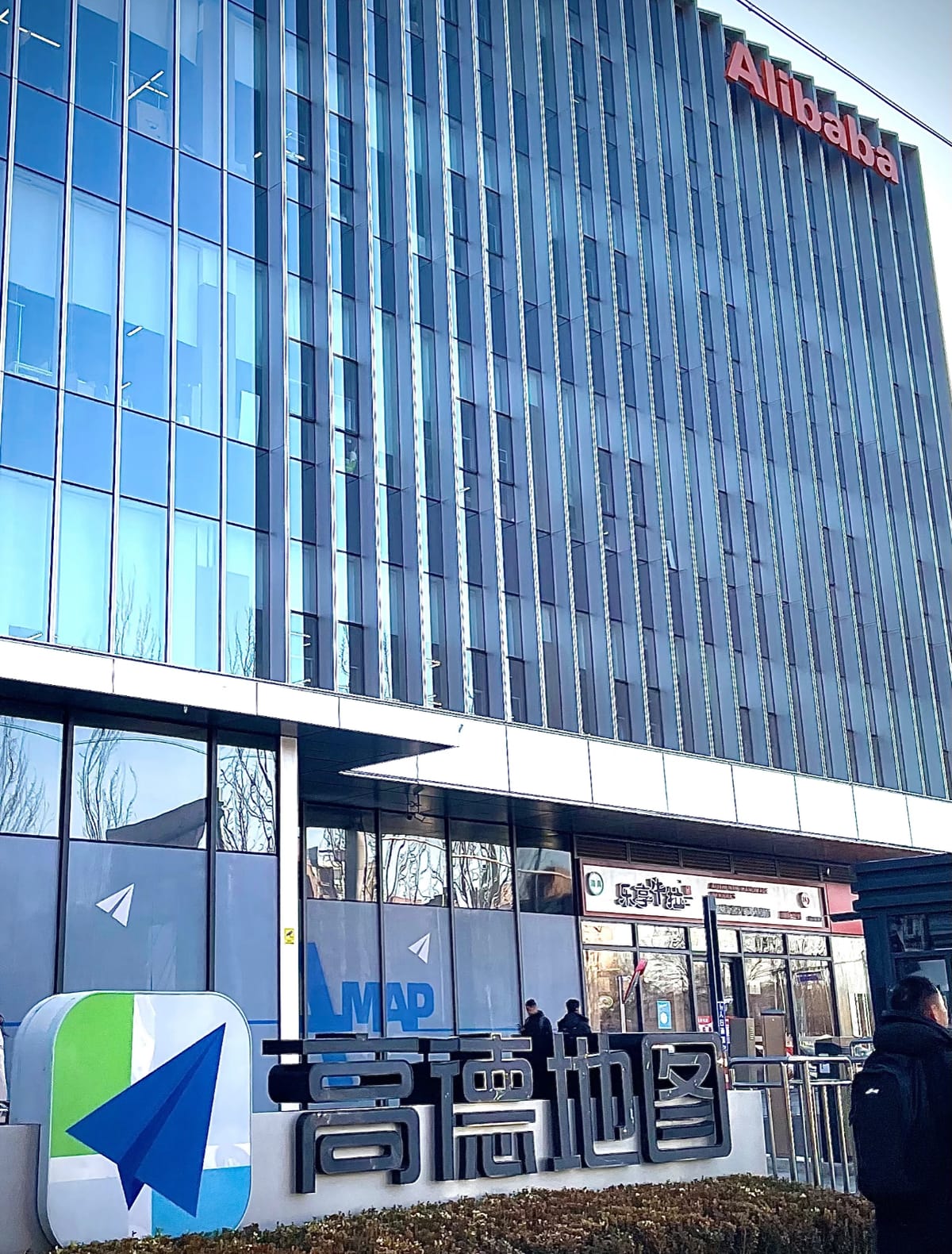
Alibaba-backed mapping service Amap has launched the world's first "Flying Streetscape" feature, making free to all merchants a capability that Google demonstrated but failed to scale commercially. The development marks a significant shift in the AI-driven spatial intelligence race, where execution capacity and ecosystem integration are proving as critical as technological innovation.
On January 7, 2026, Amap introduced the feature that allows users to virtually fly from aerial views into street-level scenes and even inside stores before physically visiting. The immersive preview capability builds on world model technology that Amap developed following its comprehensive AI transformation announced in August 2025, positioning the Chinese company ahead of Google in real-world application of similar concepts.
The launch highlights a strategic divergence between frontier AI research and market deployment. While Google's technical prowess in neural rendering remains formidable, its "immersive view" functionality showcased at developer conferences has yet to achieve widespread rollout, constrained by prohibitive production costs. Amap's generative approach, by contrast, enables merchants to upload simple videos or images that the system transforms into explorable 3D environments, dramatically reducing barriers to scale.
The competitive dynamics underscore how deep local market integration and complete service ecosystems can compensate for gaps in global reach. Amap's advantage lies not in international coverage but in its connection to Alibaba's comprehensive infrastructure spanning local services, e-commerce logistics, and mobile payments—capabilities that enable AI features to translate into tangible consumer experiences rather than remaining experimental demonstrations.
Technical Architecture Enables Commercial Viability
Amap's Flying Streetscape relies on a proprietary world model that processes multi-source perception data through cross-modal unified representation. The system jointly models and predicts both visual appearance and three-dimensional geometry, mapping physical spaces into continuous, computable digital environments with high geometric accuracy.
This generative methodology contrasts sharply with traditional 360-degree capture approaches that require exhaustive real-world filming. Industry observers compare the technology to an experienced architect who can reconstruct entire building structures from limited sketches, drawing on pattern recognition across vast training datasets.
The technical foundation has demonstrated measurable performance advantages. In WorldScore, an authoritative international benchmark for spatial intelligence, Amap's world model achieved top comprehensive scores, validating its real-world reconstruction capabilities at a global competitive standard.
Ecosystem Integration Drives Market Differentiation
The Flying Streetscape feature primarily deploys through Amap's Street Exploration Rankings, a merchant discovery service that is evolving from simple information aggregation to immersive experience delivery. This integration exemplifies what Amap CEO Guo Ning describes as transitioning from "manufacturing traffic" to "safeguarding authenticity."
The functionality represents what industry analysts characterize as a value leap from Street Exploration Rankings 1.0 to 2.0, addressing not merely trust in recommendations but creating interactive, immersive closed-loop experiences. By combining credible merchant rankings with spatial visualization, Amap builds advantages that extend beyond mapping accuracy into comprehensive local service delivery.
This ecosystem depth contrasts with structural limitations facing even dominant global players. While Google maintains unquestioned leadership in search, advertising, and operating system ecosystems, it lacks integrated fulfillment infrastructure spanning offline services, local commerce, and transaction completion. The company can map global geography with precision yet struggles to chart complete local service landscapes.
Strategic Implications for AI Application Leadership
Amap's achievement in deploying Flying Streetscape at scale illustrates broader patterns in Chinese technology companies' competitive positioning. Multiple features that domestic users consider standard—including traffic light countdown displays, lane-level navigation, and beyond-line-of-sight warning systems—remain undeployed internationally despite originating from overseas research.
Industry observers note that Chinese firms' competitive strength centers on application implementation rather than fundamental research initiation. Technologies frequently originate abroad but achieve faster, broader adoption within China's dynamic market environment. Flying Streetscape exemplifies this pattern: while multiple companies pursue frontier spatial AI, Amap converted the concept into scaled reality first.
The strategic divergence reveals how market conditions shape technological trajectories. Amap's focus on domestic operations, rather than constituting a limitation, has enabled intensive ecosystem development that supports rapid feature deployment. The "data + model + scenario" closed loop generates continuous improvement cycles where technical capabilities enhance user experiences, and usage data refines model performance.
This competitive dynamic suggests that in AI-driven spatial intelligence, technological foresight no longer guarantees market leadership. Scaled deployment capacity combined with robust ecosystem support increasingly determine competitive outcomes, requiring even cutting-edge technical models to integrate with deep scenario foundations and complete commercial pathways to progress from conceptual vision to mass user adoption.