
Baidu's Token Exchange Is Already Selling DeepSeek and GLM APIs
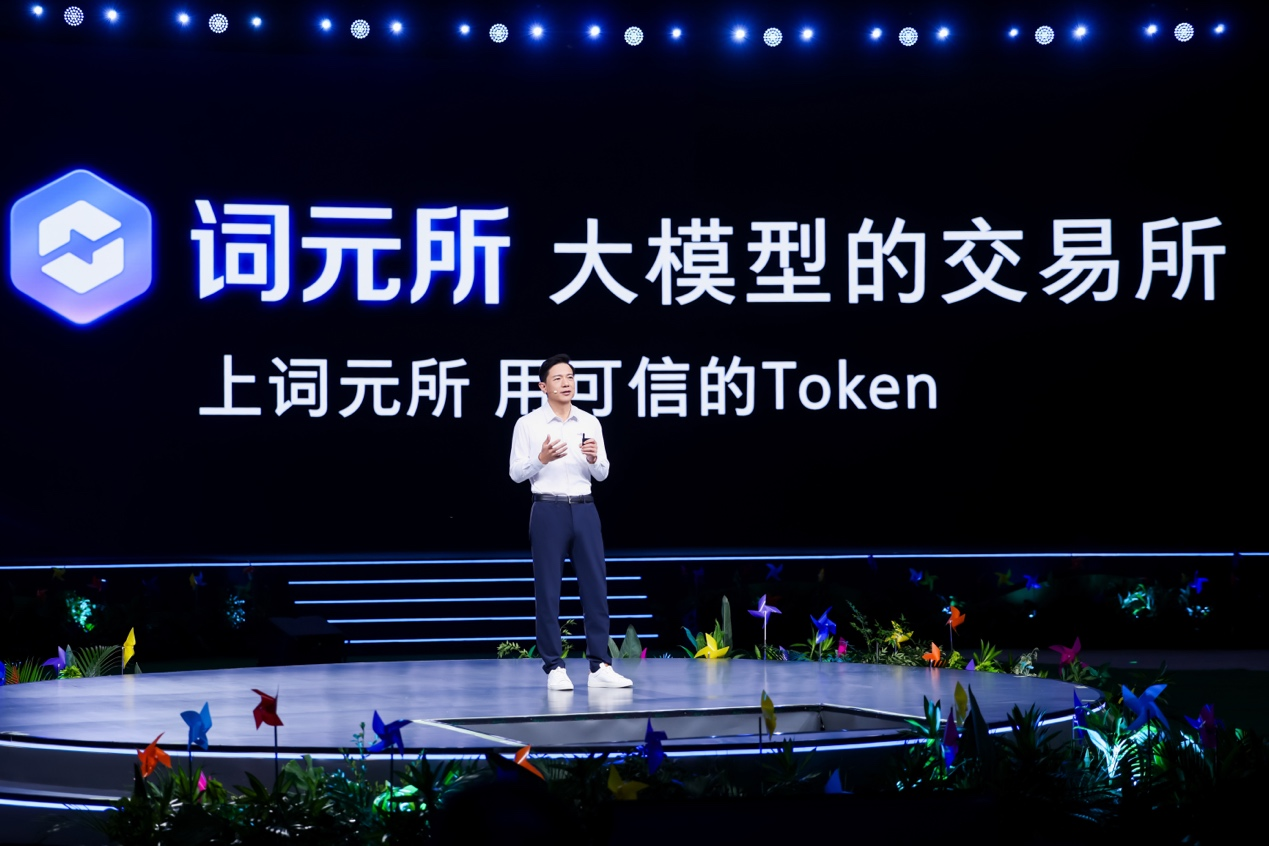
Baidu used its annual developer conference on Thursday to formally launch Token Exchange, a marketplace for buying and selling access to large-model APIs. The product, called Ciyuansuo in Chinese, is not a new Baidu model. It is a storefront that has already been running for about a month, where customers can compare suppliers, top up an account and call models through a single set of credentials.
In an English post on Thursday, Baidu described Token Exchange as “a neutral, transparent and trusted marketplace connecting AI model service providers with customers.” The company said that, one month in, the platform had more than 100 model resources and was averaging more than 50 million calls and 700 billion tokens a day. Those figures are Baidu’s own. They have not been independently audited, and they do not match the numbers still advertised on the official product page.
A Marketplace Where Rival Models Take Center Stage
What a customer can actually buy is clearer than the launch rhetoric. On the public site, as of Thursday evening in Beijing, the featured catalog was not built around ERNIE.
DeepSeek’s V4.1 Flash was listed with six suppliers, starting at 1.3 yuan per million input tokens and 1.56 yuan per million output tokens. Zhipu’s GLM-5.3 Flash was listed with 12 suppliers, starting at 0.52 yuan and 1.82 yuan. Moonshot’s Kimi K3 had four suppliers. ERNIE 5.1 appeared with a single supplier, at a higher starting price of 4 yuan and 18 yuan.
The “from” prices are the lowest listed among those vendors, not a guaranteed bill.
Baidu Targets China's Fragmented API Resale Market
That mix is the commercial point. Baidu is trying to sit in the middle of a market that already exists in China: third-party vendors reselling access to popular models, often at different prices and with uneven quality.
At the opening of Baidu World 2026, founder Robin Li said the rush of new models had also produced a crop of token relay stations that do not stand behind quality, stability or response speed, and cannot even verify that a model is authentic. Token Exchange, he said, is meant to be an exchange in the literal sense — a place that gathers suppliers and lets companies and individuals find, buy and use “trusted” tokens.
Baidu’s English account said the company will check provider credentials and compare model fingerprints before listing, to help catch model swapping and inflated specifications, then run spot checks and keep “a public credit record for each provider.”
The product documentation, updated on Nov. 11, the day before the formal launch, also says the platform uses supplier credit ratings and blockchain attestation. Those are Baidu’s descriptions of its own controls, not a test of whether they work.
Chinese Real-Name Verification Limits AccessGetting onto the platform is more ordinary than the exchange metaphor suggests. The official page tells new users to register with a mobile number, complete real-name verification, add credit, pick a supplier, then create an API key.
The site’s own search box refers to a “domestic” catalog of models and suppliers. Baidu has not said whether customers without a Chinese phone number can use the product, and it has not disclosed what cut, if any, it takes on each call.
Baidu's Neutrality Faces a Conflict of Interest. The company’s claim of neutrality sits next to a conflict it did not address on stage. Baidu operates the marketplace and also lists its own ERNIE model on it. A stock exchange does not usually list itself as an issuer.
Whether buyers treat Baidu as a referee, a retailer, or both will matter more than the fingerprint language in the launch post.
Conflicting Usage Figures Raise Questions About Scale
Even the usage figures are still unsettled. Beside the 100-plus resources, 50 million daily calls and 700 billion daily tokens in Baidu’s English post, the official homepage on Thursday evening still displayed “70+” model resources, “60 million+” daily calls and “200B+” daily tokens.
The gap is worth noting once. It is not, by itself, a reason to discard the launch. It is a reason not to treat any of those numbers as a precise measure of scale.
The Real Test: Can Baidu Become a Trusted Exchange?
The business test is narrower than Baidu World’s framing. Token Exchange is already a working, prepaid, multi-vendor API mall for customers who can pass a Chinese real-name check.
The question is whether Baidu can turn that mall into a trusted exchange — and whether the suppliers who already sell DeepSeek and GLM through it will accept Baidu as the party that grades their credit.
Related Coverage:
Baidu Unveils ApolloWorld, Compressing Three Years of Road Testing Into One Day