
Baidu Unveils ApolloWorld, Compressing Three Years of Road Testing Into One Day
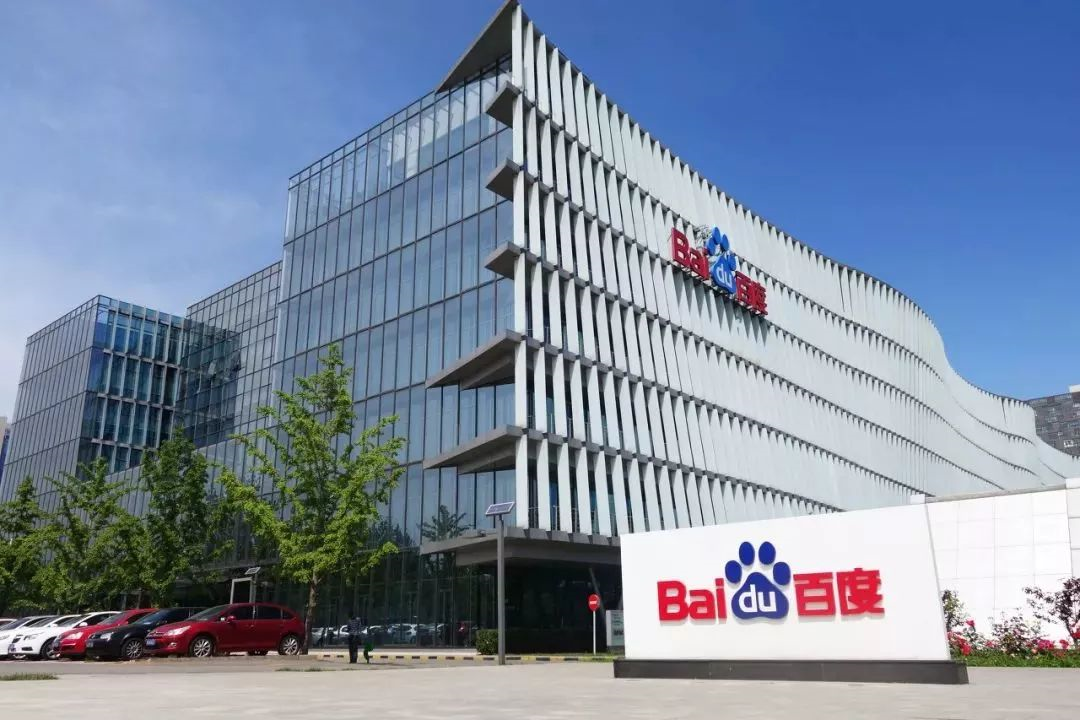
Baidu has disclosed ApolloWorld, a world model for autonomous driving that generates fully interactive virtual traffic environments, allowing its Luobo Kuaipao robotaxi fleet to complete simulation-equivalent testing at a pace that would take a single physical test vehicle roughly three years to replicate in a single day — a capability that could fundamentally reshape the economics of L4 autonomous vehicle deployment.
The disclosure arrives as the global autonomous driving industry faces a critical inflection: scaling robotaxi operations across geographically and culturally diverse cities demands exponentially more validated edge-case scenarios than physical road testing can cost-effectively produce. For Baidu, whose Luobo Kuaipao platform now operates across 28 cities globally with a cumulative mileage exceeding 350 million kilometers — including more than 240 million kilometers of fully driverless operation — the bottleneck is no longer hardware or regulation alone, but the velocity of scenario verification.
ApolloWorld is Baidu's answer. The model is already embedded in Luobo Kuaipao's active testing and validation pipeline, marking a transition from proof-of-concept to operational infrastructure.
Closing the Gap Between Virtual Fidelity and Physical Reality
The core technical claim — one day of ApolloWorld simulation equals approximately three years of single-vehicle real-world testing — rests on a multi-agent architecture in which every traffic participant, from sedans to pedestrians, is modeled as an independent AI agent with its own behavioral logic and decision-making capacity. When a robotaxi changes lanes or brakes, surrounding agents recalculate and respond, generating branching outcomes rather than replaying pre-recorded trajectories.
This distinction matters enormously for validation credibility. Conventional autonomous driving simulation has long relied on non-responsive log replay: a vehicle's altered behavior triggers no corresponding change in surrounding traffic, rendering the test environment structurally unable to assess dynamic decision-making. ApolloWorld's interactive generation model, as described by Baidu Intelligent Driving Group (IDG) Chief Architect Dr. Wang Liang, addresses this limitation by coupling a world model — which continuously generates sensor data, road conditions, and agent behavior — with the driving model that acts upon it. The two systems operate in a closed loop: the driving model's output becomes the world model's next input state.
Baidu has applied knowledge distillation techniques to accelerate model inference, enabling the virtual environment to respond to vehicle actions in real time — a prerequisite for meaningful full-trip simulation of rides lasting 20 to 30 minutes across dozens of intersections.
Baidu's "2+3" Framework Sets a New Verification Standard
Amid an industry-wide proliferation of systems marketed as "world models," Baidu has introduced what it terms a "2+3" evaluation framework — an attempt to draw a defensible boundary between generative video systems and models capable of supporting genuine L4 training.
The framework's two foundational requirements are causality (the model must correctly propagate the downstream consequences of any given state) and interactivity (external actions must persistently alter environmental evolution). The three engineering performance criteria are physical accuracy, persistence, and real-time responsiveness.
The physical accuracy requirement is where the framework becomes most consequential — and most difficult to satisfy. Dr. Wang cited wet-road braking dynamics and lidar point-cloud noise under rainfall as representative examples. A world model that renders visually convincing rain but fails to simulate how water reduces tire friction coefficients or how raindrops scatter laser returns produces test results that are not merely imprecise but actively misleading for safety-critical validation. Such problems, which Dr. Wang characterized as "dirty work," represent the engineering moat that is genuinely difficult to replicate quickly.
Dr. Yang Ze, Distinguished Architect at Baidu IDG and head of the world model program, noted that the system supports scenario reconstruction: when the driving model makes an error, engineers can freeze the initial conditions, modify surrounding agent behavior, and re-run the sequence — enabling systematic failure analysis that would be logistically prohibitive on physical roads.
Luobo Kuaipao's Operational Scale Creates a Compounding Data Advantage
The strategic logic underlying ApolloWorld is inseparable from Luobo Kuaipao's accumulated operational history. With 23 million completed trips and 350 million kilometers of real-world mileage — a distance that would take a 300 km/h high-speed train 133 continuous years to cover — Baidu possesses a dataset of encountered traffic interactions that few competitors can match.
Crucially, this dataset does not merely represent volume. It encodes the specific edge cases — a water truck dislodging construction cones into a vehicle's path, for instance — that neither scripted testing nor synthetic generation alone can reliably surface. These incidents, once captured from physical operations, can be reconstructed in ApolloWorld, varied parametrically across speeds and traffic densities, and used to stress-test successive iterations of the driving model.
The resulting feedback loop exhibits properties consistent with Scaling Law dynamics: as the fleet expands into new cities, it generates new training material; improved driving models enable faster deployment, which further expands the data surface. Baidu's new fourth-generation L4 end-to-end model architecture is already in production deployment across a portion of its domestic fleet, progressively replacing legacy modular systems.
For global expansion, ApolloWorld provides a compression mechanism. Rather than repeating city-by-city physical validation from scratch, Baidu can pre-synthesize locally relevant traffic scenarios — drawing on Baidu Maps' accumulated road geometry and regional driving behavior data — before a single vehicle enters a new market.
Competitive Positioning: ApolloWorld vs. Waymo World Model
The competitive reference point is Waymo, which in February 2026 formally released the Waymo World Model, built on Google DeepMind's Genie 3 architecture. Waymo's system supports environmental manipulation via driving actions, scene layouts, and natural language prompts, with output spanning both camera and lidar modalities.
The two systems reflect different prioritization philosophies. Waymo's model emphasizes adversarial scenario generation — constructing complex test conditions — while ApolloWorld is explicitly engineered around complete-trip validation for a commercial robotaxi service. Whether Waymo World Model has been integrated into Waymo's active fleet validation pipeline at a comparable depth to ApolloWorld's role in Luobo Kuaipao has not been publicly confirmed by Waymo.
The broader industry signal is unambiguous. Waymo's US$16 billion funding round in February 2026, valuing the company at US$126 billion, and Advanced Micro Devices' (AMD) approximately US$8.2 billion all-stock acquisition of World Labs — the spatial intelligence startup founded by Stanford professor Fei-Fei Li — in September both underscore capital market conviction that world model infrastructure is becoming a tier-one competitive asset in physical AI.
Baidu and Tesla remain the only two companies globally that have scaled next-generation end-to-end driving models to hundreds of fully driverless operational vehicles — a distinction that gives both companies' world model investments a validation depth unavailable to developers without equivalent fleet access.
Impact Assessment: What ApolloWorld Changes for the Industry
The structural implication is a potential decoupling of fleet expansion speed from the linear cost of physical road testing. If ApolloWorld's efficiency claims hold at scale, the marginal cost of validating each additional city falls — compressing the timeline between regulatory approval and commercial launch, and shifting competitive advantage toward companies with the richer real-world datasets needed to seed the virtual environment with meaningful fidelity.
Whether ApolloWorld's physical accuracy specifications can sustain performance across the full diversity of conditions encountered in 28 cities — from Hong Kong Airport's approach roads to unstructured urban traffic in emerging markets — remains the central open question. The "2+3" framework identifies the right criteria. Meeting them consistently across corner cases is the engineering challenge that will determine whether ApolloWorld delivers a durable moat or a well-specified aspiration.
Related Coverage:
Baidu Unveils AI Agent OS to Drive Cloud Growth
Baidu Takes DuMate Into 55 Million Homes as the AI Agent Race Moves to Hardware