
China's AI Glasses Race Hits IPO Inflection Point as XREAL Files, Rokid Restructures
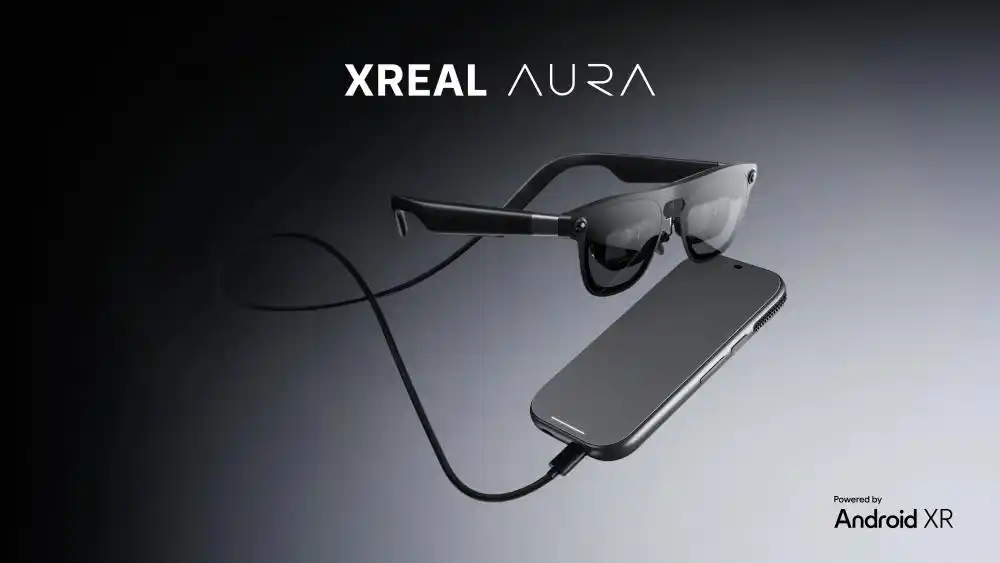
China's smart eyewear sector is sprinting toward its first public listing, with XREAL having submitted a Hong Kong IPO prospectus, Rokid completing its share restructuring, and RayNeo Innovation quietly signaling capital market ambitions — compressing what was a multi-year technology race into a near-term equity event.
The convergence is no accident. Beijing and several provincial governments have, for the first time in 2026, included smart glasses in trade-in subsidy programs — a policy tailwind that materially lowers the consumer acquisition barrier and adds an urgency to the listing queue. For investors, the subsidy inclusion functions as a demand-side validation signal, making the timing of an IPO window unusually favorable.
Yet the financials tell a more cautious story. XREAL's prospectus reveals a net loss of RMB 456 million (approximately US$63.3 million) in the prior fiscal year, cumulative losses exceeding RMB 2 billion (US$277.8 million) over three years, and — most strikingly — only RMB 63.63 million (US$8.8 million) in cash on hand. The company has not yet achieved self-sustaining cash generation. Rokid, which has never disclosed profit-related data publicly, is likely in a comparable position given its development stage, according to analysts tracking the sector.
XREAL Bets Its Balance Sheet on Proprietary Silicon
XREAL's central strategic wager — and its primary financial liability — is in-house spatial computing chip development. Its proprietary X1 series targets the performance ceiling that third-party silicon from Qualcomm or NVIDIA cannot fully optimize for consumer AR use cases, specifically addressing field-of-view width and display latency, the two friction points most cited by early adopters.
The global revenue skew is a meaningful differentiator: XREAL founder Xu Chi told 36Kr that overseas sales account for more than 70% of total revenue, effectively sidestepping China's margin-compressing domestic price wars. Total revenue reached RMB 516 million (US$71.7 million) in the prior fiscal year, but software and services contributed only RMB 40 million (US$5.6 million), or 7.8% of the total — a structural weakness that limits the recurring-revenue premium investors typically assign to platform businesses.
The deeper systemic risk is ecosystem dependency. XREAL's NebulaOS is built on Android XR, Google's AR framework. Any strategic pivot by Google — or geopolitical constraints on API access — would directly threaten the company's international growth narrative, a scenario that cannot be dismissed given current cross-Pacific technology tensions.
Rokid Converts Suppliers Into Shareholders to Lock Supply Chain
Rokid's pre-IPO maneuvering has been less about technology disclosure and more about structural risk mitigation. Ahead of its Hong Kong listing preparation, the company brought lens manufacturer Lens Technology and optical component maker Conant Optical in as shareholders — a deliberate conversion of supply chain counterparties into aligned stakeholders, designed to secure component priority and price stability during what promises to be an intensifying hardware price war.
The company's most visible marketing coup is a partnership with CCTV as the official AI glasses broadcast partner for the 2026 FIFA World Cup — the first time an AR eyewear brand has been embedded in a top-tier global sports broadcast infrastructure. The move amplifies brand recognition but simultaneously magnifies scrutiny of profitability metrics that Rokid has never made public.
Rokid's software philosophy — supporting open switching between Alibaba's Qwen, DeepSeek, and Google's Gemini — provides flexibility and reduces AI development costs. The trade-off is strategic: without a proprietary AI layer, Rokid risks commoditization as a hardware shell, ceding user engagement and data loops to whichever model provider gains dominance.
RayNeo Secures Telecom Capital, Targets Enterprise Beachhead
RayNeo Innovation, backed by a combined investment exceeding RMB 1 billion (US$138.9 million) from China Mobile and China Unicom announced in January 2026, has structured its go-to-market around a channel advantage that pure-play hardware startups cannot replicate: distribution through state-owned telecom carriers' subsidized handset programs.
The company's optical moat — a proprietary dual-eye full-color MicroLED waveguide solution — provides measurable differentiation from commodity optical designs. RayNeo has concentrated its product optimization on enterprise use cases: real-time translation, teleprompter functionality, and cross-border navigation, building stickiness among business travelers and corporate users rather than competing for mass-market volume.
The strategic constraints are equally clear. Hardware bill-of-materials costs keep pricing anchored in the mid-to-high tier, effectively excluding the sub-RMB 1,000 mass market. More critically, RayNeo's AI model stack relies on external supply from Alibaba and Tencent — a dependency that becomes a vulnerability if either tech giant accelerates its own eyewear hardware ambitions.
Alibaba's Quark Pivots to "Qianwen AI Glasses" Mid-Cycle
Alibaba's entry via Quark smart glasses, launched in December 2025, brought the most complete consumer application ecosystem to the category — integrating navigation, Alipay payments, and e-commerce into a high-frequency agent experience. The product's hot-swappable battery frame addresses a persistent wearable endurance problem with pragmatic engineering rather than battery chemistry innovation.
However, an internal Alibaba reorganization in March 2026 folded the smart glasses business into the Qianwen AI unit, meaning future products will carry the "Qianwen AI Glasses" brand. The nomenclature discontinuity between the first-generation "Quark" device and the forthcoming "Qianwen" lineup creates a consumer recognition gap that will require incremental marketing spend to resolve. A delayed launch in January 2026 also exposed supply chain execution gaps typical of internet companies entering precision hardware manufacturing.
Xiaomi Replicates the Mi 1 Playbook at RMB 1,999
Xiaomi has taken the most conservative technical posture among the five major players, positioning its AI glasses as a camera-first wearable rather than an AR display device — a deliberate echo of Meta Platforms' Ray-Ban Meta strategy. The entry price of RMB 1,999 (US$277.6) replicates the mass-market disruption formula of the original Mi 1 smartphone.
The ecosystem integration story is compelling within the Xiaomi universe: the glasses interact with Xiaomi's home automation, in-car systems, and IoT devices to deliver ambient intelligence without requiring explicit user commands. The constraint is structural — without AR display capability, the product's competitive narrative is bounded by the action camera category rather than the productivity computing category, and low technical barriers invite rapid commoditization from domestic rivals.
Three Structural Trends Will Define the Shakeout
The competitive dynamics across these five players illuminate three sector-wide inflection points that will determine which companies survive the 2026–2027 consolidation cycle.
Ecosystem depth displaces hardware specifications. As processing power becomes commoditized — mirroring the smartphone trajectory — the decisive variable shifts to software ecosystem lock-in: which platform controls user attention, application distribution, and AI interaction data.
Supply chain equity stakes become a defensive moat. Rokid's shareholder conversion of Lens Technology and Conant Optical is a template other players will likely replicate. In a price war environment, component priority and cost certainty are existential advantages.
AR and camera-first form factors will coexist as distinct market segments. The assumption that one technical architecture will dominate appears increasingly untenable. Enterprise productivity users and mainstream lifestyle consumers have divergent requirements, and the total addressable market is large enough to sustain parallel product categories — at least through the current hardware generation.
The race to become China's first publicly listed AI glasses company is, at its core, a race to establish which narrative — chip sovereignty, ecosystem openness, telecom distribution, internet integration, or mass-market accessibility — commands the highest valuation multiple from Hong Kong investors in a sector where none of the leading players has yet demonstrated a path to profitability.
Related Coverage:
XREAL Cuts AR Glasses Entry Price to $236 Ahead of Hong Kong IPO
China's Rokid Races to IPO as Giant Rivals Close In on AI Glasses Market
China's Smart Glasses War Reshapes as Alibaba's Qianwen and Xiaomi Crack the Top Five