
Chinese Robotic Mower Maker MOVA Bets on LiDAR Tech to Challenge RTK Dominance
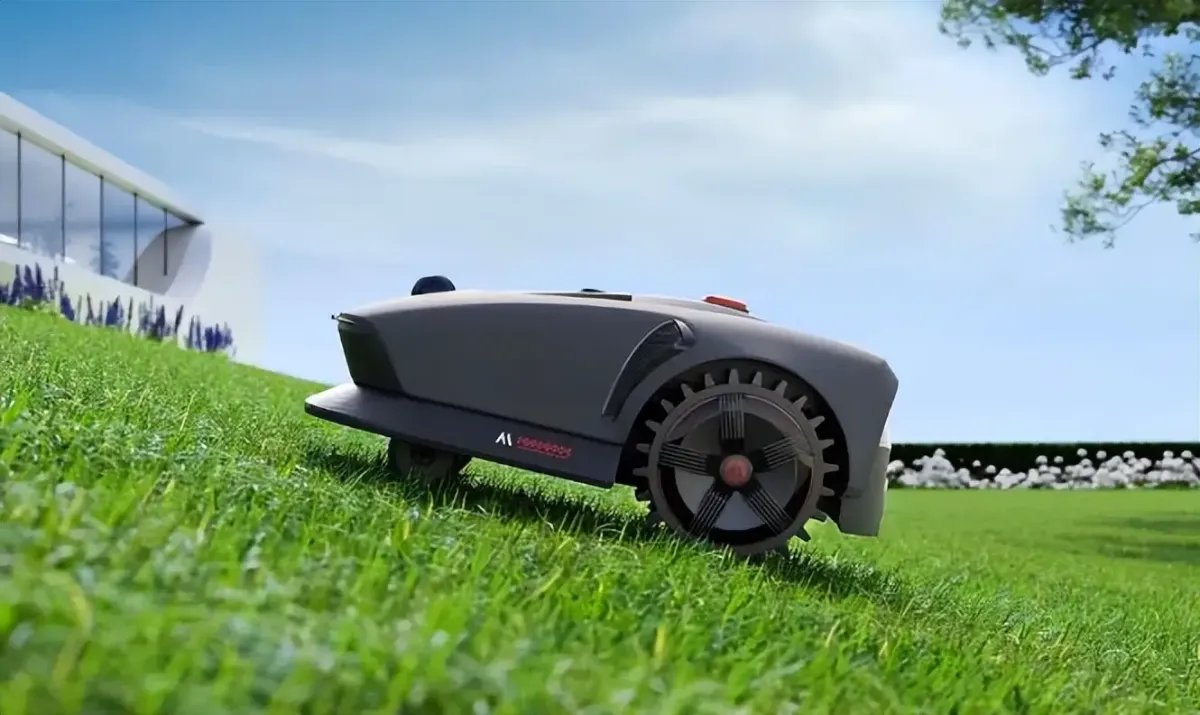
MOVA, a Beijing-based robotic lawn mower manufacturer, is making waves in the European and North American markets with its distinctive 3D LiDAR technology approach. In an exclusive interview with Tmtpost, MOVA's Chief Technology Officer Qin Ling outlined the company's strategy to differentiate itself in the rapidly expanding intelligent lawn mower sector, where Chinese manufacturers are increasingly dominating global exports.
The conversation comes as Chinese robotic lawn mower exports surged 58.92% year-over-year in the first quarter of 2025, reaching $1.01 billion, with North America and Europe accounting for 93.59% of export volume according to customs data. Grand View Research forecasts the robotic mower market will maintain 12%-20% compound annual growth over the next 5-10 years, with penetration rates jumping from 0.1% in 2022 to 17%.
Two Technical Routes: LiDAR vs RTK
The commercialization of boundary-free robotic lawn mowers truly took off in 2021. As UWB ultra-wideband, RTK positioning, and obstacle avoidance technologies developed, the robotic mower industry experienced rapid growth, with most mainstream manufacturers choosing RTK positioning technology routes.
RTK positioning technology works through real-time data interaction between a base station (with known precise location) and a mobile station (the mower), eliminating errors in satellite signal transmission such as ionospheric delays and multipath effects, to calculate the mower's precise position in real-time. This "real-time correction" mechanism enables mowers to accurately identify their position on lawns, avoiding traditional GPS "meter-level deviation" problems.
"During our initial R&D phase when entering the market, we also evaluated the more mature RTK solution. However, in testing complex scenarios, we found RTK stability issues," Qin Ling told Tmtpost. RTK-based mower products require installing a positioning pole on the lawn to receive satellite signals. But in actual testing, signal reception is easily affected by cloud cover, weather, and obstructions from buildings and trees, leading to significant positioning deviations or even position loss in mowers.
"A large portion of RTK product returns stem from this issue. Users lack professional knowledge to determine the accurate installation position for signal poles," he explained.
Consequently, MOVA decided to abandon the RTK technology route and pivot toward 3D LiDAR direction. To better adapt LiDAR for lawn mowers, MOVA collaborated with Hesai Technology to develop a 16-beam solution that ensures recognition accuracy while significantly reducing LiDAR implementation costs.
According to third-party testing, MOVA's mowers can complete mapping of a 1,000-square-meter area in just 3.5 minutes, with 3D LiDAR achieving centimeter-level positioning accuracy.
"We consistently emphasize that robotic mowers should be 'plug-and-play,' requiring users to master minimal additional technology," Qin said. Currently, robotic mowers have much higher penetration rates in residential scenarios compared to commercial ones. Mowers equipped with 3D LiDAR are as simple to use as robotic vacuum cleaners. Users only need to unbox the machine, and it can begin working immediately.
With 360° comprehensive perception, these mowers can real-time sense people, pets, trees, toys, foreign objects and other obstacles with precise identification. They have no visual blind spots, are unaffected by lighting or environmental conditions, and offer longer detection ranges. "3D LiDAR is currently the optimal solution for residential robotic mowers," Qin stated.
Adding AI Vision: Further Advancement in LiDAR Direction
Through its differentiated LiDAR route, MOVA achieved a breakthrough in the robotic mower market. Previously, MOVA launched two models targeting German and Swiss small courtyard lawns, as well as French and Polish medium-sized lawns: MOVA 600 and MOVA 1000. Official data shows that second-quarter 2025 monthly sales in Germany exceeded 3,000 units; during France's French Days period, MOVA intelligent mowers sold over 1,000 units through Amazon channels.
During IFA 2025, MOVA unveiled two new mower products for medium-to-large lawns: the MOVA LiDAX Ultra AWD series and MOVA LiDAX Ultra series. Both new products feature UltraView environmental perception technology, combining high-precision 3D LiDAR with AI-enhanced 1080p HDR cameras, enabling 70-meter long-range detection and 360° omnidirectional sensing.
The UltraView system can autonomously generate high-precision 3D maps, supporting centimeter-level precise navigation. Even at night, in complex environments, or under poor lighting conditions, it can quickly complete mapping and operations without complex wire burial, RTK base station installation, or signal poles, truly achieving "power-on-and-use" functionality.
"The addition of vision enables mowers to autonomously perceive surrounding environments. Very common obstacles in European and American courtyard scenarios, such as water hoses and children's toys, can also be identified and avoided by the mower," Qin explained. Vision also grants mowers another function as security devices for courtyards. Users can define various patrol modes for scheduled inspections of different courtyard areas.
Additionally, MOVA is attempting to layer embodied intelligence technology onto mower products. NexLawn, MOVA's garden tools and robotic solutions brand, also launched its first courtyard care robot, Master X.
Master X features a retractable robotic arm with a folded length of 44.5 centimeters, extending to 77 centimeters. Using robotic arm technology, Master X can move branches, toys, and stones through multi-functional grippers. For precise lawn maintenance, it can also weed, water, and even trim low branches and pick fruits.
"The application of embodied intelligence in robotic mowers is definitely a future development trend," Qin stated. Compared to the high costs of humanoid robots, adding minimal cost to mature mowers to expand some embodied intelligence functions is completely acceptable to users.
Regarding industry development over the next 3-5 years, Qin indicated that current market growth rates far exceed expectations, with the entire industry's compound annual growth rate maintaining 15%-20%.
"For MOVA, we hope to drive the entire robotic mower industry toward LiDAR routes and motivate supply chains to produce better LiDAR products more suitable for mowers," Qin said. From a global market perspective, Europe, North America, and Australia are currently the main growth markets. Meanwhile, while China's private courtyard numbers cannot match European and American markets, demand for robotic mowers in commercial scenarios is also considerable. As labor costs rise and robotic mower costs decline, domestic demand from high-end properties, private estates, and golf courses for robotic mowers will experience explosive growth.