
DJI and Insta360 Ignite Premium Pocket Camera War with Dual-Lens May 2026 Releases
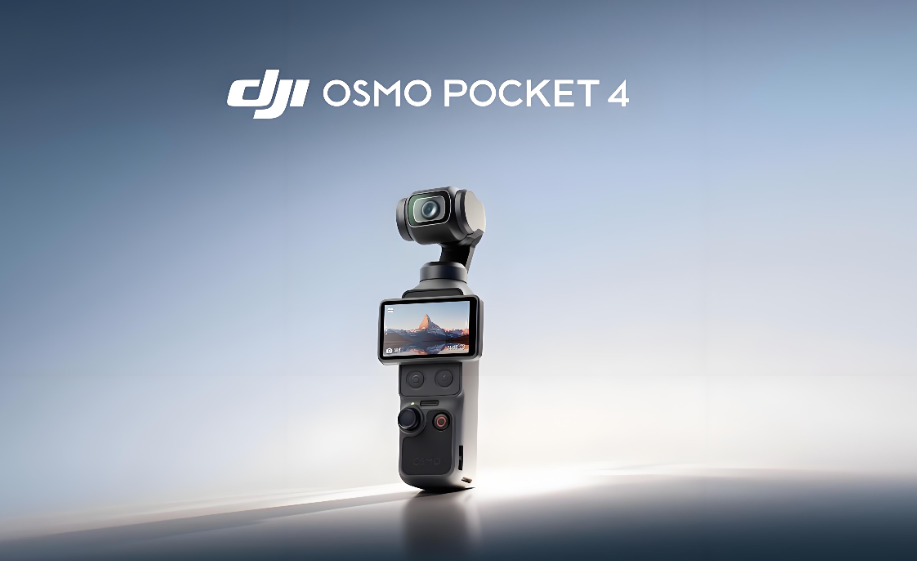
Chinese imaging hardware giants DJI and Insta360 are bracing for a direct collision in the premium vlogging market this May, as leaked specifications reveal both companies are integrating 1-inch sensors, dual-lens arrays, and high-end brand optics into their next-generation pocket gimbals.
The imminent launch of DJI’s Osmo Pocket 4 P, priced at RMB 4,399 (US$637), signals a defensive fortification of its dominant market share against Insta360’s aggressive hardware expansion. Industry analysts view Insta360’s upcoming Luna Ultra—featuring 8K video capabilities and a detachable modular design—as a targeted maneuver designed to capture professional creators operating outside the traditional action camera segment.
This escalation reflects a broader 2026 consumer electronics trend where manufacturers are leveraging dedicated AI processing chips and strategic partnerships with heritage optical brands—Hasselblad for DJI and Leica for Insta360—to sustain premium pricing and margins in a maturing global creator economy.
Insta360 Disrupts Form Factors with Modular 8K Architecture
Leaked technical specifications indicate Insta360 is prioritizing architectural flexibility and raw resolution to differentiate the Luna Ultra. The device introduces a rotational, modular design featuring a detachable camera head and an OLED touchscreen that doubles as a remote control, fundamentally altering the standard monoblock gimbal form factor.
Optically, the Luna Ultra utilizes a Leica-engineered dual-lens system. The primary 18mm wide-angle lens pairs with a 1-inch sensor at an f/2.0 aperture, while the secondary 120mm telephoto lens (70mm equivalent) utilizes a 1/1.3-inch sensor at f/2.8, enabling up to 6x lossless optical zoom. The system supports simultaneous dual-lens recording.
Data processing on the Luna Ultra represents a significant leap for the category. Powered by a triple AI chip configuration, the device captures 8K video at 24fps and 4K at 240fps. It supports a 120 Mbps H.265 (HEVC) bitrate, 10-bit color depth, Dolby Vision, and 37-megapixel RAW photography. Stabilization relies on a hybrid approach, combining a mechanical three-axis gimbal with Insta360’s proprietary six-axis FlowState electronic gyroscope.
DJI Defends Ecosystem Dominance via Optical Refinement
Conversely, DJI’s strategy with the Osmo Pocket 4 P focuses on refining its established, highly successful product lineage rather than introducing radical form factor changes. By setting a competitive retail price of RMB 4,399 (US$637), DJI aims to leverage its vast existing user base and accessory ecosystem.
The Pocket 4 P counters with its own dual-lens array, utilizing Hasselblad color science and D-log profiles favored by professional videographers. The primary 20mm lens features a 1-inch sensor, supported by a 60mm telephoto lens backed by a 1/1.3-inch sensor.
While trailing the Luna Ultra in maximum resolution, capping at 6K/60fps, the DJI unit matches the 4K/240fps ultra-slow-motion capability. This specification indicates DJI is prioritizing high-framerate performance and established color grading workflows over the data-heavy 8K standard, calculating that current consumer processing hardware remains a bottleneck for 8K video editing.
AI Silicon Drives Software-Defined Hardware Advancements
Beyond sensor sizes, the 2026 pocket camera battleground is heavily defined by edge-AI computing. Both devices are integrating deep machine learning directly into the capture process. The Luna Ultra specifications highlight real-time AI depth-of-field enhancement for portrait modes, Deep Track AI for automated subject framing, and complex automated movements like 360-degree barrel rolls and bullet time.
Audio capture is also undergoing professionalization to match the upgraded optics. The Luna Ultra incorporates 48 kHz 32-bit high-fidelity audio with advanced wind noise suppression, supported by Wi-Fi 6, Bluetooth connectivity, and direct compatibility with the Insta360 Mic Pro transmitter system.
With both the DJI Pocket 4 P and Insta360 Luna Ultra slated for May releases, alongside rumored traditional camera launches from Sony and Canon, the sub-US$1,000 imaging market is facing unprecedented saturation. The survival of these new models will depend less on megapixel counts and more on the seamless integration of their respective software ecosystems and AI-driven automated workflows.
Related Coverage:
DJI Pocket 3 Sales Cross 10 Million, Spurring Race From Smartphone Rivals