
Homocompute Closes Multi-Billion RMB Series B as Compute-in-Memory Race Draws Dense Capital
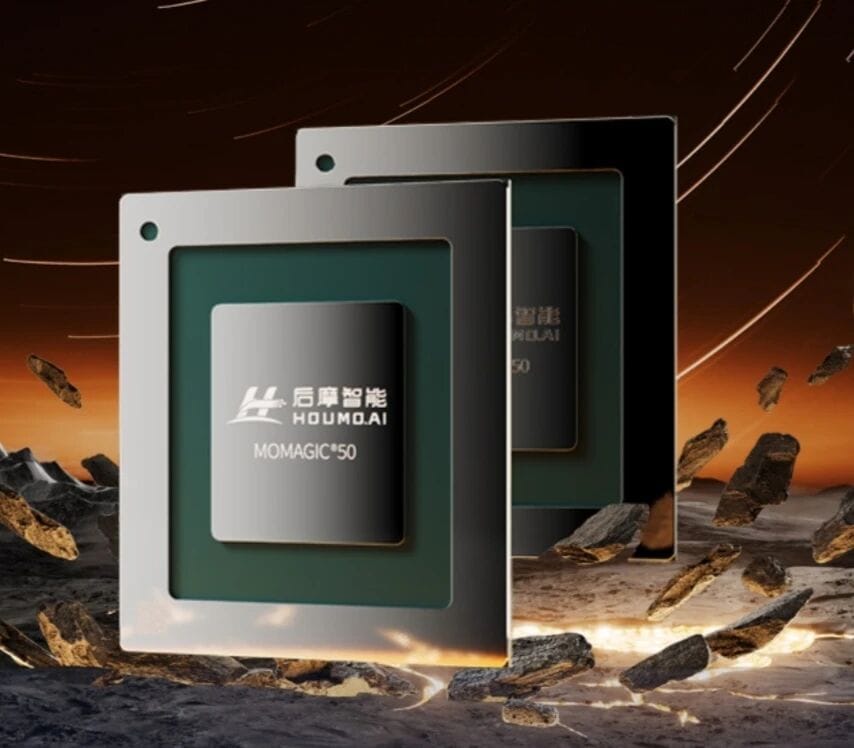
China's compute-in-memory chip sector is experiencing a capital surge, with Homocompute anchoring the trend after closing a multi-billion RMB Series B — a round that underscores how the shift from one-shot AI queries to persistent agentic workloads is redrawing the semiconductor investment map.
The Beijing-based fabless chip designer confirmed the raise in late 2026 without disclosing a precise figure, though the "multi-billion RMB" designation implies a floor well above RMB 1 billion (US$139 million). The syndicate spans upstream and downstream industrial capital, state-owned investors and at least one international participant, with several existing shareholders rolling additional commitments — a structure that signals conviction rather than a forced insider bridge.
The announcement arrives within weeks of two comparable deals: Micronano Core completing a RMB 1 billion-plus (US$139 million-plus) C2 round on Oct. 28, and Jitian Ruixin disclosing RMB 1 billion in cumulative funding over six months as of Oct. 22. The clustering is not coincidental.
Agentic AI Rewrites the Demand Equation for Edge Inference
The capital wave has a specific technical catalyst. Traditional large-model inference is a discrete transaction: one prompt, one response. Agentic AI — where a model autonomously plans, iterates, retrieves data and calls external tools to complete a multi-step task — generates sustained, repetitive compute-and-memory cycles. The longer the task chain, the higher the premium on latency, energy per token and total cost of ownership.
Researchers at China Academy of Information and Communications Technology flagged this inflection at an Open Data Center Committee symposium in May 2026, noting that agentic state management, multi-pass iteration and tool invocation require co-optimization across compute, memory, networking and scheduling — not merely higher peak FLOPS.
Qualcomm's September 2026 NPU architecture briefing independently converged on the same conclusion, listing sustained agentic operation, long-context handling and reduced off-chip memory access as primary design targets. When two companies operating at opposite ends of the supply chain identify identical bottlenecks, the technical consensus is essentially confirmed.
M50 Chip Accumulates 150-Plus Design Wins, Validating Commercial Traction
Homocompute's near-term revenue thesis rests on the M50, its local large-model inference processor launched in July 2025. Targeting AI-capable PCs, intelligent terminals, robotics and edge inference nodes, the chip competes on a constrained-resource brief: deliver usable AI performance within the power, thermal and bill-of-materials budgets of end-product manufacturers.
By end of August 2026, M50 had secured more than 150 product design wins. A subsequent October disclosure indicated the active customer base had crossed 100. Design wins are a leading indicator, not a revenue guarantee — the critical variable is conversion to volume production orders, a threshold Homocompute has not yet publicly quantified.
Two announced partnerships provide concrete anchors. Lenovo integrated M50 into its ThinkStation P7, unveiled in May 2026, to support on-device AI applications. China Mobile co-developed an intelligent all-optical network terminal with Homocompute, targeting office and campus deployments. Both Lenovo's venture arm and a China Mobile-affiliated fund are prior investors in Homocompute, illustrating a capital-to-customer conversion pipeline that is structurally notable — though the degree to which investment relationships drive procurement decisions warrants independent scrutiny.
Compute-in-Memory Architecture Targets the Data-Movement Bottleneck
Homocompute's differentiation argument is rooted in memory-compute topology. Conventional AI chips shuttle data continuously between discrete DRAM and logic dies; the resulting "memory wall" consumes bandwidth, energy and latency. Compute-in-memory (CIM) architectures relocate portions of the arithmetic pipeline to where data resides, reducing the volume and cost of data movement.
For inference workloads dominated by weight-loading and KV-cache access — both characteristic of large-model deployment — the efficiency gain is application-specific rather than universal. Homocompute packages the silicon with board-level modules, a software toolchain and reference designs, lowering integration friction for OEM customers who lack dedicated AI silicon teams.
The commercial roadmap extends beyond M50. The company is advancing the next-generation M6X and has separately disclosed that its first 3D CIM chip, the A20, has entered production. The Series B capital allocation spans all three vectors simultaneously: scaling M50 deliveries, funding M6X development and building out 3D CIM — a broad front that reflects ambition but also compresses organizational bandwidth.
Founder Credentials and Corporate Restructuring Reinforce IPO Optionality
Homocompute was founded in 2020 by Wu Qiang, who holds a Ph.D. in computer science from Princeton University and previously held engineering and leadership roles at Intel, AMD, Facebook and Horizon Robotics, where he served as CTO. The pedigree is a material asset in a sector where investor due diligence prioritizes deep architectural expertise.
Early institutional backers include Sequoia China, Matrix Partners China and Qiming Venture Partners. Lenovo Capital has participated from the angel round onward. State-linked capital entered progressively, with Chengton Mixed-Ownership Reform Fund and a China Mobile-affiliated vehicle joining in later tranches — a pattern consistent with strategic-sector companies that begin with market-rate VC and later attract policy-aligned capital as commercial proof points accumulate.
In April 2026, Homocompute completed a joint-stock conversion, formally restructuring from Beijing Homocompute Technology to its current share-company form. The reorganization is a standard prerequisite for A-share or Hong Kong IPO proceedings, though no listing timetable has been disclosed. Proprietary data from Cailian Press Venture Tracker assigns a 76.27% probability of Homocompute completing at least one additional financing round within two years of November 2026 — a model estimate, not a commitment.
Sector Comparison Reveals Differentiated Go-to-Market Strategies
The three companies absorbing the bulk of recent CIM capital are pursuing overlapping but distinct paths. Homocompute is concentrated on edge and terminal inference. Micronano Core addresses both terminal and cloud-side inference with a first-generation three-chip portfolio targeting customer testing by early 2027. Jitian Ruixin — backed by Meituan strategic investment, Xpeng Motors' Xinghang Capital, Yangtze Memory Industry Fund, Oriza Prunus Ventures, OmniVision, Zhiwei Capital and miHoYo strategic investment — is extending from CIM silicon into inference boards and servers.
The divergence matters for investors: edge CIM and cloud CIM face different competitive dynamics, customer concentration risks and gross margin profiles. Homocompute's edge-first positioning shields it from direct confrontation with Nvidia in data-center inference, but exposes it to competition from Qualcomm, MediaTek and domestic rivals including Cambricon in a market where OEM switching costs can be low.
Key Risks: Design-Win-to-Revenue Conversion Remains Unproven at Scale
The investment case for Homocompute carries execution dependencies that the Series B does not resolve. First, design win volume — 150-plus as of August 2026 — must translate into volume shipments; the gap between the two metrics defines whether CIM's efficiency advantage becomes a revenue event or a pilot program. Second, software toolchain maturity is a recurring friction point for emerging AI chip vendors; customer support scalability will be tested as the installed base expands. Third, the simultaneous pursuit of M50 ramp, M6X development and 3D CIM commercialization creates resource allocation tension that management will need to demonstrate it can navigate.
Wu Qiang has publicly acknowledged that agentic PC and edge inference demand is growing faster than other verticals, implicitly flagging that the company is prioritizing segments where momentum is clearest. Whether that focus holds as the M6X roadmap matures will be a defining strategic question heading into 2027.
Related Coverage:
Memory Chip Crisis and Huawei's Resurgence Reshape China's Smartphone Battlefield
Cambricon Clears the Air on Shipment Rumors as Inventory Surge Draws Scrutiny