
How a Six-Person AI Short-Drama Team Hit Hongguo's Charts Without Paid Traffic
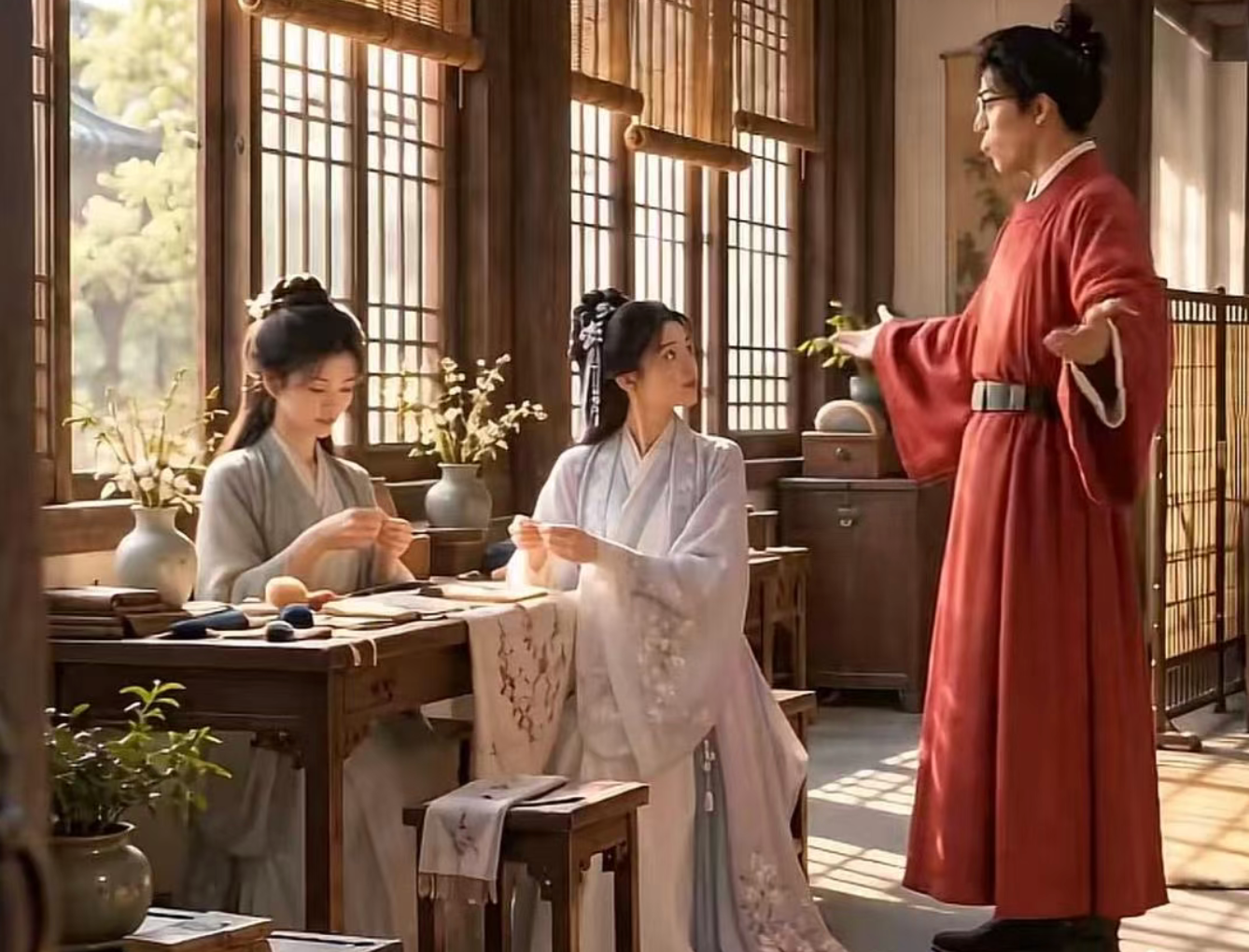
A six-person team of amateurs—including a stay-at-home mother, a ride-hailing driver, and a delivery worker—has produced the most-discussed AI short drama in China in 2026, reaching 12 billion cumulative plays on Hongguo without spending a single yuan on traffic acquisition, exposing a structural fault line in an industry that has long mistaken distribution spend for content quality.
Chijie Ru Song, a historical time-travel drama set in the Song Dynasty, was uploaded to Hongguo by the team known as "Lao Shiyi" on Aug. 21. The series launched quietly, but by the time Season 4 went live, it had reached the top of Hongguo's AI new-drama rankings with a heat index surpassing 50 million. Season 10 peaked at a heat index of 82.06 million. As of Nov. 6, cumulative plays stood at 12 billion, with nearly 4 million viewers pre-subscribed to unaired episodes—a long-tail serialization metric with no prior precedent in the domestic short-drama segment.
The numbers landed hard enough to draw official media attention. State-affiliated outlets Banyuetan, Economic Daily, and Guangming Network each ran commentary pieces, with the consensus framing identical: AI can reduce production cost, but cost reduction does not equal standard reduction. The Banyuetan piece was subsequently republished by CCTV Online, a distribution pathway that confers a degree of institutional endorsement rare for independently produced AI content.
Deconstructing the Cost Stack That Rewrites Industry Assumptions
The team's total declared production cost of approximately RMB 1 million (roughly US$139,000) covers only compute—specifically, model generation credits consumed on ByteDance-backed video generation platform Seedance. There are no labor costs: every member operates as a sole-proprietor entity, with revenue distributed on a contribution-weighted basis. IP licensing fees are also zero; the source novel was sourced from Tomato Novel's short-drama creator IP library under a free-licensing arrangement. The novel itself had fewer than 100,000 reads at the time of acquisition.
This cost architecture is not merely a curiosity—it is a direct challenge to the prevailing unit economics of China's short-drama industry. The standard industry playbook allocates the majority of a title's total budget to paid traffic, often at ratios that see distribution spend exceed production spend by a factor of three to five. Lao Shiyi's model inverts that entirely: zero distribution spend, full allocation to compute and time.
The team's total production cost of approximately RMB 1 million (roughly US$139,000) is consistent with the compute-only model they describe. Industry analysts tracking China's short-drama segment have noted that among the 221,900 AI-generated drama titles tracked on Hongguo's platform, only 0.48% have crossed the 100-million-view threshold—making the series an extreme statistical outlier, not a representative benchmark.
Seedance 2.5 Becomes the Quiet Infrastructure Winner
The team's technical stack centers on a single video-generation model: Seedance 2.5, developed under ByteDance's AI research division. The upgrade from version 2.0 to 2.5—deployed progressively across seasons—expanded multi-reference input capacity from approximately nine reference images to more than ten, a seemingly incremental change that the team identifies as materially significant for ensemble scenes and large-scale battle sequences.
"Seasons 9 and 10 had noticeably less AI artificiality," lead director He Xiushan noted in an interview with industry publication Wenyu Jiazhi Guan on Nov. 6. The team attributes this to iterative prompt engineering rather than any single technical breakthrough—a year-plus of accumulated workflow refinement across prior titles that informed the production methodology brought to Chijie Ru Song.
For text-based script development, general strategist Zhang Hansheng confirmed exclusive use of Doubao, ByteDance's large-language-model assistant. The end-to-end production stack—Doubao for scripting, Seedance for generation, proprietary prompt libraries for character and scene consistency—is effectively an all-ByteDance pipeline, a concentration of platform dependency that carries its own risk profile as the team scales.
The team holds annual membership subscriptions rather than pay-per-token contracts, partially insulating them from token price inflation that affected broader developer communities in the second half of 2026.
Content Discipline Outperforms Algorithmic Optimization
The production process reveals a deliberate inversion of the content-factory model dominant among high-volume AI drama producers. Pre-production for Season 1 alone ran from Aug. 1 to Aug. 21—slower than any prior title from the team. The first 20 minutes of footage required nine days. The first ten episodes required two crew members working in parallel for approximately one week.
The differentiating variable, according to chief producer Li Zhaohua, was historical research density. Costume color-coding by official rank, footwear conventions, household registration documents, travel permits, and ceremonial protocol hierarchies were all verified against primary Song Dynasty sources before appearing on screen. That research rigor generated an emergent audience behavior: viewers began self-organizing in comment sections to annotate official systems, battle maps, and historical figures by accuracy tier—categorizing content as "historical fact," "fictional," or "inferred." The community-generated knowledge layer extended dwell time and social propagation without any platform algorithmic intervention.
This is the mechanism by which a zero-paid-traffic strategy can function: when content specificity is high enough to convert passive viewers into active validators, the audience itself becomes the distribution channel.
The original novel's author—an English teacher whose work was still being serialized at the time of adaptation—had accumulated fewer than 100,000 readers when Lao Shiyi licensed it. The team selected it not on traffic signals but on the quality of period-accurate dialogue and the absence of a game-mechanic "system" common to most time-travel narratives—a structural choice that Zhang Hansheng described as the clearest early differentiator from competing titles.
The Workforce Model Signals a Broader Structural Shift
The team's composition of 30 total contributors across multiple concurrent production groups—with Chijie Ru Song handled by a core six-person unit—represents a distributed, remote-only workforce without a single formally trained film or television professional. Members handle sequential workflow stages independently: novel reading, script breakdown, prompt writing, video generation, and post-production editing. Coordination relies on shared asset libraries—standardized character design sheets, scene references, prop specifications—and a year of accumulated working rapport rather than institutional hierarchy.
The business architecture has near-zero fixed costs, generates revenue through platform revenue-sharing rather than episodic licensing fees, and scales laterally by adding parallel production groups rather than deepening headcount on a single title. A second title, Tuiyi Guilai Zhi Baobiao Bu Hao Re, reached more than 1 million saves within days of its Oct. 23 launch and ranked third on Hongguo's pre-subscription chart—a preliminary signal that the production methodology transfers across IP.
For investors and analysts tracking China's AI content ecosystem, the Lao Shiyi model suggests that the marginal returns on paid-traffic spend in short drama are compressing faster than platform economics currently reflect. When a six-person team with RMB 1 million (US$139,000) in compute costs can outperform titles carrying ten-times the distribution budget, the implied pressure on incumbent production houses—which have built cost structures around traffic arbitrage—is structural, not cyclical.
What the Replication Question Actually Measures
When asked about methodology replication, Zhang Hansheng offered a three-variable framework: genre alignment with team capability (the group specializes in male-audience narrative with patriotic-action themes), thematic resonance with mainstream values, and creative immersion at the individual contributor level. He Xiushan, who wrote and produced the battle-death sequence in Episode 38-39 of Season 6—identified by audience metrics as a peak emotional moment—confirmed he was in tears during production. "If you don't cry yourself, the audience won't cry," he said.
That is not a scalable KPI. It is, however, a reasonable explanation for why 221,900 competing titles have not replicated the outcome.
Related Coverage:
Seedance 2.0 Powers Volcano Engine's 10x MaaS Revenue Ambition