
Huawei Launches World's First Wide-Ratio Bar Phone, Betting on HarmonyOS
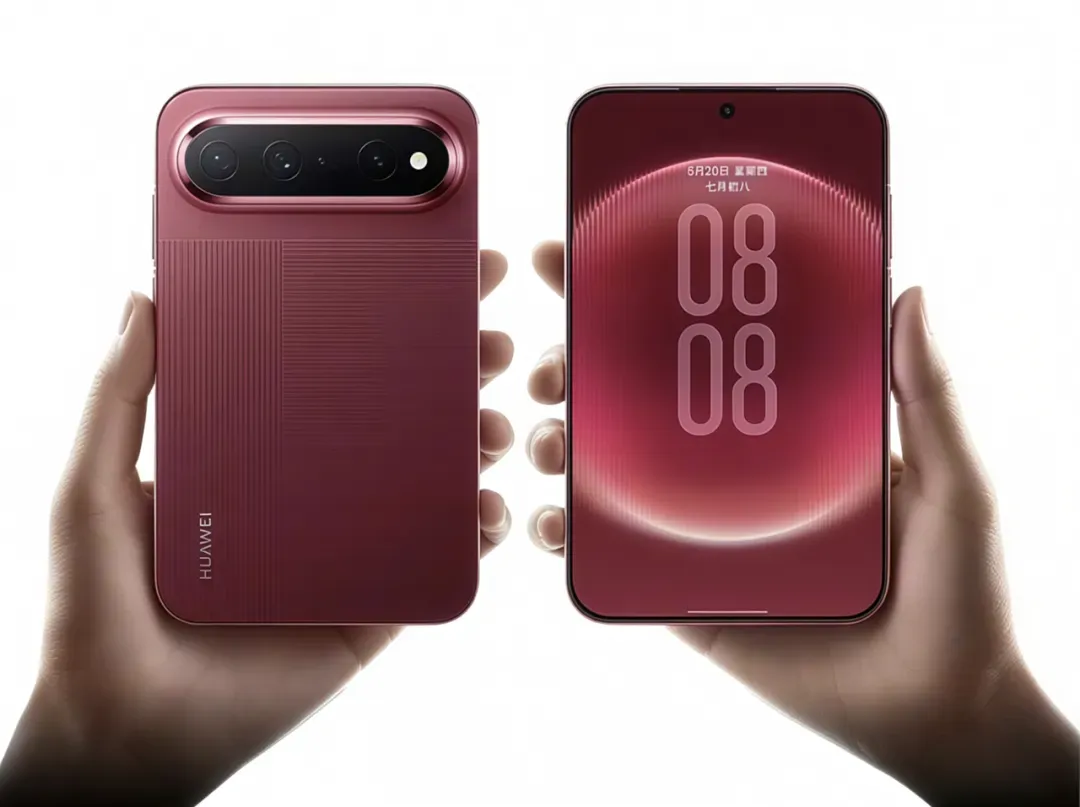
Huawei Technologies unveiled the Pura X View on August 20, 2026 — the world's first "wide-format bar phone" — staking a claim that hardware form-factor innovation, backed by a maturing HarmonyOS software stack, can carve out a defensible premium segment in China's fiercely contested flagship market.
The device, revealed at a Chengdu event alongside the Stelato G9 launch, arrives at a moment when China's high-end smartphone competition is intensifying. By translating the wide-screen ratio pioneered on its foldable lineup into a conventional candy-bar chassis, Huawei is effectively testing whether consumers will pay a flagship premium for a fundamentally different visual experience — without the mechanical complexity or price premium of a folding device. Pre-orders opened at 18:08 local time on August 20; in-store trials begin August 28, with full pricing expected at a dedicated handset event in September 2026.
Wide Aspect Ratio Challenges an Industry Metric Calculus
The Pura X View's most commercially significant specification is not its headline diagonal — 6.39 inches — but its actual illuminated area: 114.27 cm². Huawei placed the device next to a conventional 6.9-inch flagship in its Chengdu presentation and demonstrated that the Pura X View's display surface exceeds that competitor's 111.55 cm² by approximately 2.4%, despite a half-inch shorter diagonal.
The discrepancy is structural. The smartphone industry has standardized on diagonal measurement as a proxy for screen real estate, an assumption that holds only when aspect ratios remain consistent. The Pura X View's 16:9.5 ratio — versus the industry-standard 20:9 — breaks that convention. The result: a 2,232×1,320 resolution panel that delivers 16% more display area in video-consumption scenarios and 21% more in vertical browsing versus traditional long-format flagships, according to Huawei's own benchmarks.
The physical package is engineered to offset the ergonomic trade-offs of a wider chassis. At 6.68mm thin and 201g, the device integrates a 7,000mAh battery — a capacity tier typically associated with substantially heavier handsets. A 1.05mm uniform bezel on all four sides pushes the screen-to-body ratio to 96.1%, placing it at the upper bound of current bar-phone engineering.
HarmonyOS 7 Debut Transforms the Device Into an Ecosystem Anchor
The Pura X View is the first device to ship with HarmonyOS 7, a launch that carries strategic weight beyond the handset itself. At the same event, Huawei disclosed that HarmonyOS 6 device installations have surpassed 80 million units — a figure that quantifies the addressable base for developer investment and signals the ecosystem's growing gravitational pull.
The ecosystem readiness argument is central to the Pura X View's commercial viability. When manufacturers have historically altered screen proportions, developer adoption has lagged, undermining the user experience of the new form factor. Huawei's counter is architectural: HarmonyOS employs a responsive layout framework that segments interfaces by window width and aspect ratio into discrete "breakpoints." Applications built to this specification — including Bilibili, Douyin, Xiaohongshu, Huawei Reading, and WPS Office — can adapt to the Pura X View's wider canvas largely through existing code paths, reducing the marginal adaptation cost for developers.
This is not a speculative capability. Huawei has spent more than 12 months stress-testing wide-format adaptation on its foldable lineup: the Pura X (launched March 2025 with a 6.3-inch, 16:10 folded display) and the Pura X Max (April 2026, 7.7-inch unfolded), which shares a similarly wide outer-screen ratio. The Pura X View's form factor slots into the same layout class as the Pura X in its expanded state, meaning a substantial portion of the app ecosystem is already optimized for the new device's proportions.
Pura X View Extends a Form-Factor Strategy From Foldables to the Mass Flagship Tier
Huawei Consumer Business Group CEO Richard Yu framed the Pura X View as a "universal portable terminal," citing productivity, reading, gaming, and media consumption as primary use cases. The positioning is deliberate: wide-screen foldables have established consumer appetite for the format at price points above RMB 10,000 (approximately US$1,390). A bar-phone execution of the same design language targets a meaningfully larger addressable market at lower price sensitivity.
The strategic logic is a vertical extension of Huawei's existing product architecture rather than a lateral bet. The company is not proposing a new category so much as democratizing a visual standard it has already validated at the premium tier. The critical outstanding variable — retail pricing — will determine whether Huawei can capture incremental share from Apple and domestic rivals including Xiaomi and OPPO, or whether the wide-format proposition remains a niche for content-centric power users.
The device launches in four colorways: Zero-Degree White, Dynamic Red, Linen Gray, and Midnight Black.
Related Coverage:
Huawei Ascend: How China Built Its Own AI Chip Ecosystem Under Sanctions